Akali Dal, BJP back together after 6 years, but road to Punjab revival remains tough
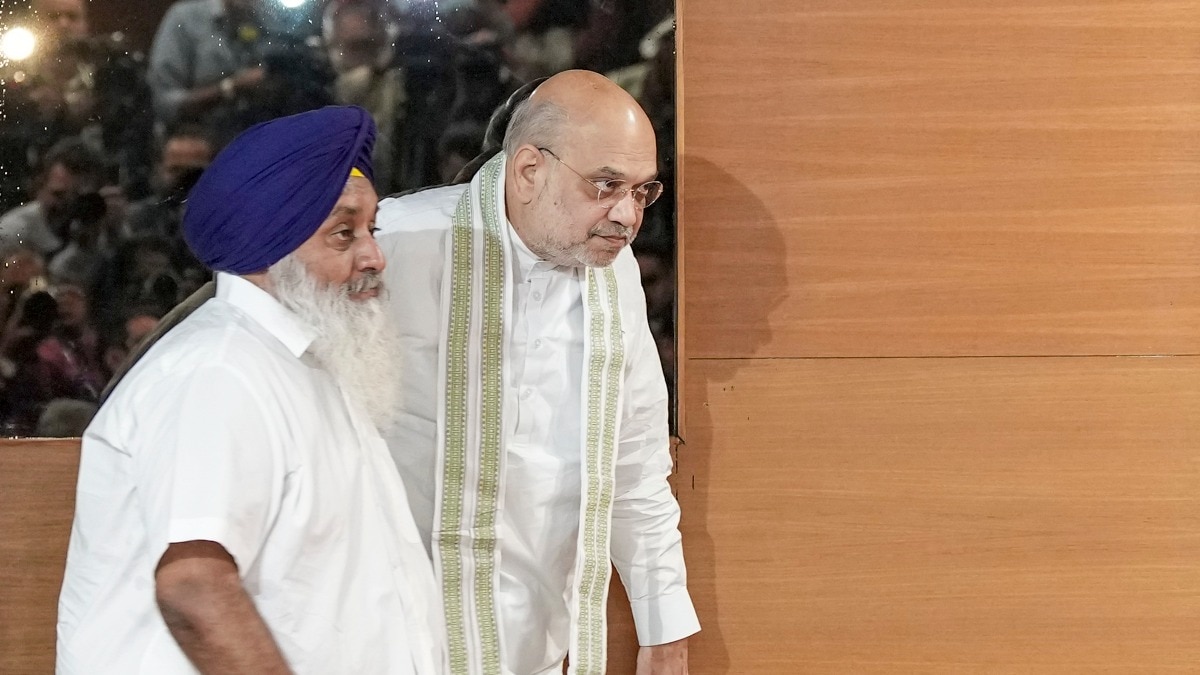
The Shiromani Akali Dal (SAD) and the Bharatiya Janata Party (BJP) have reunited after six years of political separation, setting their sights on the high-stakes 2027 Punjab Assembly elections.
The two allies, who have formed governments together in the past, are now preparing to contest the polls as a team. However, their biggest challenge will be to regain the political ground they have lost over the past few years.
The SAD-BJP alliance lost the 2017 Assembly elections before the two parties parted ways in 2020 over the contentious farm laws. Following the split, both parties contested elections independently. Their electoral performance since then has highlighted the extent of the challenge they face in rebuilding their political presence in Punjab.REGAINING LOST GROUND REMAINS THE BIGGEST TASK
The numbers from the 2022 Punjab Assembly elections underline the decline of both parties. Out of the state's 117 Assembly seats, the SAD won just three, while the BJP managed to secure only two.
The picture was similar in the 2024 Lok Sabha elections, when the SAD won one seat while the BJP failed to open its account. However, the BJP registered a significant increase in its vote share, securing 18 per cent, even more than the SAD. Despite this improvement, the party failed to translate its vote share into electoral victories.
With the alliance back together, the biggest challenge for both parties will be to regain their lost support across Punjab's three regions — Majha, Malwa and Doaba.
Political expert Professor Kuldeep Singh said the alliance had historically been among the most successful electoral partnerships in Indian politics, but the political landscape had changed considerably.
"Yes, this alliance has historically been one of the most successful in Indian politics. However, the major challenge now is what this alliance will offer to counter the AAP government's popular, people-friendly schemes. Another challenge will be how the two parties recover the vote share they have lost to other parties over the past few years," he said.
Punjab Chief Minister Bhagwant Mann also questioned the reunion, pointing to the public criticism that the two parties had directed at each other over the past few years.
"Both parties have openly criticised each other over the past few years. Now, what are they doing by coming together in this alliance?" Mann said.FARM LAWS SPLIT: QUESTIONS OVER WHAT HAS CHANGED
The 2020 split over the farm laws is likely to remain a major political challenge for the reunited alliance. The SAD had walked out of the BJP-led alliance over the contentious legislation, and the decision had marked a significant rupture in their long-standing political relationship.
With the two parties now back together, opposition parties have already begun questioning whether the issues that led to their separation have been resolved.
Punjab Congress chief Pargat Singh questioned the timing of the reunion and raised the issue of farmers who lost their lives during the agitation against the farm laws.
"Close to 750 farmers lost their lives over the farm laws issue. The SAD broke the alliance out of fear. Have all these issues been resolved? This alliance will be a big disaster for the SAD," he said.
Union Home Minister Amit Shah, responding to a question on the farm laws during the announcement of the reunion on Tuesday, said the legislation had been repealed and that the issue should no longer remain a point of contention.
"The farm laws were repealed, so that issue does not remain anymore," Shah said.
However, the opposition's questions suggest that the two parties may continue to face scrutiny over their past positions and the circumstances surrounding their separation.MORE SEATS FOR BJP COULD BRING GREATER RESPONSIBILITY
The seat-sharing arrangement will be another significant factor in determining the dynamics of the reunited alliance.
Historically, the SAD has contested 94 of Punjab's 117 Assembly seats, while the BJP has fought on the remaining 23. However, the BJP's growing national political footprint and its improved vote share in Punjab have changed the equation.
With the BJP securing 18 per cent of the vote in the 2024 Lok Sabha elections, the party is reportedly seeking more than 40 seats in the upcoming Assembly polls, significantly higher than its traditional share of 23.
A larger seat allocation would also give the BJP an opportunity to expand its presence beyond urban constituencies into semi-urban segments. However, contesting more seats would bring greater responsibility, as the party would have to convert its increased vote share into victories across a larger number of constituencies.
The BJP's challenge will therefore not be limited to securing a bigger share of seats in the alliance. It will also have to demonstrate that its growing vote base can translate into actual electoral gains.SAD NEEDS TO REBUILD ITS RURAL, PANTHIC SUPPORT BASE
While the BJP is looking to expand its electoral footprint, the SAD has its own considerable challenges. The party will have to rebuild its rural and Panthic support base, which has weakened over the past few years.
The SAD, traditionally dependent on rural voters, has witnessed an erosion of its vote share as well as splits within its political base. Several leaders associated with factions such as Akali Dal (Punar Surjit) were once members of the SAD. While a few have returned to the party, others continue to remain outside its fold.
Akali Dal (Waris Punjab De), which also has its eyes on the rural vote bank, will be another political force that the Shiromani Akali Dal will have to watch closely.
The SAD, once a formidable political force in Punjab, also witnessed a decline following the sacrilege incidents during the SAD-BJP government in 2015. The developments had a lasting impact on the party's political standing.
With the 2027 Assembly elections approaching and the alliance now stitched together, the SAD will have to work hard to win back voters who have drifted towards other parties and rebuild its support base.ELDER BROTHER-YOUNGER BROTHER EQUATION REMAINS IN FOCUS
The leadership and seat-sharing arrangement within the reunited alliance will also be closely watched.
Union Home Minister Amit Shah emphasised on Tuesday that the SAD would remain the elder brother in the alliance and that the Chief Minister would come from the SAD. This suggests that the traditional leadership arrangement is unlikely to change, even as the BJP seeks a larger share of seats.
While the BJP may continue to occupy the position of the younger partner in the alliance, it is likely to contest significantly more seats than its traditional allocation of 23.
Reacting to the reunion and the proposed arrangement, Punjab Congress chief Pargat Singh dismissed the significance of the roles assigned to the two parties.
"They can decide whatever role they want. It has no meaning because this alliance will not work. Both these parties were in single digits in their surveys, and that is why they are coming together now," he said.
The SAD-BJP reunion brings two allies back together ahead of a crucial electoral battle. However, their past electoral setbacks, the unresolved political questions surrounding the farm laws, changing seat-sharing equations and the erosion of their respective support bases mean that the road to 2027 will not be easy.
For both parties, the real test will be whether their renewed partnership can translate into a revival of their electoral fortunes across Punjab.- EndsMust Watch
Aseem Bassi, currently working as Deputy Editor with the India Today Group, has a 20 years experience in active journalism.
Hailing from Amritsar, Aseem Bassi kicked off his journalistic career with Hindustan Times in year 2004 and stayed there for 13 years. He worked for ANI for a year and worked for ABP NEWS for almost 6 yeats. He was Punjab Bureau chief with ABP News before joing India Today.
Aseem Bassi during his journalistic journey has covered all Vidhan Sabha and Lok Sabha elections along with all the important happenings along the Indo-Pak border. He has also covered terror attacks that took place in Dinanagar and Pathankot.
He has recieved various in-house awards from Hindustan Times and ABP NEWS.
Completing his Masters in Mass Communication in 2003, Aseem Bassi has interest in sports and border coverages.