Brazil zoo hails birth of Spix's macaw chick as boost for species' recovery - CNA
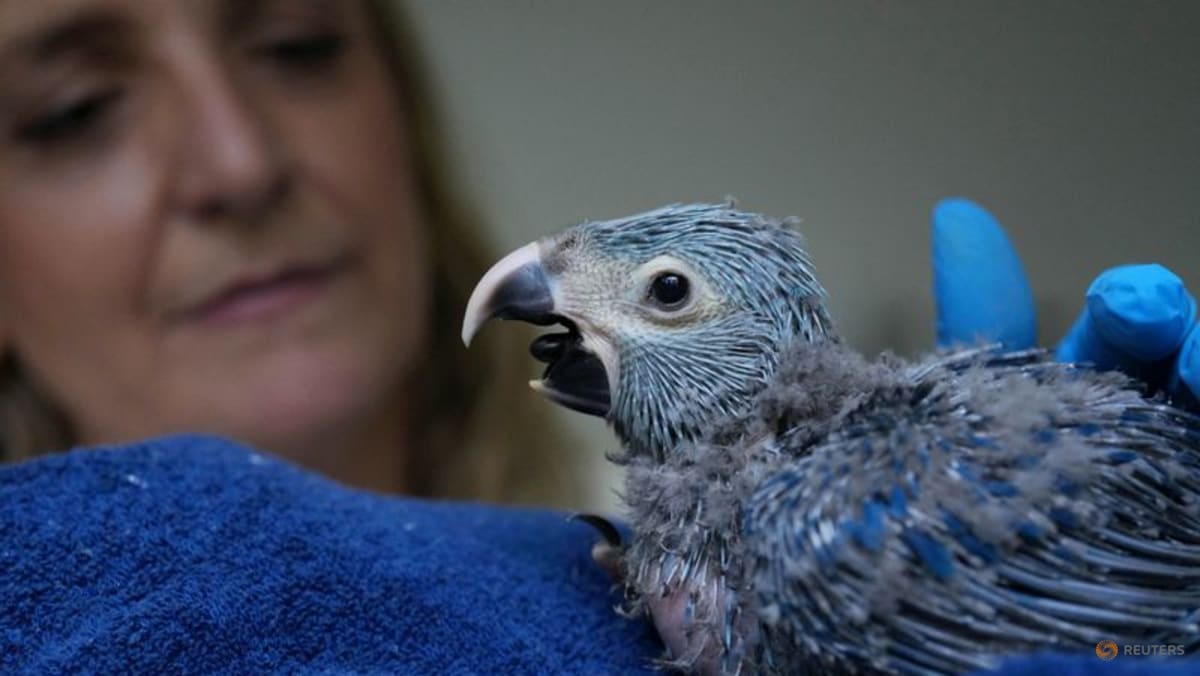
Sao Paulo Zoo's biologist Fernanda Guida shows a newborn Spix's macaw, the "little blue macaw", named Hope and considered extinct in the wild, in Sao Paulo, Brazil, November 24, 2026. REUTERS/Alexandre Meneghini Spix's macaws, considered extinct in the wild, during a presentation to the media of the first Spix's macaw born at the Sao Paulo Zoo, in Sao Paulo, Brazil, November 24, 2026. REUTERS/Alexandre Meneghini Sao Paulo Zoo's biologist Fernanda Guida shows a newborn Spix's macaw, the "little blue macaw", named Hope and considered extinct in the wild, in Sao Paulo, Brazil, November 24, 2026. REUTERS/Alexandre Meneghini Spix's macaws, considered extinct in the wild, during a presentation to the media of the first Spix's macaw born at the Sao Paulo Zoo, in Sao Paulo, Brazil, November 24, 2026. REUTERS/Alexandre Meneghini Sao Paulo Zoo's biologist Fernanda Guida shows a newborn Spix's macaw, the "little blue macaw", named Hope and considered extinct in the wild, in Sao Paulo, Brazil, November 24, 2026. REUTERS/Alexandre Meneghini 25 Nov 2026 04:19AM Bookmark Bookmark Share WhatsApp Telegram Facebook Threads Email LinkedIn Set CNA as your preferred source on Google Add CNA as a trusted source to help Google better understand and surface our content in search results. Read a summary of this article on FAST. Get bite-sized news via a newcards interface. Give it a try. Click here to return to FAST Tap here to return to FAST FAST SAO PAULO, Nov 24 : When a tiny blue chick finally broke free from its shell after weeks of anxious waiting, keepers at Brazil's Sao Paulo Zoo saw more than the birth of a bird; they saw a glimmer of hope for a species that has vanished from the wild.
Aptly named Hope, the female Spix's macaw born in October forms part of a breeding program aimed at rebuilding populations of one of the world's rarest parrots.
Known in Brazil as the Ararinha-azul, the species became internationally famous after inspiring Blu, the main character of the 2011 animated film Rio, a domesticated Spix's macaw who embarks on a journey to save his species.
"We chose 'Hope' because we hope we can give a better future to this species," said Fernanda Guida, head biologist at the zoo's bird division.
CNA Games Guess Word Crack the word, one row at a time Buzzword Create words using the given letters Mini Sudoku Tiny puzzle, mighty brain teaser Mini Crossword Small grid, big challenge Word Search Spot as many words as you can Show More Show Less Hope's arrival followed a tense 28-day artificial incubation process. Zoo specialists removed the egg for monitoring and eventually intervened when the bird struggled to hatch. Brazil's environment ministry backs the zoo's program.
"It was 28 days of suffering until we saw her hatch. She needed help, we had to remove her from inside the egg because she was badly positioned, and then she hatched," Guida said.
Native to the Caatinga region of northeastern Brazil, Spix's macaws were pushed to the brink of extinction by deforestation and decades of trapping for the illegal pet trade.
The species is classified as "extinct in the wild" by the International Union for Conservation of Nature (IUCN) Red List, meaning its survival has depended on captive populations.
"That first hatching was a very important milestone for the conservation of the Spix's macaw," Guida said. "It's a long road ahead of us, but it's the path we hope will be very successful."
Our chief editor shares analysis and picks of the week's biggest news every Saturday.