
Hope this visit ends complaints: Pak minister, in Delhi for SCO meet, on India ties
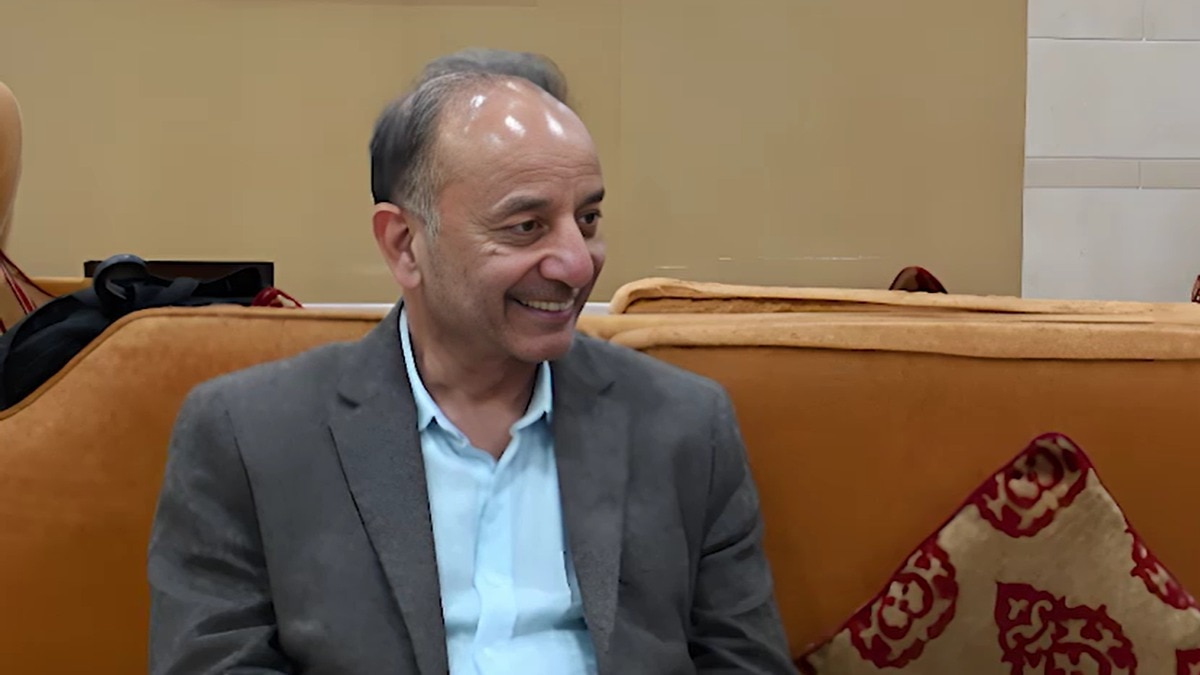
Pakistan Minister Musadik Masood Malik, who is in New Delhi for a Shanghai Cooperation Organisation (SCO) event, on Friday expressed hope that his visit would not be a one-off occasion, saying he hoped India would not "complain again" about the lack of interactions between the two neighbours at odds.
"Mujhe ummeed hai ki dobara aap gila nahi karenge aur hamara aana jaana rahega" (I hope you won't have this complaint again and that our visits and interactions will continue), the Pakistan Minister for Climate Change and Environmental Coordination said after participating in the first SCO Civilisational Dialogue Forum.
Malik's visit to New Delhi for the multilateral event is exceptionally rare, as it marks the first visit by a Pakistani federal minister to India in over three years and only the second such ministerial visit in a decade. The last such visit was by former Pakistan Foreign Minister Bilawal Bhutto Zardari, who attended an SCO foreign ministers' meeting in Goa in May 2023.
Commenting on the prospects of the SCO forum, Malik said the session had been productive. He also expressed satisfaction at the opportunity to interact with representatives from different countries, saying the discussions would help participants understand one another's perspectives, which he described as essential for meaningful dialogue.
Speaking at the venue of the multilateral gathering, the Pakistani minister said dialogue could not progress if countries continued to view issues exclusively from their own perspectives.
"If we fail to grasp each other's points of view, if we remain unaware of one another's perspectives and continue to view everyone solely through our own lens, without considering how others perceive things, then how can a dialogue possibly advance?" he asked.
He added that meaningful engagement required broadening one's perspective, with understanding the other side's point of view being the most crucial step.
Asked on the role of culture in improving relations between India and Pakistan, Malik said it had a "very key role to play". However, he emphasised that its significance extended beyond the two countries and was relevant to the entire region.
"Unless we understand each other, our way of thinking and manners of living, we won't be able to grow. Through dialogues, we will get each other's perspectives and get to know each other's understanding and that's how the region will be able to grow," he said.
The minister also spoke about the broader geopolitical situation in the region, describing it as one navigating complex geopolitical nuances, with multiple epicentres of instability.
Expressing hope that multilateral engagements could help improve the situation, he said Pakistan was committed to participating in discussions wherever countries came together to deliberate on peace and find a way forward.
"You have witnessed that whenever instability has arisen, even in instances where Pakistan had no direct involvement, the country has consistently endeavoured to play a significant, constructive role," Malik said.
Asked about bilateral issues between India and Pakistan, Malik maintained that the discussions at the forum were taking place within a multilateral framework.
The three-day SCO Civilisational Dialogue Forum is being hosted by India at the historic Purana Qila in New Delhi from November 20 to 22. The event is being organised by the Ministry of Culture and the Ministry of External Affairs, with delegates from various SCO member countries, including Pakistan, participating.
The SCO was founded in 2001 at a summit in Shanghai by the presidents of Russia, China, the Kyrgyz Republic, Kazakhstan, Tajikistan and Uzbekistan. India and Pakistan became permanent members in 2017, while Iran joined the grouping in 2023.- EndsMust Watch
Ajmal Abbas works with the news desk at IndiaToday.in, where he edits news reports from a wide spectrum of national and international news, and also heads the shift.
Politics and stories from south India and the political dynamics in West Asia are two topics that excite him most.
Originally from Kerala, Ajmal joined India Today in July 2023. He began his career in 2015 as a trainee with the Press Trust of India after completing his post-graduation in journalism from the Indian Institute of Mass Communication, New Delhi.
Before joining the India Today Group, he worked with Times Network as a Senior Special Correspondent, where he reported and edited stories from India’s major metro cities with a focus on urban mobility, civic administration, and infrastructure for Times Now. He has also worked with Tehelka Magazine as a reporter and was associated with two other media houses in Kerala.
Ajmal is an organic journalist for whom news provides the greatest high. He also closely follows the latest developments in digital storytelling across the world.
He is fluent in English and his mother tongue, Malayalam, and has professional expertise in Hindi. He can also speak and understand Tamil, and read and write Arabic.
