Russian warship ‘jammed signal’ of BA and easyJet flights - The Telegraph

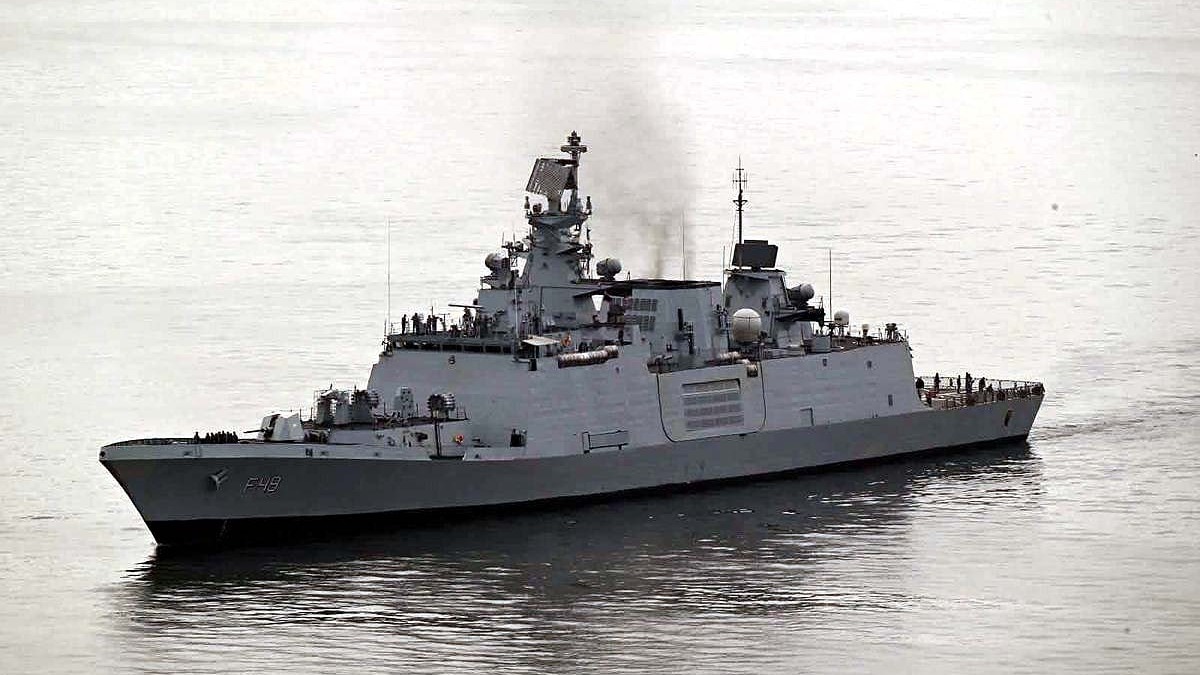
A Russian warship sailing within 200 miles of Britain is suspected of jamming the GPS signals to dozens of flights.
Flights from Edinburgh, Manchester and London Heathrow were among the 140 flights affected on Nov 9, analysis showed.
Experts have said it could be the first time Russia has blocked satellite navigation signals on planes so close to the UK.
Jamming is when a transmitter sends radio interference that is picked up by the aircraft’s GPS receiver, preventing it from calculating location or time.
A Ryanair plane from Edinburgh to Rome, an easyJet flight from Manchester to Hurghada, Egypt, and a British Airways flight from London to Stockholm were among those affected earlier this month.
Analysis by Hexbird, an aviation intelligence group, seen by the i Paper, found there was no operational effect on the flights during the interference which lasted about 20 minutes.
Commercial aircraft are provided with backup navigation systems and pilots are trained for the eventuality.
Experts have said the suspected Russian activity would mark an escalation in Vladimir Putin’s hybrid warfare.
Hexbird tracked the likely source of the jamming to a radio transmitter over the North Sea, around 190 miles off the English coast.
At the time, three sanctioned Russian cargo ships, Lady R, Lady D and Maia-1 – which were previously suspected of ferrying weapons between Russia and North Korea to be used in the war against Ukraine – were heading south under escort from a Russian warship.
Russian cargo ship Maia-1 was under escort from a Russian warship at the time of the incident Dr Thomas Withington, an electronic warfare specialist, said if Russia were responsible, it would be “an intensification of the disruption that we’ve seen so far”.
He told the paper: “It’s the first time to my knowledge, first time we’ve seen anything this far west. But equally, I don’t think it’ll be the last time.”
Hexbird, run by John Wiseman, an aviation data analyst, concluded that its analysis “neither identifies the convoy as the source [of the jamming] – nor rules it out”.
The Dutch air traffic control agency said seven flights that reported losing GPS were guided into Amsterdam’s Schiphol Airport as a result.
Meanwhile, around 40 affected aircraft were believed to have been in or near UK-controlled airspace at the time, according to the Hexbird analysis.
James Droxford, a former naval intelligence officer and an independent maritime intelligence analyst, said a Russian warship escorting the convoy was “almost certainly the origin of the GPS jamming, not the merchant vessels”.
Suggesting it could have been in response to Nato monitoring the convoy, he added: “They’ve been tracked all the way through the North Sea. I think the short duration of the GPS jamming, the location and assets around it, suggests that it was a reaction to deter surveillance by the West against those ships.”
Ramsey Faragher, the chief executive of the Royal Institute of Navigation, said: “It was a very large area that was covered, and so it would have been a significant piece of equipment that was probably more likely to have been on a dedicated military platform.
“The UK is quite lucky that it was as far offshore as it was, because we wouldn’t have wanted that sort of level of GPS jamming to be flooding things like our mobile phone networks and our DAB digital radio stations.”
A Government spokesman said: “We do not comment on operational security or intelligence matters.
“UK aviation is amongst the safest in the world – our pilots are trained to handle GPS interference, and all commercial aircraft have backup navigation systems, so passengers can be confident their flight is safe.
“We are delivering £155m to boost resilience of critical infrastructure, including funding for a GPS interference monitoring programme. We continue to work closely with the CAA, industry and international partners to combat interference.”