Russians threatened to kill crewmate after warship crashed in UK waters - The Telegraph

The Neustrashimy, a Russian warship, in the English Channel Lily Shanagher Foreign Breaking News Reporter Show biography Lily has reported on the Iran war, Latin America and domestic events. You can contact her at lily.shanagher@telegraph.co.uk or via X @lilyshanagher
Russian crewmen threatened to shoot their crewmate after their warship collided with a refuelling vessel off the coast of Essex, intercepted radio transmissions have revealed.
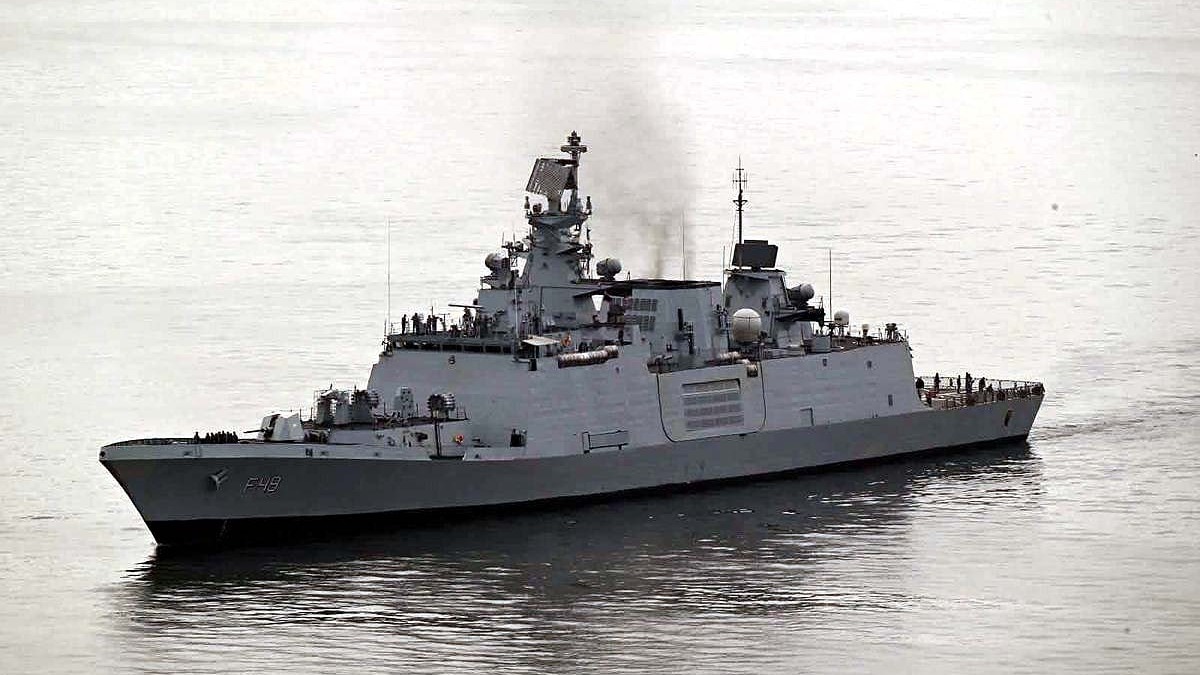
Sailors aboard the Neustrashimy, a heavily armed Russian warship, hit the Valentin Rykov during a failed attempt to secure itself to the oil tanker between Oct 21 and Oct 23.
The frigate had just two days left of fuel at the time of the botched operation, which occurred during poor weather and rough seas.
“F---, this is an absolute nightmare, I’m getting really worked up,” one crew member shouted over the radio after an engineer delayed the refuelling operation with paperwork problems.
“We’ve just been waiting around for this f---ing ridiculous wind and current,” he added in the transmissions obtained by The Times.
In another transmission, a sailor said: “We need to bring him out onto the helipad and execute him there in front of everyone.”
The Valentin Rykov is a Russian oil tanker The Russian rafting involved anchoring one ship and unloading fenders on one side to absorb any impact before attaching it to the other vessel.
In comparison, British warships refuel by sailing alongside replenishment vessels, with one ship setting the speed and course and the other matching it before closing the gap and allowing crews to transfer lines and hoses between both.
As they planned to detach from the other vessel and sail away, a crew member said: “We’re expecting headwinds, like yesterday, with winds of 10 [knots] and gusts up to 12. Tomorrow, the wind will ease. On the 25th, across the entire North Sea, and then later in the straits and the Baltic Sea, there’s a red warning indicating winds of up to 30 metres per second [58 knots].”
One sailor said: “Conditions are very unfavourable, and we’re losing way on the vessel.”
Another added that he was “ready for the emergency drill”, telling his comrades: “In 10 minutes, I’ll sound the alarm.”
Both crews abandoned the operation and turned their trackers off and headed towards eastern Scotland, Automatic Identification System tracks showed, where they were able to refuel in more sheltered waters.
The ships are believed to have then entered the Bay of Mecklenburg in the Baltic Sea, with the Neustrashimy returning to patrol in the North Sea and English Channel and the Valentin Rykov returning to Kaliningrad before leaving again.
A defence source told The Times that the incident was a “shambolic” display of seamanship that risked spilling oil into British waters and probably left the vessels with damage to their hulls and upper decks.
The source said: “We think the reason they were trying so hard in rough seas was because the warship was about to run out of fuel. She was probably down to fumes.”
The Telegraph understands that the incident occurred outside UK territorial waters.
Sources said the Valentin Rykov had attempted to undertake a “replenishment activity” of the Neustrashimy in “challenging sea conditions” for a number of days while closely monitored throughout by HMS Tyne, a Royal Navy patrol boat.
The Neustrashimy has been replenished a number of times by Russian support vessels during its extended deployment in the vicinity of the UK.
It has been guarding shadow fleet tankers in UK waters for months.
Last month, a Telegraph investigation found that Russia was deploying fishing trawlers to spy on the UK’s critical undersea cables, with Nato tracking civilian vessels as they carried out espionage for Vladimir Putin in waters around Britain.
Analysis uncovered more than 500 incidents in which Russian trawlers loitered above vital communications cables linking Britain with Europe and the US, or followed their routes for miles.
The findings suggested that Russian vessels were mapping the precise locations of fibre-optic cables carrying billions of pounds of economic activity every day, potentially allowing them to be attacked in a future conflict with Nato.
Earlier this month, the Royal Navy intercepted the Viktor Leonov, a Russian spy ship, off the coast of Scotland.
The vessel was monitoring Nato warships participating in Exercise Strike Warrior, a drill involving 2,000 personnel from six of the alliance’s countries.
There has been a 25 per cent increase in the amount of Russian activity in and around British waters during the first seven months of the year, compared with the same period in 2025.
In June, Royal Marine Commandos stormed Smyrtos, a Russian shadow fleet tanker, in a six-hour military operation.