Trust Is The New Battleground For Customer Engagement

James Garvert is the EVP of Fraud & Communications Solutions for TransUnion.
gettyEngaging with consumers has never been more essential, or more difficult. Amid the meteoric rise of AI-enabled scams, call spoofing and social engineering attacks, the challenges organizations face when trying to reach consumers seem insurmountable.
Every interaction depends on trust, yet consumers are more hesitant than ever to engage. Many of the traditional warning signs consumers were trained to recognize have disappeared—consumers are on edge.
And with good reason: It’s a jungle out there.
In our recent global study, “61% of business leaders ranked fraud among the risks with the greatest potential business impact, ahead of cybersecurity breaches, compliance, customer churn, operational cost and reputational risk. More concerning, 58% said they’re very or extremely concerned fraud is evolving faster than their organizations’ abilities to detect and prevent it.”
Historically, organizations have viewed fraud and engaging with customers as separate disciplines. But today’s threat environment makes it clear they’re deeply interconnected. In many cases, the communication channel itself—whether a phone call, text message, email or mobile app interaction—provides the first indication that fraud may be occurring.
Consumers don’t experience fraud, identity and communication challenges as separate issues. To them, it’s one experience, one problem. It’s a trust problem that’s reshaping the customer journey. In fact, 69% of consumers say they would switch vendors for stronger security.
Trust has become the foundation for both customer engagement and fraud prevention.
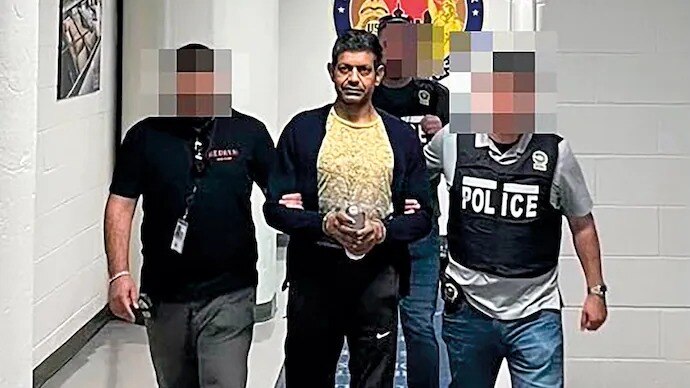
At our recent Fraud & Communications Summit in Chicago, keynote speaker Matt O’Neill, a former U.S. Secret Service Special Agent and recipient of Gold and Silver Awards for distinguished service, shared insights from years spent working undercover as a banker, broker, money launderer and other personas. In these roles, he led multinational investigations into crypto-laundering networks and dark web marketplaces.
According to O’Neill, fraudsters are winning because fraud has evolved into a highly organized industry. He explained that scam operations now function much like large multinational corporations. Scam compounds are similar to call centers, complete with organizational structures, performance quotas, shift schedules and human resources departments. Unfortunately, many of these compounds operate under sophisticated criminal networks and employ workers who have been trafficked.
At the same time, the barrier to entry into the fraud world has never been lower. AI enables fraudsters to create convincing scams at scale in virtually any language, including cloned voices, deepfake videos and personalized social engineering campaigns. And it’s cheap.
The consequences of eroding trust extend well beyond fraud losses. Organizations often experience:
Ironically, the industries and brands most trusted by consumers are frequently among the most targeted by fraudsters, with the highest fraud instances related to auto lending, bank-issued and retail credit cards and unsecured personal lending.
According to Edelman, trust now rivals price and quality as a primary factor influencing consumer decision-making. Research shows that “77% of consumers cited confidence their personal data is secure as the most important feature when choosing whom to transact with online.”
Organizations can strengthen trust by approaching fraud prevention and customer communications as a unified strategy.
Traditional fraud controls were designed for predictable attacks. Today’s fraudsters adapt quickly, vary their tactics and coordinate attacks across multiple channels and sessions. Identity verification remains important, but it only confirms who someone claims to be. It doesn’t determine whether the current interaction should be trusted.
• KYC (Know Your Customer) controls are often strongest at onboarding, not throughout the customer lifecycle.
• Devices, behaviors and risk profiles change over time.
• Credentials can be compromised after verification.
• Synthetic identities can appear legitimate on paper.
The most important fraud signal is often not a single event. Any single signal can be manipulated or generate false positives. It’s the story that unfolds throughout an interaction. It emerges through relationships among users, devices, accounts, entities and sessions.
As if it wasn’t hard enough, AI has turbocharged fraud. In addition, labeling identified threats as AI-driven remains a challenge. That’s because it’s difficult to build comprehensive strategies with new AI fraud models evolving so rapidly.
While fraud practitioners know when an account was taken over, there’s currently no label for how it was taken over and whether AI drove the attack. As a result, the AI-attributed training set doesn’t exist yet for tracking that fraud, and detection stays anchored to heuristics and analyst judgment.
To be able to engage effectively with consumers and prevent fraud, organizations must adopt continuous authentication and layered risk strategies.
• Develop a comprehensive strategy—don’t address fraud in silos across your organization.
• Form strategic partnerships with your cyber teams.
• Correlate identity, device, behavioral and contextual signals in real time.
The process is straightforward: Collect. Correlate. Score. Decide.
Every phone call, text message, email and digital transaction represents a trust moment. Customers want confidence the organization contacting them is legitimate and their information and transactions are protected. Simply asking consumers to “trust us” is no longer enough.
Verified identity, authenticated communications and real-time risk intelligence are becoming the foundation of trust in a digital-first world.
The future isn’t reactive fraud mitigation. It’s proactive trust at the point of interaction, by orchestrating identity, risk and communications intelligence across every customer interaction.
Forbes Technology Council is an invitation-only community for world-class CIOs, CTOs and technology executives. Do I qualify?