13-year-long bribery investigation by AFP ends with no prosecution
The Australian Federal Police have accepted a $9 million settlement to end a 13-year-long bribery investigation into a storied Australian engineering company that still has major government contracts.
As part of the settlement agreement to pay the money under proceeds of crime legislation, SMEC, formerly the Snowy Mountains Engineering Corporation, made no admissions of wrongdoing. Police did not refer the matter to the Commonwealth Director of Public Prosecutions, citing factors including the company’s co-operation and the length of time since the events under investigation occurred.
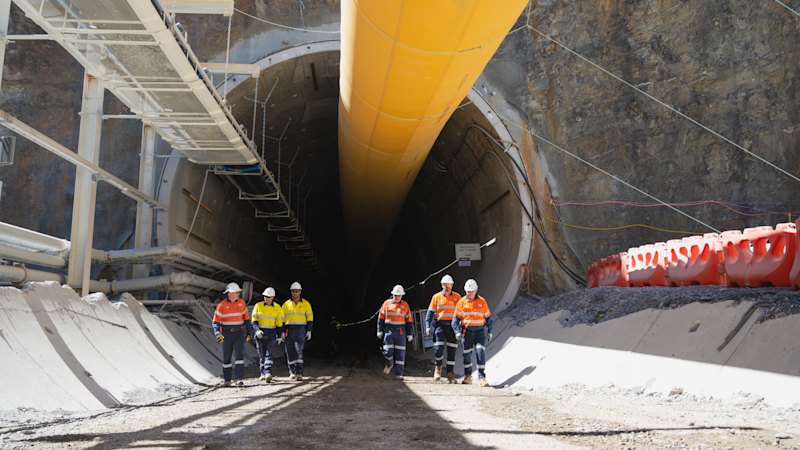
SMEC has done work on numerous government projects, including Snowy Hydro 2.0.Jamila ToderasTwo former SMEC staff members were arrested and charged in 2022 with allegedly conspiring to pay bribes to officials in Sri Lanka, but those charges were dismissed in court the following year and the men were awarded costs.
AFP anti-corruption commander, Andrea Quinn, said the $9 million payment showed that companies would still face significant financial consequences following foreign bribery investigations, even if there was no prosecution.
“Noting the co-operation of SMEC throughout the investigation, companies identifying potential misconduct and engaging early, transparently and constructively with the AFP place themselves in a materially different position to those who do not,” Quinn said. “The AFP is committed to detecting, disrupting and deterring foreign bribery and any related criminal activity.”
The AFP began investigating SMEC’s conduct in countries including Sri Lanka and Vietnam in 2013. It twice conducted searches under warrant in the following years. This masthead has repeatedly reported on SMEC, including a parallel investigation by the World Bank.
A spokeswoman for SMEC said the company had conducted internal investigations, hired consultants to do external checks, and self-reported issues to the AFP in 2016 and 2018.
“SMEC co-operated with the AFP throughout the investigation and provided an extensive range of additional material and information as requested over an extended period,” she said. “SMEC has zero tolerance for bribery and corruption throughout its global operations and has enhanced its anti-bribery and compliance procedures since the alleged conduct.”
Along with the proceeds of crime payment, SMEC also agreed to make a contribution to the AFP’s external legal costs and donate money to an anti-corruption NGO. Neither amount was disclosed.
SMEC confirmed that staff alleged to have been involved with the overseas issues were no longer with the company.
Barrister Geoffrey Watson, SC, said it was extraordinary that SMEC had been able to pay a $9 million fine on the basis that it did nothing wrong.
“It is just absurd,” said Watson, who is also a director of the Centre for Public Integrity.
He said the fine would not hurt the company because it would be passed on to its customers.
“In this case, the principal consumers are Australian governments [so] it’s the Australian people paying a fine on behalf of the Singaporean government,” Watson said, referring to SMEC’s ultimate owner.
Amid the Snowy Hydro scheme’s construction in the 1960s, the Department of Foreign Affairs and Trade asked the forerunner to SMEC to assist Australia’s foreign aid programs with engineering works. The company is now owned by Surbana Jurong, a subsidiary of the Singaporean state’s investment company Temasek, and operates as part of a conglomerate with 120 offices in more than 40 countries, employing about 16,000 people.
It is involved in many of Australia’s largest infrastructure projects, including Melbourne’s Metro Tunnel project, Western Sydney International Airport, Snowy Hydro 2.0, and the Warringah Freeway upgrade in Sydney.
The Business Briefing newsletter delivers major stories, exclusive coverage and expert opinion. Sign up to get it every weekday morning.
You have reached your maximum number of saved items.
Remove items from your saved list to add more.