136-year-old Leh bridge hangs by a thread
Direct Source Verification:
This story is aggregated from The Express Tribune (tribune.com.pk). Full reporting rights and copyright belong to the primary publisher.
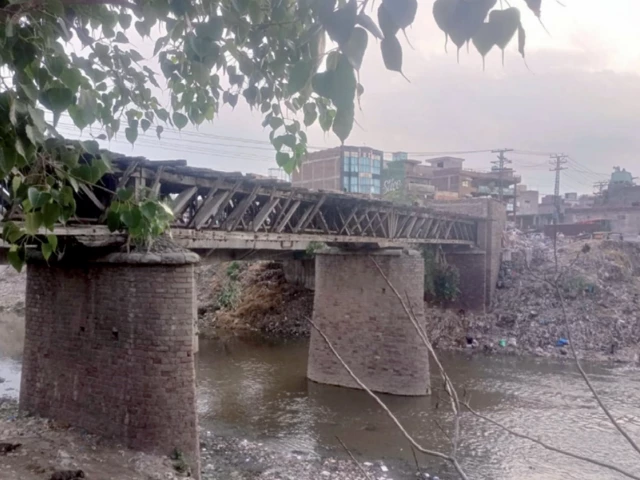
Sources say historic bridge in Dhoke Ratta got damaged by recent floods
Recent monsoon rains have brought a 136-year-old wooden-and-iron bridge built during the British era on the verge of collapse, with fears that the historic Dhoke Ratta bridge over Nullah Leh could be swept away by any major flood.
The bridge, made of pure deodar wood and iron, has suffered extensive damage because of recent rains and flooding.
Residents fear that if the Archaeology Department, district administration and Rawalpindi Municipal Corporation fail to repair it immediately, the historic structure could fall into Nullah Leh, taking with it a part of the city's history.
The monsoon rains and severe flooding have damaged its century-old wooden structure, while the iron railings have rusted. Its floor has also broken at several places and parts of it have fallen into the nullah, making it dangerous even for pedestrians.
Dangerous landslides and soil erosion have also occurred around the bridge's foundations.
The plank bridge connecting Dhoke Ratta and Ganj Mandi is not merely a structure of wood and iron but a living witness to Rawalpindi's centuries-old history, culture and changing times.
It was once the only and busiest link between the two important commercial and residential centres of Ratta Amral and Ganj Mandi. Trade and daily necessities were transported through the bridge by horse carts and handcarts. The sounds of horses' hooves, coachmen and vendors were once part of the city's daily life.
The bridge kept commercial and social activity moving between the two areas. When the water of Nullah Leh was clean, people would stand on the bridge to watch it flow below, making it a symbol of Rawalpindi's romantic past.
The Ganj Mandi bridge is one of the oldest historic and cultural bridges over Nullah Leh. It was constructed with iron and strong deodar wood and is still locally known as the "Lakri Wala Pul" or wooden bridge.
British forces built it over Nullah Leh to connect the city with military barracks and railway quarters in Westridge.
During British rule, the area on the other side of the bridge was known as Sarai Beli Ram. A red-light area reportedly existed there before and after Partition until the 1960s, because of which the bridge became popularly known as "Chaklay Wala Pul".
The name has remained widely recognised in Rawalpindi for the past 136 years.
Original Source
https://tribune.com.pk/story/2630298/136-year-old-leh-bridge-hangs-by-a-thread