15 years of Anirudh Ravichander, the composer Tamil cinema keeps coming back to
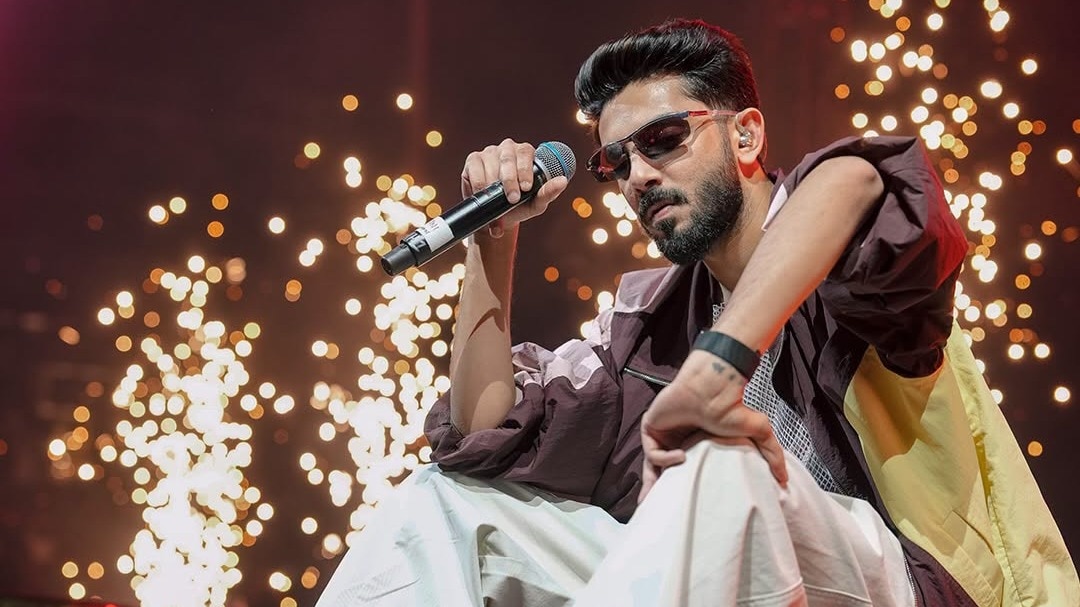
There are two sides to Anirudh Ravichander that have shaped his 15-year journey in Tamil cinema. One makes theatres erupt, gets audiences dancing in their seats and turns songs into celebrations. The other quietly finds its way into our playlists, stays with us long after a film has left theatres and often becomes the song we return to when nobody is watching. For every Vaathi Coming, there is a Nijamellam Marandhu Pochu. For every Ullaallaa, there is a Kaadhalada. And for every Hukum, there is a Rathamaarey.
That contrast is what makes Anirudh's journey particularly interesting. Fifteen years after Why This Kolaveri Di introduced him to the world, he has become the composer Tamil cinema keeps coming back to. He is no longer just the young musician who delivered a viral hit. He has become a recurring presence in some of the industry's biggest films, shaping their identities through songs, background scores and promotional music. But to understand why his music has endured, it is important to look beyond the mass anthems.
The first memory, of course, is 3. A young Anirudh, then just 21, arrived with a song that nobody quite knew what to make of initially. Why This Kolaveri Di was quirky, deliberately irreverent and unlike the polished film songs audiences were accustomed to. Dhanush's playful delivery, the Tanglish (Tamil + English) lyrics and that infectious tune made it a phenomenon well beyond Tamil Nadu. It travelled across languages and borders, introducing Anirudh to an audience much larger than the one a debut composer could ordinarily hope to reach.
But what makes his 15-year journey worth revisiting is that he did not spend the next decade trying to recreate Kolaveri Di. He moved on, and quite quickly.
The early years were about proving that he could do more than deliver a viral hit. Ethir Neechal gave us the infectious title track, while Vanakkam Chennai showed a softer, more romantic side. Then came 2014, a year that changed the scale of his ambitions. With Dhanush's Velaiyilla Pattadhari and Vijay's Kaththi, Anirudh began finding his place in mainstream commercial cinema. The VIP theme became an anthem for a generation of young people who saw something of themselves in Raghu. Selfie Pulla and Aathi brought a different kind of energy to Vijay's screen persona. He was no longer just the composer behind a viral song. He was becoming someone who could understand the musical language of stars.
That ability to adapt without losing his identity would become one of his biggest strengths. He could give Ajith the swaggering Aaluma Doluma in Vedalam, and then turn to the aching Uyir Nadhi Kalangudhae from the same film. He brought a playful, youthful energy to Remo, before switching gears for the romance and melancholy of Naanum Rowdy Dhaan. Thangamey and Neeyum Naanum showed that the composer who knew how to make a theatre erupt also understood restraint. Po Nee Po from 3 remains another reminder that his music has always had room for heartbreak.
Over the years, Anirudh has also become an important part of how Tamil films build anticipation. A song or theme from his soundtrack can begin creating a film's identity months before its release. Think of Marana Mass from Petta, Vaathi Coming from Master and Arabic Kuthu from Beast. These were not merely tracks that worked on streaming platforms. They became part of the promotional life of the films, travelled into celebrations and social media trends, and gave audiences something to latch on to before they even entered a theatre.
But the other side of Anirudh's discography deserves equal attention. Naanum Rowdy Dhaan had the warmth of Thangamey and Neeyum Naanum, while Yennai Maatrum Kadhale carried a more melancholic quality. Velaikkaran moved between the intensity of Iraiva and the breezy romance of Idhu Naal. In Velaiyilla Pattadhari, the composer who gave us the swaggering title theme, also delivered the deeply moving Amma Amma and the gentle Po Indru Neeyaga. These albums were not built around one sound or one formula. They allowed Anirudh to experiment with mood, melody and emotion without losing his musical identity.
That variety is also evident in Doctor, where the playful Chellamma sits alongside the atmospheric Soul of Doctor, and in Thiruchitrambalam, where Megham Karukatha became a reminder of how beautifully he can build a melody without relying on a massive hook. The songs that make the loudest impact may define his public image, but these albums show why his music has stayed with listeners beyond the first rush of a theatrical release.
His 2022 run was particularly telling. In the same year, he moved between the high-energy world of Beast, the romantic comedy space of Kaathuvaakula Rendu Kaadhal, the youthful appeal of Don and Thiruchitrambalam, and the dark, pulsating soundscape of Vikram. The latter gave us Once Upon a Time and the unforgettable title theme, which helped turn the film's central character into an event of his own. Yet, Thiruchitrambalam gave audiences Megham Karukatha, while Kaathuvaakula Rendu Kaadhal had Naan Pizhai. Both showed how effortlessly he could move away from the noise and create something intimate.
Then came 2023, with Jailer and Leo. Hukum became a Rajinikanth celebration, while Kaavaalaa took on a life of its own. Badass and Naa Ready added to the anticipation around Vijay's Leo. With Jailer 2, he returned to a musical world that audiences already associated with Nelson Dilipkumar and Rajinikanth. The familiarity was part of the appeal, but so was the expectation that he would find another way to make it sound exciting.
It would be easy to reduce Anirudh's success to volume, bass drops and hero-elevation themes. That would be missing a significant part of his appeal. His melodies, romantic tracks and emotional compositions have often given his soundtracks longevity beyond their initial promotional buzz. The mass numbers might introduce a film to audiences, but it is often the quieter songs that make them return to the album.
His journey has also moved beyond Tamil cinema. Jawan introduced his music to a wider Hindi-film audience, while his Telugu projects have expanded his collaborations across industries. The scale of his concerts, the crowds singing his songs back to him and the reach of his music across languages are now part of a much larger story than the one that began with a quirky song in 2011.
Perhaps the most interesting thing about Anirudh's career is how often Tamil cinema has returned to him. Rajinikanth, Vijay, Ajith, Kamal Haasan, Dhanush and Sivakarthikeyan have all been part of his musical journey. Directors have trusted him with films of different moods and scales. For audiences, his name on a film's music credits has come to carry an expectation of its own. That is not a small achievement in an industry where a composer is often judged one soundtrack at a time.
As he marks 15 years, Anirudh has spoken about the journey as one of continuous work, gratitude and new possibilities. His 2026 slate, which includes LIK, Jana Nayagan, DC, The Paradise and Jailer 2, is another indication of how widely his music now travels.
Fifteen years ago, the question was whether the young man behind Why This Kolaveri Di could sustain the attention that came his way. Today, the more interesting question is how many more musical identities he can create without losing the one audiences recognise instantly. Anirudh has gone from being the new sound Tamil cinema was curious about to the composer it keeps coming back to. And perhaps that is the most telling measure of his journey.- EndsALSO READ | Best is yet to come: Composer Anirudh rules out career break after wedding
A proud South Indian, especially Chennaiite, with love for films, food and cricket. She loves entertainment. In life also. Cries in theatres, watches films alone and always takes back some lessons. Hills over beaches for her. If not for films, you can see her obsessing over food videos and making organic soaps. Also, a Senior Assistant Editor at India Today Digital covering South films.