
15 Years of IKEA in Thailand: The Brand That Changed How Thais Furnish Their Homes, From Large Shipping Challenges to the Small Store Model - Thairath English
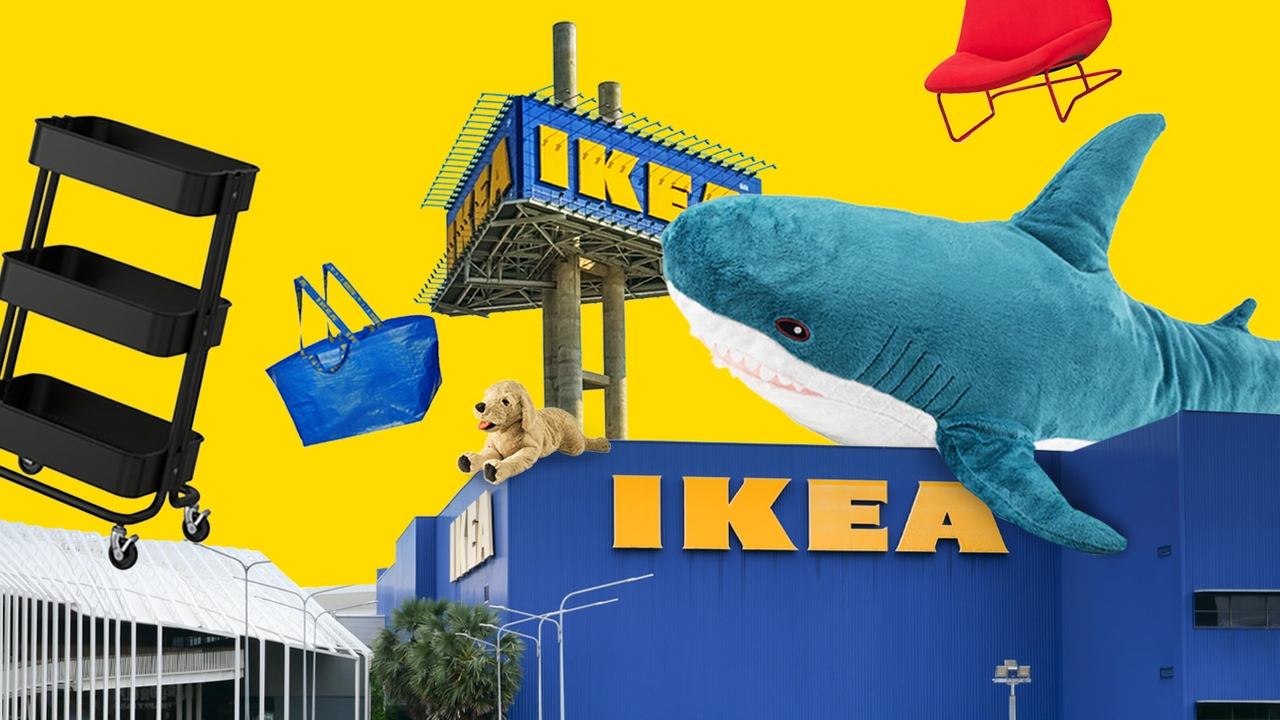
Fifteen years ago, when IKEA, the Swedish furniture and home décor brand, opened its first store in Bangna, Thailand, in 2011, its arrival was not just the addition of a new player in the Thai furniture retail market but introduced a different shopping experience and home decoration concept.
At that time, IKEA introduced the concept Democratic Design, which emphasizes design, functionality, quality, sustainability, combined with the concept Affordability, making products accessible in price. This became a key stance for IKEA, communicating that building a good home doesn't have to start with expensive purchases but can begin by choosing products and solutions that fit each person's space and budget.
IKEA’s entry expanded Thai consumers’ perspectives on home decoration—from focusing on beauty or buying large furniture pieces to designing spaces suitable for living, such as choosing multifunctional furniture, organizing storage, or changing the home's atmosphere with small decorative items within a limited budget.
Amid economic uncertainty and fluctuating consumer purchasing power, IKEA Thailand has continued to expand its business, especially in recent years with new smaller store formats to better reach consumers in provincial areas. Currently, there are six stores nationwide: IKEA Bangna, IKEA Bangyai, IKEA Phuket, IKEA Sukhumvit, IKEA Chiang Mai, and the newest, IKEA Khon Kaen.
On the occasion of IKEA Thailand’s 15th anniversary, Leonie Hoskin, Retail Business Manager for IKEA Thailand and Vietnam, revealed that the company is focusing on developing more flexible store formats alongside expanding online channels and reducing logistics costs, which remain a key challenge in the furniture business.
Despite challenges in Thailand’s economy and consumer purchasing power, IKEA has continued expanding, especially into provincial markets through smaller store formats in recent years.
Leonie Hoskin, Retail Business Manager for IKEA Thailand and Vietnam, explained that historically, IKEA’s expansion relied on investing in large stores, which involved high costs and long project timelines. Currently, the company does not want to wait until ready to invest only in large stores.
IKEA collaborates with partners in Thailand to develop store formats with lower investment costs that can reach new customer areas and gradually grow with the market. This approach has led IKEA to shift from relying solely on large stores to operating multiple store sizes suited to each area.
Currently, large IKEA stores are about 25,000 square meters or more, medium stores about 12,000 square meters, while the small stores in Chiang Mai and Khon Kaen cover approximately 800-850 square meters.
Expanding small stores aims not only to increase sales points but also to allow IKEA to test markets, study consumer behavior, and assess each area's potential before committing to larger investments. Since many furniture consumers want to see and touch products before buying, small stores help reduce the limitations for provincial consumers who cannot easily travel to large stores.
Leonie views small stores as starting points for building markets before expanding to medium or large stores as demand grows. For example, in Phuket, IKEA began with a small store but aims to expand to around 10,000-12,000 square meters.
IKEA also sees opportunities to open about 1-2 more new stores or service points in the next 1-2 years, depending on readiness and market conditions. Regarding large new store projects in Bangkok and its vicinity, Leonie revealed the company holds land for future development, possibly including expanding distribution infrastructure; however, such projects are likely to happen after 2030.
One of IKEA’s biggest challenges in business expansion is fulfillment costs, especially delivering large furniture such as wardrobes, bookshelves, and other heavy or damage-prone items during transport.
Currently, IKEA operates about 5-6 main transport routes (Trunk Lines) covering key regions in Thailand, including the North, Northeast, East, and South. The company prioritizes developing these networks for efficient product distribution, since opening new stores depends not only on market demand but also on transport system readiness.
Another approach IKEA is developing is increasing collection points through partnerships, allowing customers to pick up items near their homes instead of home delivery for every order. This model can reduce delivery costs and help IKEA reach customers in areas without stores, without needing to fully invest in stores everywhere, Leonie said.
This shows that IKEA’s future competition is not only about opening the most stores but also about backend system efficiency to maintain affordable prices for consumers.
Beyond expansion strategy, IKEA sees growth opportunities in demand for home living products and solutions. Last year, the company focused on Kitchen, Cooking & Eating products under the "Everyday More Value" campaign, offering accessible-priced kitchen products and solutions.
The remarkable result: IKEA Thailand sold over 9,000 METOD kitchen sets, generating around 300 million baht in revenue. This success made Thailand the top seller of METOD kitchens in the Ikano Group and ranked 24th globally, according to company data.
This figure reflects IKEA’s business potential in Thailand, which is not limited to selling individual furniture pieces but can extend to offering higher-value home solutions, especially kitchens, which involve design, furniture selection, storage systems, and installation tailored to real spaces. Planning and design services have become key elements supporting consumer purchase decisions.
For fiscal year 2027, IKEA plans to shift marketing focus to Store & Organise, home storage and organization solutions, under the "Every Version of You" campaign and the concept "Make Space for What You Love."
This campaign aims to present ways to organize home spaces to suit consumers at different life stages and lifestyles, aligned with Everyday More Value and Everyday Accessible approaches, making products and services continually more valuable and accessible.
Another significant change for IKEA Thailand over 15 years is the growth of its e-commerce channel. Leonie revealed that when online service launched around 2018-2019, e-commerce sales accounted for only about 3% of total sales.
Since then, online sales have steadily grown by about 2-3 percentage points annually, reaching around 26% currently and peaking at 28-30% in some periods, though recently online sales proportion slightly decreased as consumers returned to in-store shopping.
Leonie noted fierce competition in the online market, especially in pricing and delivery costs, as furniture differs from typical online goods. Large furniture like wardrobes or bookshelves have significantly higher delivery costs and risk of damage during transport.
For IKEA, which stands for accessible pricing, controlling these costs is critical; if operating costs rise and are passed to product prices, competitiveness could be affected.
Leonie also noted some online platform operators may accept losses to subsidize delivery costs, but IKEA does not follow this approach because the company aims for long-term business sustainability. IKEA’s e-commerce development must go hand-in-hand with improving delivery efficiency, cost management, and customer experience.
In the future, customers may increasingly research and buy online, but seeing and touching products remains crucial for furniture purchase decisions. IKEA’s strategy is not about choosing between online and offline but about developing both channels to work together—physical stores as experience centers and online channels to assist.
Leonie said one of the most important lessons IKEA has learned over 15 years in Thailand is understanding how Thai consumers live inside their homes.
IKEA values Home Visits, studying consumers’ lifestyles and home space usage to understand real needs and use that data to develop ways of presenting products and solutions suited to the Thai market.
Over time, IKEA has had successes and mistakes to learn from, such as choosing store sizes or business models that might have suited past markets but need adjustment as consumer behavior changes. The key lesson is not to cling to old business models but to continuously learn and adapt.
For IKEA, the 15th anniversary is just the start of a long journey. The company affirms its commitment to grow alongside Thai consumers—not as a short-term trend follower but as a business aiming to build sustainable consumer relationships.
Therefore, IKEA’s key challenge in the next 15 years is not just opening the most stores but creating business models that reach more consumers while maintaining price competitiveness amid changing operational costs and spending behaviors.
Read business news, marketing strategies, and exclusive interviews with ThairathMoney to help you achieve “Good Finance, Good Life” at https://www.thairath.co.th/money/business_marketing
Follow the Facebook page Thairath Money at this link: https:// www.facebook.com/ThairathMoney
