
2028 candidates: What’s your GLP-1 plan? - Semafor
A number of national political figures are looking svelte these days. But it doesn’t do to rifle through public figures’ medicine cabinets. And only a few of them are saying much about the policy implications of the new class of miracle drugs that promise to reverse America’s obesity epidemic: GLP-1s.
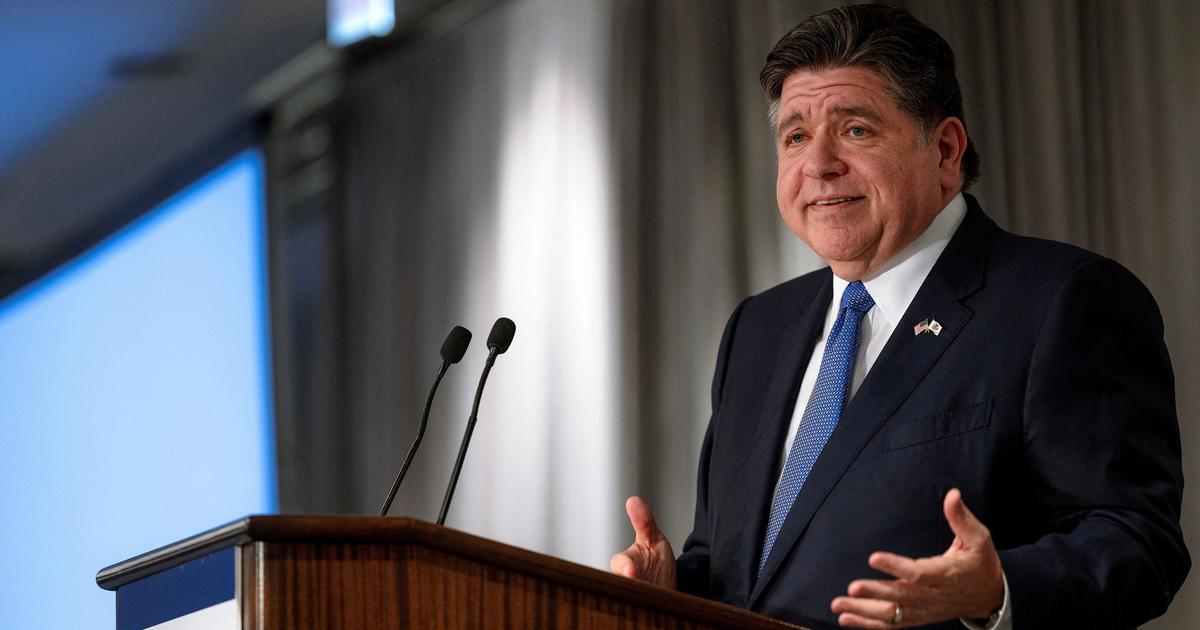
So I called up the only national figure who has both talked openly about his own treatment and taken concrete steps to expand coverage of the drugs to include weight loss: Illinois Gov. JB Pritzker.
Pritzker was diagnosed with Type 2 diabetes in 2024 and began taking insulin. A doctor added a GLP-1 to his treatment protocol a few months later. He’s since lost about 80 pounds and no longer takes insulin.
He was feeling good when we spoke this week: He said he has more energy, he goes for walks, and he’s stepped off a lifelong “rollercoaster” of struggling with his weight.
“When I think about all the ill effects of obesity across the population, and the costs that come with it — and I’m talking about personal cost as well as financial cost — it feels to me like we may have stumbled onto something,” he marveled. “As the price drops, we really ought to be offering this to everyone.”
Illinois extended its coverage of the drugs — from covering them for just diabetes to also covering them for obesity — for state employees in 2024. About 32,000 Illinois state employees and their family members are currently on the drugs, at a total cost of $149 million — a sum that Pritzker’s office says makes up 18% of the state’s prescription budget. For perspective, 41% goes to coverage of other brand-name specialty drugs taken by 6,500 employees.
GLP-1s touch nerve centers of US healthcare politics, from populist fury at big insurers and pharmaceutical companies to worries about government spending and a growing awareness of the toll of chronic illness.
But even as President Donald Trump pushed Eli Lilly and Novo Nordisk to lower prices and states, the 2028 campaign, which effectively begins after the midterms next week, will be the first presidential race during which the drugs will no longer be a novelty.
Pritzker hasn’t committed to running in 2028, and he’s not ready to make sweeping political claims or to push private companies to cover the drugs.“If the cost savings bear themselves out, then I think you can campaign on it,” he said.
The policy questions around GLP-1s are red-hot in state Medicaid and health plans — and in corporate boardrooms, where CEOs and human resources executives are balancing demand from employees with a hit to the bottom line.
Depending on expansion criteria, more than 40% of Americans under age 65 with private insurance could be clinically eligible for GLP-1s, a 2024 KFF study found.
Those costs would add up: Americans taking a GLP-1 spend an average of $1,528 per year on their medication, including those with insurance coverage and without it. For cash payers, the cost can be far higher. Novo Nordisk, which makes Wegovy and Ozempic, advertises list prices ranging from $149 per month to $399 per month, depending on the dose.
This year, seven states that expanded Medicaid coverage of GLP-1s for weight loss either dropped the benefit or added restrictions to limit eligibility. (Illinois did not extend coverage to Medicaid enrollees.) Medicaid cuts passed in a 2025 tax bill set to take effect next year are expected to exacerbate states’ problems.
A key question is time: When does better health save healthcare money? The median job tenure in the US is about four years, while the federal government evaluates health outcomes on a 10-year timetable.
Pritzker said his state is carefully monitoring the savings GLP-1s bring and thinks they can at least defray some of the price tag. (It may help that “in state government, we have quite a lot of people who stay for a reasonably long period of time,” he said.)
Others argue that narrow actuarial questions are a distraction from the larger political issue. “We borrow against our future for far worse reasons than the health of our citizens,” the CEO of the direct-to-consumer health care company Ro, Zachariah Reitano, told me.
The cost of the drugs there and in the private market limits their use, the philanthropist and former energy trader John Arnold notes.
“Drugs don’t work if people can’t access them. This class of drugs should be broadly available at a fair price,” he said.
About 32 million Americans take GLP-1s, a higher number than there are American Jews and Muslims combined. About twice as many Americans take drugs as pay for artificial intelligence subscriptions.
Many are paying out-of-pocket sums comparable to expenses like gasoline. (I pay Eli Lilly $454 a month for 30 milligrams of Zepbound and some small needles, and would certainly be receptive, as a voter, to Pritzker’s or, say, JD Vance’s plan to save me a few bucks.)
And the politics of GLP-1s are unsettled. Pritzker rolled them out quietly, and it seems possible that voters concerned about the growing cost of government (not to mention the small but influential minority of thin people) may have qualms about broader expansions.
But it’s also obvious that anyone seeking the American presidency in 2028 will have to figure out a response to the challenging policy questions around the jabs. This is particularly true in states like West Virginia, Kentucky, Louisiana, Oklahoma, and Texas, where medication usage (and diseases like obesity and diabetes) are among the highest in the country.
People active in the space have some suggestions: Arnold called on Congress to block loopholes Novo Nordisk and Eli Lilly could use to delay competition from generic GLP-1s. He also noted that the most obvious and effective solutions, like mandating public and private programs to cover GLP-1s for obesity, will be expensive.
Ro’s Reitano suggested using the government’s scale to negotiate lower prices, and to structure programs that pay for patients staying on the treatment, not just starting it, as much of the health value disappears when patients stop.
John Puri argued in National Review that the government should stay out of covering GLP-1s —because the private market is working to bring down cost in “a real-time experiment in what happens when a revolutionary treatment runs outside traditional payment systems.”
Unlike other blockbuster drugs, multiple companies introduced versions, which is both creating competition now and will likely lead to much lower prices in the 2030s when generics become available.
