272 districts across India under scanner as govt targets drug-free status by 2029
As the BJP and Aam Aadmi Party (AAP) trade blame over Punjab’s persistent drug problem, the Centre has identified 272 vulnerable districts across India, of which 73 have been classified as ultra-sensitive under the national anti-drug framework.
Six of the ultra-sensitive districts are in Punjab, including Gurdaspur, Amritsar, Tarn Taran, Ferozepur, Fazilka and Ludhiana. While most of the districts identified in the state are along the international border, Ludhiana is located in Punjab’s hinterland, that it is away from the international border.
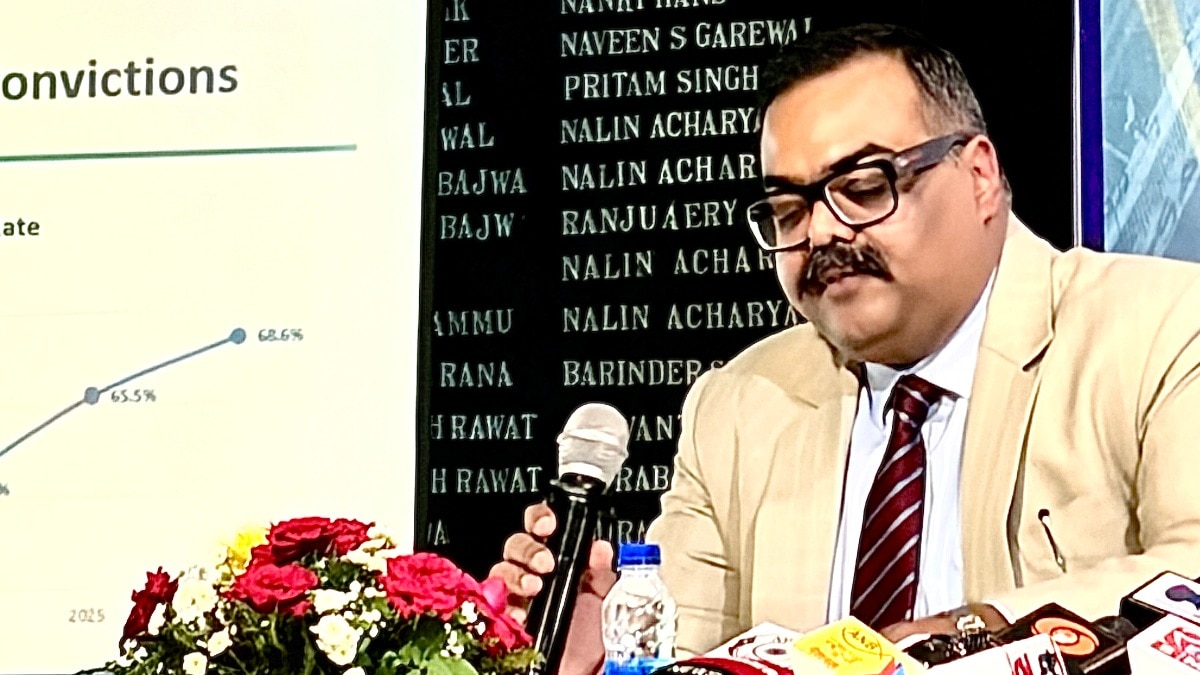
The details emerged during the first in a series of awareness workshops under the “Vartalap” programme being held under the Nasha Mukt Bharat (Drug-Free India) campaign in Chandigarh.
The session was led by Ministry of Home Affairs spokesperson Raj Kumar and Amanjit Singh, Zonal Director of the Narcotics Control Bureau’s Chandigarh Zone, who outlined the Centre’s national roadmap to tackle drug trafficking and substance abuse.
In September 2026, Union Home Minister Amit Shah launched the Nasha Mukt Bharat 2029 roadmap, a three-year mission-mode plan aimed at making India drug-free by 2029.
Officials at the Chandigarh workshop highlighted several targets under the roadmap, including dismantling 100 major drug networks, bringing back 100 narcotics-related fugitives and reaching 50 crore citizens through awareness and outreach programmes.
The plan also targets financial investigations into 100 major cartel cases by December 2027.
Authorities said technology and data analysis will play a key role in identifying and disrupting drug networks. This includes using CCTNS data analysis and an integrated data fusion centre at the NCB to map drug networks, hotspots and trafficking methods.
The roadmap also envisages a stronger regulatory framework for the digital tracking of pharmaceutical drugs.
Although the roadmap is national in scope, the BJP has repeatedly linked its anti-drug campaign to Punjab, claiming that a BJP government in the state could eliminate the drug problem within two years.BJP, AAP TRADE BLAME OVER PUNJAB DRUG MENACE
The Centre’s anti-drug push comes amid an increasingly sharp political exchange between the BJP and the AAP government in Punjab, with both sides blaming the other for the continuing drug menace.
Punjab BJP president Kewal Singh Dhillon has attacked the state government’s “Yudh Nashian Virudh” (War Against Drugs) campaign, calling it a failure.
Dhillon has pointed to rising drug-related deaths and alleged that the situation has worsened despite the Punjab government’s claims about its crackdown.
Punjab Chief Minister Bhagwant Mann, however, has argued that the state’s drug problem cannot be tackled by focusing only on Punjab because major supply routes originate outside the state.
Mann has claimed that nearly 80 per cent of drugs coming from Pakistan have been stopped because of the state government’s crackdown. According to him, the focus has now shifted towards inter-state routes, particularly those linked to Gujarat, Madhya Pradesh and Rajasthan.
Mann has also targeted the BJP over major drug seizures at Mundra Port in Gujarat, arguing that if the port were properly secured, the drug problem in Punjab would be “almost eliminated”.
He has further said Punjab Police have recovered drugs from BJP-ruled states based on intelligence inputs. The state government has also installed its own anti-drone systems along the border, according to Mann.CHEEMA TARGETS PREVIOUS SAD-BJP GOVERNMENT, BSF
Punjab Cabinet Minister Harpal Cheema has placed the blame further back, alleging that the roots of the state’s drug problem can be traced to the SAD-BJP government that ruled Punjab from 2007 to 2017.
Cheema claimed that the term “chitta” gained currency during that period and alleged that reports had emerged of drugs being transported in government vehicles.
He also alleged that an Enforcement Directorate officer was transferred after beginning a probe into the drug trade.
Cheema separately questioned the effectiveness of the Border Security Force (BSF) in stopping cross-border smuggling, arguing that the force, which guards the India-Pakistan border, has not been able to fully control the movement of drugs into the state.
He also cited Gujarat’s prolonged BJP rule, saying the state has been under the party’s government for nearly three decades while a significant volume of drugs is entering the country through Gujarat.
The competing claims come as the Centre’s anti-drug machinery continues to identify vulnerable areas, strengthen surveillance and set targets for dismantling trafficking networks under the Nasha Mukt Bharat 2029 roadmap.- EndsWith inputs from Kamaljit Sandhu Published By: Tanu jainPublished On: Sep 16, 2026 17:18 IST