28 militants killed after crossing from Pakistan to carry out attacks: Afghanistan
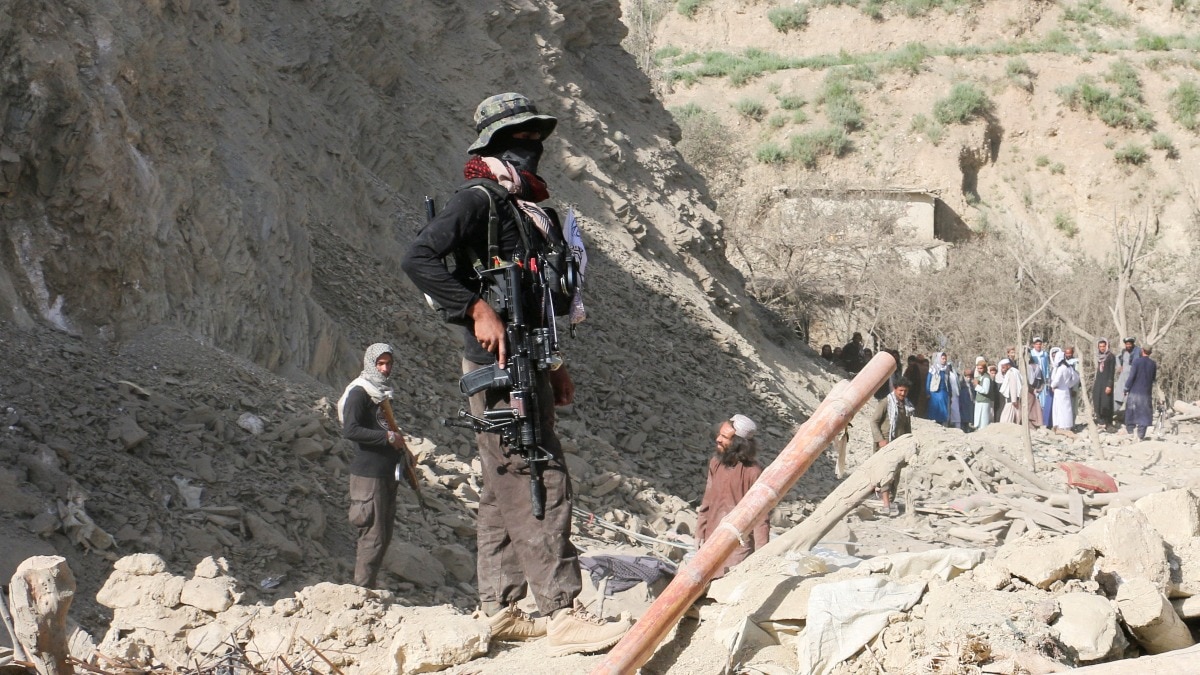
Afghanistan said on Sunday that its forces killed 28 men and wounded another 32 after an armed group crossed into the eastern province of Nuristan from Pakistan, adding a new flashpoint to already deteriorating relations between the two neighbours.
Afghanistan's defence ministry said they entered Kamdesh district, close to the Pakistani border, on Saturday with the intention of carrying out attacks. Afghan forces launched an operation against the group, killing 28 of its members, the ministry said. It claimed that most of those killed were former members of Afghanistan's security forces who had served under the government ousted by the Taliban in 2021.
The ministry also alleged that the fighters had been backed by Pakistani militias and that Pakistani armed personnel coordinated with them before withdrawing once fighting began. According to the Afghan account, the surviving fighters eventually fled towards Pakistani militia positions.
The allegations are significant because Kabul is not merely accusing Pakistan of failing to prevent an armed group from crossing the border. It is alleging direct involvement by Pakistani security and intelligence structures in organising, training and facilitating the fighters.
Pakistan's Information Ministry rejected the allegations in a post on X, calling them "frivolous, baseless and devoid of any truth". It denied that Pakistani security forces or intelligence agencies were involved in the clashes in Nuristan, recruited or trained former Afghan security personnel, or facilitated Islamic State or other militant groups operating in Afghanistan.
Afghanistan's defence ministry alleged that Pakistani intelligence officers had taken former Afghan security personnel into Pakistan under the pretext of providing them assistance. It said they were subsequently trained and sent towards Nuristan.
The claim comes at a particularly tense moment.
Less than a week earlier, Pakistan carried out airstrikes inside Afghanistan, saying it had targeted militant hideouts. Islamabad has repeatedly accused Afghanistan's Taliban government of allowing armed groups operating from Afghan territory to launch attacks inside Pakistan.
Kabul has consistently rejected those accusations.
The latest confrontation therefore reflects a cycle that has become increasingly difficult for both sides to contain: Pakistan accuses Afghanistan of harbouring militants, Afghanistan accuses Pakistan of violating its territory and supporting hostile forces, and military action follows.
The immediate backdrop was a fresh round of Pakistani airstrikes on September 21. Islamabad said the strikes killed 28 militants. Afghan officials disputed that account and said civilians were among those killed.ONCE ALLIES, NOW AT WAR
The deterioration in relations is striking because Pakistan initially viewed the Taliban's return to power in Afghanistan in 2021 as a development that could work in its favour.
Then-Prime Minister Imran Khan welcomed the Taliban takeover, saying Afghans had "broken the shackles of slavery."
But the relationship quickly became more complicated.
According to news agency Reuters, militant attacks inside Pakistan increased, particularly in the country's north-west and south-west. Islamabad began accusing the Taliban government of allowing militants to use Afghan territory as a base from which to operate against Pakistan.
Pakistan has also accused its long-standing rival India, alongside the Taliban authorities, of providing militants with money, weapons and safe haven. Both Kabul and New Delhi have rejected those allegations.
The dispute eventually spilled directly across the border.
Pakistan carried out an airstrike on Kabul in October last year, with Pakistani security officials saying the operation targeted the head of the Tehreek-e-Taliban Pakistan, or TTP. The TTP later said its leader had survived.
Pakistan has also accused the Afghan Taliban of hosting Baloch insurgents, which is a separate armed movement seeking independence for Balochistan in southwestern Pakistan.CEASEFIRES HAVE FAILED TO SOLVE THE CORE DISPUTE
The two countries have attempted to halt the violence before, but previous agreements have failed to address the central disagreement over militant groups operating along the border. A ceasefire signed in Doha in October eventually broke down. Fighting intensified again in the spring, when shelling and airstrikes killed hundreds of people.
One of the deadliest incidents involved a Pakistani airstrike on Kabul that the Afghan Taliban said hit a drug rehabilitation centre. More than 400 people were killed by the Afghan side.
Islamabad defended the operation, saying it had "precisely targeted military installations and terrorist support infrastructure".
Chinese-mediated talks subsequently produced another ceasefire in March. The agreement helped bring down the immediate level of violence but did not resolve the dispute over militant sanctuaries and cross-border attacks.
That unresolved issue has now returned to the centre of the conflict.TWO ATTACKS IN PAKISTAN REIGNITED THE CRISIS
The latest escalation followed almost three months of relative calm along the roughly 2,600-km (1,600-mile) border. That lull ended after two major militant attacks in northwestern Pakistan last week left at least 30 people dead, including 15 police officers and six soldiers.
In the first attack, at least eight militants, including suicide bombers, attacked a police facility in Kohat district on Friday. Twenty-four people were killed, among them 15 police officers.
The Shura Ittehad-ul-Mujahideen, led by militant commander Hafiz Gul Bahadur, claimed responsibility.
Two days later, fighting between militants and Pakistani security forces in neighbouring Hangu district killed four soldiers and two officers.
Pakistan said the attacks were linked to militants operating from Afghanistan and responded with airstrikes across the border. Kabul denied sending drones or militants into Pakistan and said seven Afghans killed in the strikes this week were civilians.advertisementWHO ARE THE GROUPS FIGHTING PAKISTAN?The security picture is complicated by the presence of several militant organisations in Pakistan's north-west. They have different histories and ideologies, but share opposition to the Pakistani state.
The most prominent is the Tehreek-e-Taliban Pakistan, commonly known as the Pakistani Taliban.
The TTP was formed in 2007 by an alliance of Islamist groups, many of them from the Pashtun communities of northwestern Pakistan. The group drew inspiration from the Afghan Taliban, which seized control of Afghanistan in the 1990s before being ousted by a US-led invasion in 2001.
The two movements are separate organisations and have different leadership structures. But their fighters developed close ties during the Afghan Taliban's two-decade insurgency against US and NATO forces.
TTP fighters fought alongside the Afghan Taliban in Afghanistan, while Afghan fighters also found shelter in Pakistan. Those relationships have survived the Taliban's return to power in Kabul.
Pakistan has carried out repeated military operations against the TTP inside the country, with limited success. In recent years, attacks attributed to the group have largely focused on Pakistani security forces, although civilians have also been killed.
The Shura Ittehad-ul-Mujahideen, which claimed the Kohat attack, has its own history in the region.
Its leader, Hafiz Gul Bahadur, previously hosted al Qaeda and Arab Islamist fighters in the border region, according to Abdul Basit, an analyst at Singapore's S. Rajaratnam School of International Studies.
The group initially focused its attacks on US and NATO forces operating in Afghanistan. Its relationship with Pakistan changed after the Pakistani military launched a major offensive around 2015 against the group's safe haven in North Waziristan.
The offensive pushed many of its fighters into Afghanistan.
That history helps explain why the current crisis cannot be reduced to a simple dispute between two governments. Militants have operated across the porous frontier for decades, alliances have shifted, and fighters displaced by military operations have repeatedly moved between Afghanistan and Pakistan.- EndsWith inputs from agencies