3,607 Ship Accident Victims Spotlight Vessel Seaworthiness and Cargo Safety Concerns
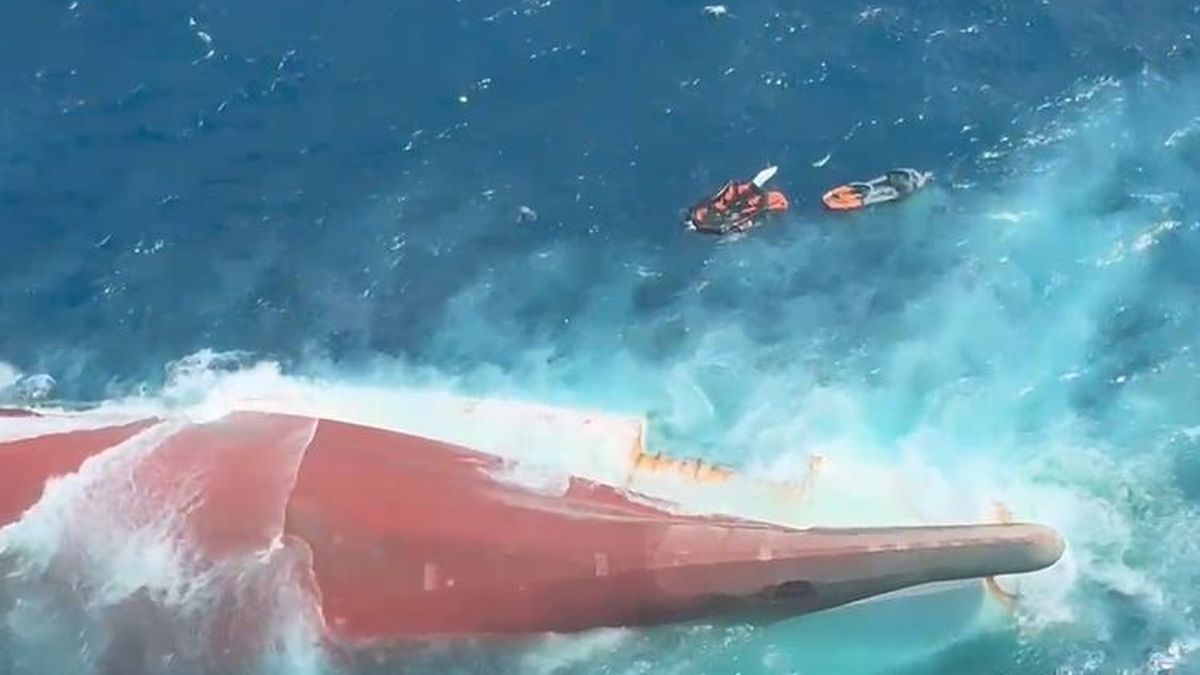
JAKARTA, KOMPAS.com - The high number of ship accident victims throughout 2026 has once again placed maritime safety at the forefront as a critical issue demanding serious attention.
Basarnas data records that from January to August 15, 2026, there were 3,607 victims of ship accidents. This figure includes 3,165 people rescued, 239 fatalities, and 203 still listed as missing.
These numbers demonstrate that maritime safety is not only about the condition of vessels but also involves seaworthiness, cargo, crew readiness, supervision, weather conditions, navigation systems, and the preparedness of rescue operations when accidents occur.
UNSPLASH/RED SHUHEART Illustration of a ferry ship.
“This National Transportation Day should not be limited to ceremonial celebrations but rather serve as a platform for fundamental corrections in the direction of national transportation policy. There are several crucial issues that must become the primary focus and serious concern of the government moving forward,” said Djoko Setijowarno, an academic from the Civil Engineering Program at Unika Soegijapranata and Advisor to the Indonesian Transportation Society (MTI), in a statement on Friday (18/9/2026).
He stated that National Transportation Day is a critical annual moment to evaluate how fairly and safely the transportation system has served the public.
This occasion should transcend ceremonial purposes and become a stage for essential reassessment of national transport policy direction.
According to Djoko, several matters require government focus, including the sustainability of public transport subsidies, the management of road logistics, 3TP area connectivity, and transportation safety reforms.
KOMPAS.com/ANDI MUHAMMAD HASWAR One of five life rafts from KM Virgo Transport 8 found by residents in Sungai Perlu Village, Seruyan, Central Kalimantan, Thursday (17/9/2026).
Djoko believes that maritime safety should become a top priority given the high rate of ship accidents.
He said safety reforms are needed not only in maritime sectors but also in rail and road transportation.
According to him, safety must be tackled comprehensively, involving improvements in infrastructure, supervision, regulation, and community education.
“Maritime safety must receive serious government attention due to the high number of ship accidents,” Djoko emphasized.
In his view, transportation safety must be an ongoing policy evaluation component. This includes ensuring public transport services operate safely and are well-integrated.
Djoko also highlighted road safety, which continues to face high accident rates.
He recommended collaboration between the Ministry of Transportation and the Ministry of Primary and Secondary Education to develop a transportation safety curriculum.
Beyond safety, Djoko underscored the necessity for the government to strengthen the sustainability of public transport subsidies.
He argued that central government intervention through the Buy the Service (BTS) scheme at regional levels should be bolstered and guaranteed with long-term budget certainty.
He noted that capital and operational subsidies should ideally prioritize road and mass rail transit rather than be redirected as incentives for private electric vehicles, which could potentially worsen traffic congestion.
Out of 552 local governments in Indonesia, only 46 or around 8 percent have modern public transportation, according to Djoko’s data.
Maritime safety issues resurfaced prominently after the KM Virgo Transport 8 accident.
KOMPAS.com/DIKI FEBRIANTO Commercial ship traffic flow at Tanjung Perak Port after KM Virgo Transport 8 sank, Monday (14/9/2026).
During his visit to the Integrated Post for the KM Virgo Transport 8 accident at Tanjung Perak Port, Surabaya, on Monday (14/9/2026), DPR RI member and Central MTI Advisory Board Chairman, Bambang Haryo Soekartono (BHS), highlighted several critical aspects requiring thorough investigation.
According to BHS, evaluating the age of a ship alone is insufficient.
Capacity and cargo weight, vessel stability, human resources, and maritime safety systems must all be part of the assessment.
“The evaluation of the KM Virgo Transport 8 accident must be comprehensive. The notion that the accident occurred because the ship was old is not a valid basis to conclude the cause of the accident,” Bambang stated.
BHS emphasized that presuming accident causes solely based on the vessel's age is incorrect.
He cited examples of old ships still operating in other countries.
In Sweden, the M/S Enköping, built in 1868, is approximately 158 years old and is regarded as the world's oldest still-operating passenger ship.
In Denmark, the S/S Hjejlen, built in 1861, is recognized as Denmark's oldest steamship and the world's oldest coal-fired paddle steamer still operating with its original engine, reaching around 165 years in 2026.