30 ships carrying medicines stuck at Durban port as shortages hit public hospitals - IOL
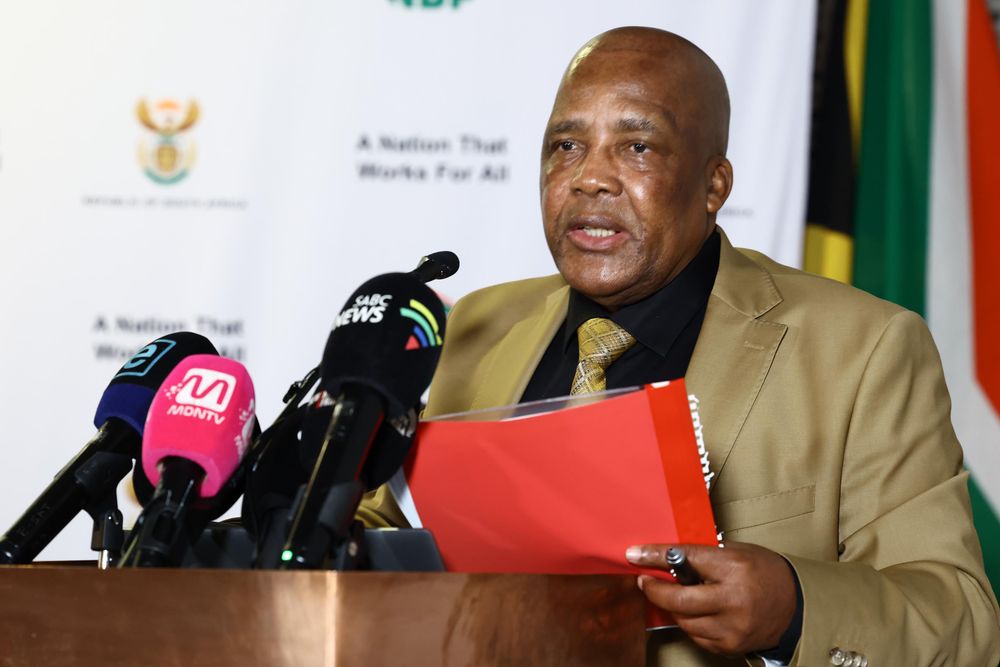
Health Minister Aaron Motsoaledi says congestion at the Durban port, where about 30 ships carrying medicines are waiting to be processed, is worsening shortages in public healthcare facilities.
Congestion at the Durban port, where about 30 ships carrying medicine supplies are waiting to be processed, is worsening shortages in South Africa's public healthcare system, Health Minister Dr Aaron Motsoaledi has said.
Motsoaledi said the country imported about 95% of its medicines, leaving supplies vulnerable to international shipping delays and disruptions affecting pharmaceutical manufacturing.
Speaking to Newzroom Afrika, he said the shortages were affecting the entire healthcare system, not only psychiatric medication, with five factors contributing to the problem.
“The drug shortage which you call stock out, it's not something that is static,” he said, explaining that availability could change from one facility to another and even within the same day.
He said suppliers had informed the department that medicines ordered from overseas had arrived in South Africa but remained on ships at the Durban port.
A new information technology system introduced through a partnership at the port had contributed to operational delays.
Motsoaledi said he had approached the Transport Minister, who was working with Transnet to identify and prioritise containers carrying medicines. He hoped the intervention would bring some relief by the end of the week.
However, he cautioned that clearing the port backlog would not resolve all the shortages.
Another contributing factor was disruption around the Strait of Hormuz, which was affecting the supply of active pharmaceutical ingredients (APIs) used to manufacture medicines. South Africa does not manufacture its own APIs and relies on international suppliers.
He also blamed pharmaceutical manufacturers for failing to comply with good manufacturing practice standards.
Motsoaledi said the South African Health Products Regulatory Authority (SAHPRA) had increased inspections and was taking action against companies failing to meet the required standards. These companies could lose a production line or have their entire manufacturing operations shut down.
The department had allowed provinces to source medicines from alternative suppliers when contracted companies could not fulfil orders.
South Africa has 96 companies contracted to supply medicines, including 11 supplying antiretroviral (ARV) medication.
“When a company cannot supply, we are allowed by law to look elsewhere, and that's what the provinces have been allowed to do,” Motsoaledi said.
He also confirmed that suppliers had blocked accounts involving the Eastern Cape, Northern Cape and North West over unpaid invoices.
The department's director-general had given the three provinces until the end of the week to settle their outstanding payments. Motsoaledi said he would escalate the matter to the provincial premiers if they failed to do so.
He pointed out, however, that even provinces that had paid their suppliers were experiencing shortages because of the wider supply chain problems.
Motsoaledi said government was working to strengthen local pharmaceutical manufacturing and reduce the country's dependence on imported medicines.
The Department of Health was working with the departments responsible for science and technology, and trade and industry, on improving local production.
He said President Cyril Ramaphosa had opened a unit at the Council for Scientific and Industrial Research (CSIR) the previous month to work towards manufacturing certain medicines locally.
Developing the capacity to manufacture APIs in South Africa would be a significant breakthrough, he said.
Addressing concerns about patients being left without treatment, Motsoaledi said provinces were required to maintain a three-month stockpile of ARVs.
The system had been in place for about 15 years, with approximately 6.1 million people receiving ARV treatment in South Africa.
“If there's any facility that is short of ARVs, it will just be a logistical problem, not that there are no ARVs in the country,” he said.
He said doctors had also been advised to prescribe alternative medicines where appropriate.
Motsoaledi cited furosemide, also known as Lasix, saying that although the 100mg strength was unavailable, the 50mg and 25mg strengths could be combined to provide the required dosage.
The department had issued circulars to provincial health departments and healthcare facilities outlining which medicines could be substituted.
He acknowledged that patients could become frustrated when familiar medicines were unavailable, but said alternatives could help mitigate the shortages.