300,000 Iranians attend biggest pro-regime rally since war began as Tehran recruits new ‘volunteer’ forces
Hundreds of thousands of Iranians took to the streets of Tehran on Friday in a massive government-organized display of defiance as they pledged their readiness to take up arms in the largest demonstration since the war began in February.
Tehran is seeking to project national unity as its economy struggles under the weight of a US naval blockade and fresh sanctions. The Iranian government simultaneously reported launching a new attack on a commercial vessel in the strategic Strait of Hormuz, a vital maritime passage it has attempted to control since the war began.
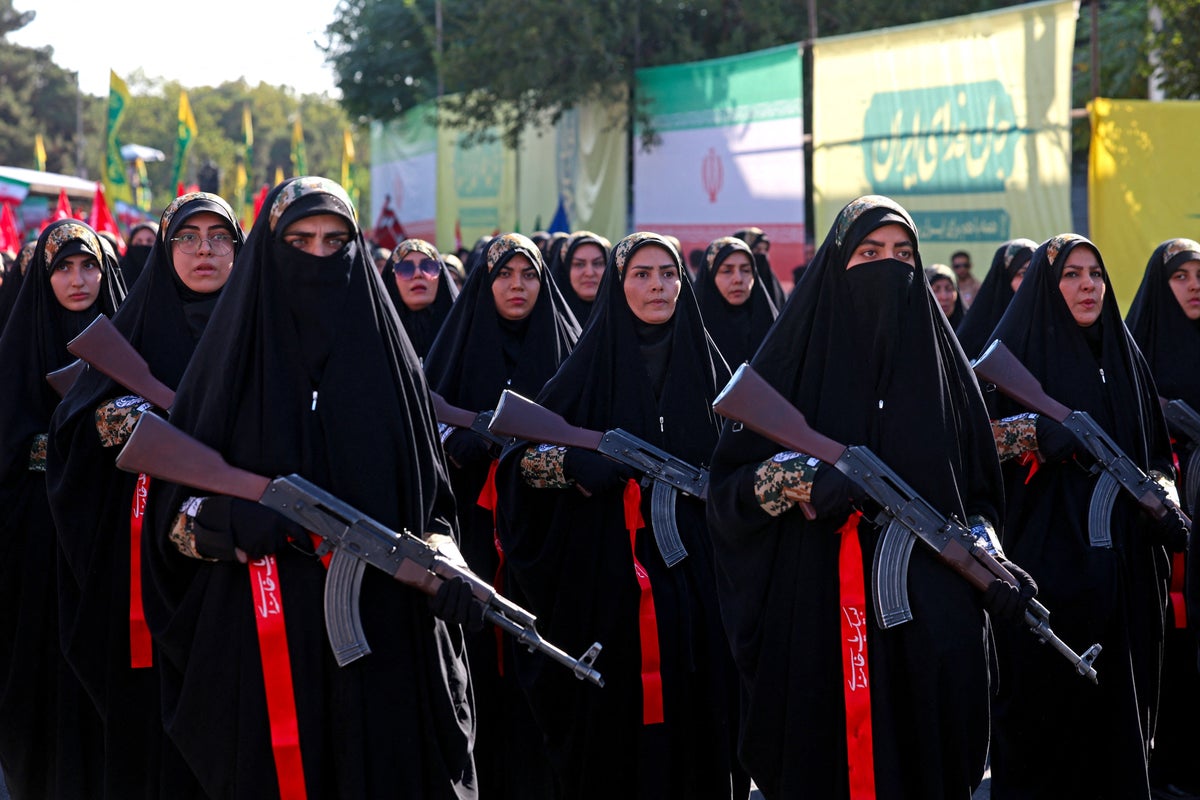
Varying reports emerged regarding the headcount of volunteers enlisting for limited military instruction to safeguard the nation in an initiative dubbed "Janfaday-e Iran," or the "ones who sacrifice their lives for Iran." Dressed in combat uniforms and waving flags, participants marched through central Tehran as onlookers cheered.
For days, state media channels have urged citizens to join the effort, broadcasting that training with assault rifles will commence shortly. These new recruits are expected to provide an extra layer of security alongside the paramilitary Revolutionary Guard and the Basij militia, which has previously played a central role in quashing anti-government demonstrations.
Gen. Hassan Hassanzadeh, head of the Revolutionary Guard in Tehran, stated on national television that over 600,000 individuals had signed up, predicting eventual participation would surpass 1 million. State media estimated Friday morning's crowd size at over 300,000 people on the streets.
Addressing the rally as it got underway, newly appointed Basij commander Hossein Taeb declared that volunteers would stand prepared for a "full-fledged defense," adding that similar demonstrations would soon take place in other cities.
Taeb further asserted that the new trainees would become a "nightmare" for Iran's enemies, speaking before an audience that included President Masoud Pezeshkian, senior defense officials, and military commanders.
Demonstrators trampled American and Israeli flags while chanting slogans such as "Death to America" and "Death to Israel."
"I am here to tell (U.S. President Donald) Trump that we Iranians have no fear about his threats against our homeland," said 24-year-old Marzieh Afaghi, who attended the demonstration alongside her husband and toddler. "No one in history could invade Iran and remain there."
The event also functioned as an exhibition of Iranian military capabilities, featuring anti-aircraft hardware alongside female Guard members wearing black headscarves stationed behind truck-mounted heavy machine guns.
Authorities also showcased unmanned aerial vehicles that have been deployed against maritime shipping in the Strait of Hormuz, where ongoing attacks have severely disrupted regional crude oil and natural gas exports to global markets.
Iranian state television announced an attack on the Trend, an oil tanker flying the flag of Togo, citing an "illegal attempt" to navigate the Strait of Hormuz. The U.K. Maritime Trade Operations center reported that a vessel was struck by a projectile, igniting an onboard fire that crew members managed to put out.
In a separate briefing, the UKMTO reported that US military-escorted ship transits off Oman had averaged 24 daily over the preceding week, though total maritime traffic remains roughly 90% lower than before the war.
The mobilization indicates that hard-liners within the leadership, such as Taeb, are strengthening their ability to suppress potential future internal protests against the theocracy.
In January, prior to the outbreak of war, Iran experienced some of the largest nationwide protests in its history, which began over economic hardship before expanding into broader grievances. Activists stated that a security crackdown killed more than 7,000 people and resulted in the detention of tens of thousands.
By May, official figures claimed that over 30 million people out of Iran's total population of roughly 90 million had registered online or at public gatherings to lay down their lives for the theocracy, an assertion that could not be independently confirmed.