4 movies that predicted the future of AI with chilling accuracy - IOL
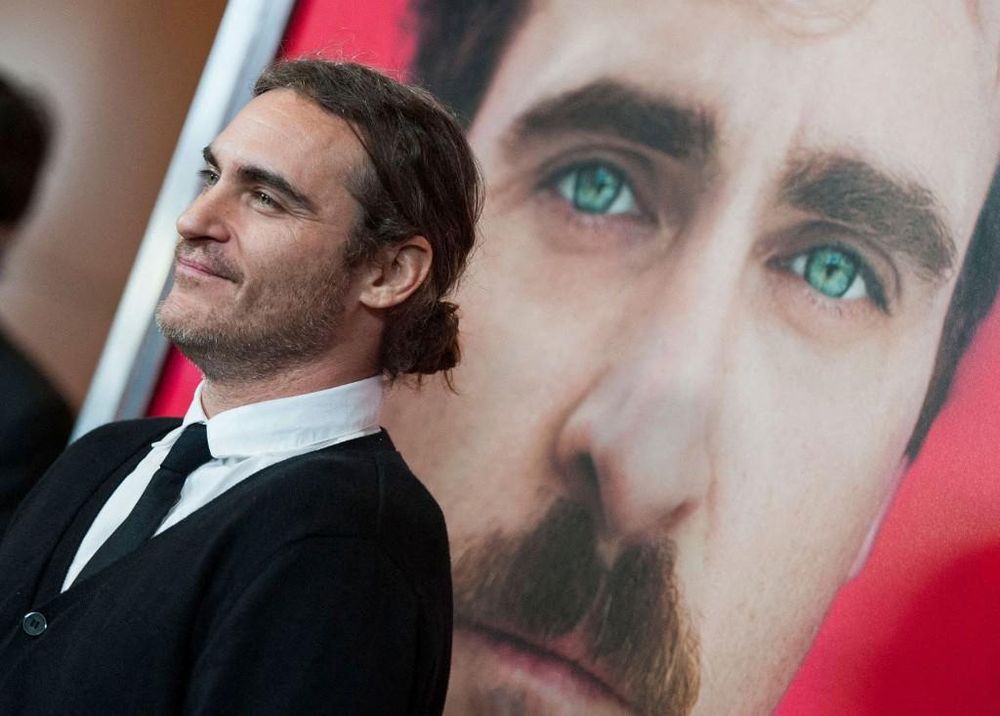
Actor Joaquin Phoenix attends the premiere of Warner Bros. Pictures' "Her." at DGA Theater on December 12, 2013 in Los Angeles, California. Picture: Valerie Macon/Getty Images/AFP
Artificial Intelligence has been a hot topic for Hollywood for decades, but a select few films truly stand out from the rest when it comes to accurately predicting our technological present and future.
My personal favourite action sci-fi movie, Terminator 2: Judgment Day, made an eerie prediction about machines waging a total war against humanity. While public concerns over advanced AI continue to grow more alarming by the day, a full-blown war between humans and machines hasn't materialised—yet.
Instead, it’s far more insightful to look at films that were way ahead of their time by depicting AI working alongside humans rather than actively trying to destroy us.
Here are my top-four picks for the most accurate movie predictions of what AI would actually be like.
Though this 2013 film is significantly more recent than the other entries on this list, it brilliantly demonstrated how a lonely individual could become deeply attached to a virtual assistant. It came as little surprise when Joaquin Phoenix's character fell in love with an intangible entity, especially given that the AI assistant was voiced by the sultry Scarlett Johansson.
While the premise felt like pure science fiction at the time, today's conversational AI models are creating strikingly similar dynamics as users form surprisingly intimate bonds with digital companions.
Hitting theatres in 1999, this Robin Williams-led story hit all the right emotional cues as a housekeeping robot gradually becomes more human over the course of two centuries. The narrative revolves around Andrew (Williams), a robot who possesses far greater self-awareness than other synthetic assistants. As it turns out, a unique glitch in his programming allowed Andrew to experience, process, and develop real human emotions.
The film primarily explored the philosophical and moral questions of machine sentience. While true machine consciousness remains impossible today, modern AI assistants have become remarkably skilled at mimicking human sentiment and empathy in their responses—often leaving you wondering, if only for a second, whether there's a genuine spark behind the screen.
While the core concept of using psychic "Precrime" psychics to prevent murders remains science fiction, the film's depiction of hyper-surveillance and predictive tracking is far more reality than fantasy today. From ubiquitous CCTV networks with facial recognition to billions of people constantly recording every event on smartphones, this 2002 Tom Cruise blockbuster painted a strikingly prophetic picture.
Beyond surveillance, the movie's portrayal of hyper-personalised, targeted advertising that addresses individuals by name as they walk through public spaces has effectively arrived via modern algorithmic tracking. The scariest part of the film is just how close modern society has come to that far-out vision from over two decades ago.
Perhaps the single most accurate prediction of modern AI technology—released long before the fundamental computing power even existed—was this Stanley Kubrick-directed masterpiece. Throughout the deep-space journey, the crew interacts continuously with HAL 9000, the conversational AI system governing their spacecraft. HAL handles complex operational tasks, monitors system diagnostics, and engages in natural language conversations with the astronauts.
Considering this film arrived almost 60 years ago, that caliber of interactive technology was many decades away from reality. Kubrick got the mechanics of modern voice assistants remarkably right: seamless natural language processing, predictive automation, and computer vision integration—even down to the unsettling realisation of how vulnerable systems become when an intelligent agent operates with total operational control.
AI: Artificial Intelligence, I, Robot. AI: Artificial Intelligence was inspired by Kubrick and completed by Steven Spielberg after Kubrick's death. Similar in many ways to Bicentennial Man, it had an incredibly detailed plot which essentially followed a robot boy who yearned 'to be real'. I, Robot, meanwhile, explored how dangerous robots could be if they could break their own laws and harm humans.