
7 Signs Republicans Are Worried About the Midterms - Newsweek
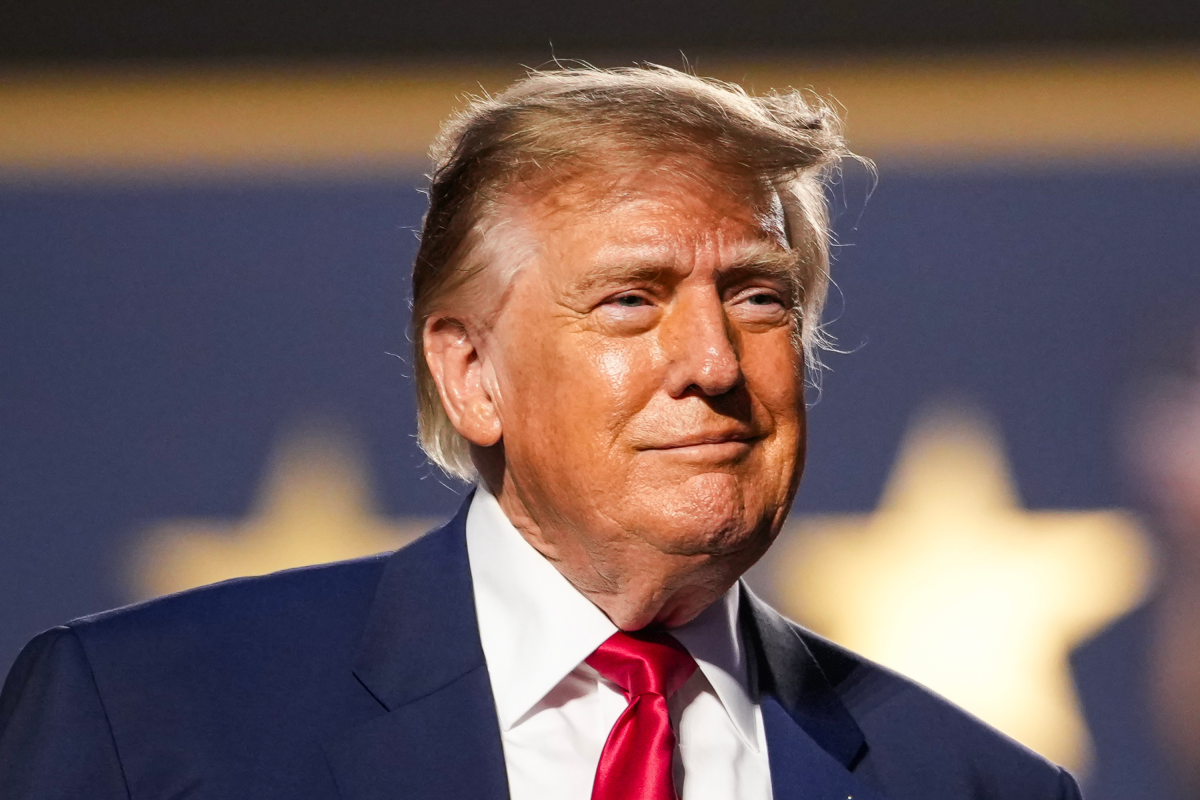
Republicans are intensifying their midterm campaign, sending President Donald Trump and Vice President JD Vance into unexpectedly competitive states and committing millions in advertising as polls point to a close fight for Congress.
Control of both chambers is at stake, leaving little room for the GOP to absorb losses. Voters could decide whether Trump has a Republican Congress for the final two years of his term.
While no single move proves the party expects defeat in November, seven recent developments show the GOP devoting money, presidential attention and increasingly urgent appeals to defending its control of Washington.
Natalie Baldassarre, the Republican National Committee's (RNC) national press secretary, said the party had amassed a record campaign war chest, staged its first midterm convention and adopted new voter-turnout strategies because it understood the historical challenges of a midterm election.
“The stakes this November couldn’t be higher, and Republicans are doing whatever it takes to protect and expand our majorities,” she told Newsweek in an emailed statement.
And White House spokesman Davis Ingle has repeatedly insisted that Trump "is working tirelessly to create jobs, cool inflation, increase housing affordability," saying that the President has "already made historic progress not only in America but around the world, and this is just the beginning as his agenda continues taking effect."
Midterms often punish the president’s party, but six developments suggest Republicans see risks beyond that historical pattern.
None proves panic on its own; together, they show a party devoting money, star power and sharper messaging to defending its position.
Speaking on the All-In Podcast, Vance acknowledged that “there’s a lot of work left to do” before asking voters to “give us another chance” in November.
Rather than relying only on the administration’s record, Vance argued that Democrats would govern badly and urged Americans not to hand them either chamber.
That language suggests Republicans know some voters remain unconvinced by what the party has delivered.
Republicans face an awkward strategic choice.
Former White House press secretary Karoline Leavitt has urged Americans to vote as though Trump were on the ballot, while some candidates in difficult races would prefer to focus on local concerns.
A CBS News survey conducted among 2,460 U.S. adults from September 8 to 11, with a margin of error of plus or minus 2.3 percentage points for the full sample, found that 45 percent of likely voters viewed their congressional vote as opposition to Trump, compared with 28 percent who saw it as support for him.
His endorsement made 48 percent less likely to back a candidate and 21 percent more likely.
Making Trump central could mobilize loyal supporters who do not routinely vote in midterms. But it also risks energizing opponents.
Trump and Vance have started campaigning in places that would ordinarily offer the GOP more comfort.
Trump traveled to North Carolina for Senate nominee Michael Whatley, while Vance went to Kansas to support Senator Roger Marshall.
North Carolina backed Trump in 2024, and Kansas has not elected a Democratic senator since 1932.
Vance also appeared at an RNC midterm rally in Council Bluffs, Iowa, on September 18, campaigning alongside Republican gubernatorial nominee Zach Lahn and urging voters to support the party’s candidates in November.
The Iowa appearance is notable because Trump carried the state by 13 points in 2024, yet its gubernatorial and Senate contests have since become competitive.
Sending the president and vice president into those contests indicates that Republican leaders are not taking historically favorable ground for granted.
Outside groups connected to Trump’s political operation have reserved more than $130 million in advertising for the closing stretch, according to AdImpact figures reported by the Associated Press.
No Going Back accounted for more than $98.5 million, while the Safety and Affordability PAC committed $27 million and MAGA Inc. reserved another $11 million. Much of the money is aimed at closely fought House and Senate contests.
Large expenditures are normal in national elections. Their scale, timing and concentration in vulnerable races, however, show how urgently Republicans are trying to shape the final weeks.
Trump has told voters that higher gasoline costs are a small price to pay for the administration’s actions against Iran, while also predicting that prices will fall.
Drivers have yet to see that promised relief.
The CBS News poll found 73 percent disapproved of Trump’s handling of inflation. Ninety-three percent believed the Iran conflict was making oil and gas prices higher, while 71 percent said Americans should not be willing to pay more at the pump because of the war.
That leaves Republican candidates defending an issue voters encounter whenever they fill their tanks, rather than an abstract economic statistic.
Republicans running in Ohio, Michigan and Texas have supported restrictions on new data centers despite Trump’s enthusiasm for the facilities.
Public opposition helps explain the split. A national University of Massachusetts Amherst Poll, conducted from August 21 to 26, 2026, among 1,000 respondents, found that 65 percent opposed the construction of an artificial intelligence data center in their local community, including 52 percent of Republicans. The survey had a margin of error of plus or minus 3.5 percentage points.
CBS News separately found that 54 percent of likely voters preferred a congressional candidate who opposed local data-center construction, against 15 percent who favored a supporter.
For candidates in tight races, separating themselves from Trump on a tangible local concern may carry less political risk than defending an unpopular national position.
Trump has promised a $5,000 “dividend” to every adult U.S. citizen if Republicans retain both chambers of Congress, but the administration has not produced a detailed funding or legislative plan.
Providing the payment to roughly 245 million adults would cost about $1.22 trillion, while tariff revenue has fallen far short of that amount.
Any payment would also require Congress to authorize and fund it, meaning a Republican victory alone would not trigger the checks.
A Washington Post analysis of more than one million social media posts found that GOP candidates were largely sticking to their own campaign themes rather than amplifying Trump’s proposed payouts, suggesting some Republicans may be reluctant to make the pledge a defining election issue.
Newsweek’s reporters and editors used Martyn, our AI assistant, to produce this story. Learn more about Martyn here.
Contact Newsweek editors on this story: Ben Kelly and Cristina Diciu.


