A bumpy road to Asian Games bronze: Rudrankksh Patil's chaotic journey to Japan
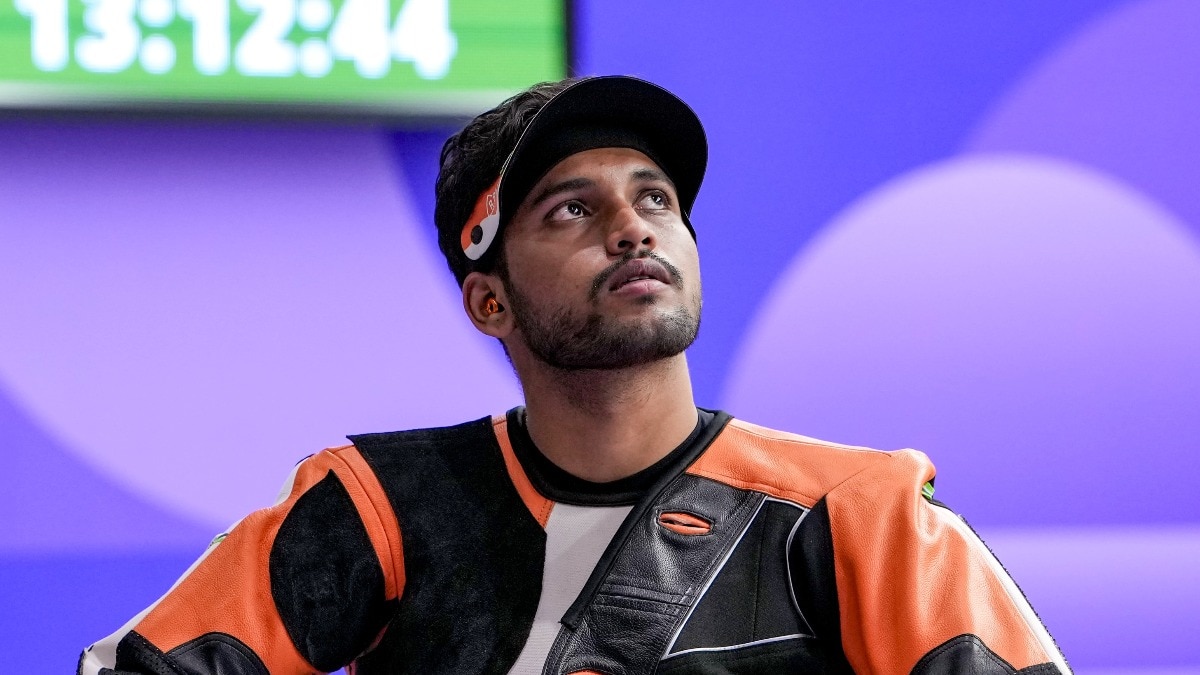
For Rudrankksh Patil, the road to the Asian Games shooting range was anything but smooth.
Before the former world champion won bronze in the men’s 10m air rifle event on Monday, he had endured an emergency landing, a six-hour road journey, a long flight via Hong Kong, a late-night wait for transport, a hotel mix-up and bus journeys that took more than twice as long as promised.
Speaking to select media after his bronze-medal finish, Patil opened up about the ordeal faced by the Indian shooting contingent on its journey from Bhopal to Japan.THE JOURNEY BEGINS
The journey started in Bhopal. Patil and the Indian shooting contingent were travelling to Delhi when their flight ran into trouble and made an emergency landing in Jaipur. From there, the shooters took a car for six hours to reach Delhi.
The following day, they flew to Hong Kong, where they had a six or seven-hour halt before taking another five-hour flight to Japan.
Even after reaching Japan, the wait continued.
“After reaching here, within five minutes everything was cleared. We went to the welcoming centre. It took us three hours to wait for the bus there,” Patil said.
It was around 2 or 3 a.m. when they finally left for the hotel. They reached at around 3:30 or 4.
“After reaching the hotel, we realised that the hotel which we had booked was not our hotel. We only had a couple of rooms there,” Patil said.
The hotel was supposed to be the best accommodation assigned to the contingent, and the coaches questioned why the team was being shifted despite having received confirmation of the original booking.
Patil said the organisers had a system in which one hotel functioned as the main hotel, with other hotels connected to it. Rooms were allocated based on availability, but the system did not work as expected with the reservations.
“It was quite disappointing to know that,” he said.
The team eventually got rooms at a hotel beside the main one. But the rooms were small.
“We cannot open our suitcases over here,” Patil said.
The coaches decided that the rooms were too small for double occupancy and gave each shooter a room of their own.
“That made us much more comfortable. The room is small, but it’s comfortable also. It’s cosy also. I love now, I love this room now, even though it is small,” Patil said.TRANSPORT WOES CONTINUE
The problems did not end with the accommodation.
Patil said the buses to the venues were arriving on time but taking far longer than expected to complete the journey.
“The buses are coming on time but taking two hours to reach rather than the 70 minutes which they had promised, sometimes two-and-a-half hours to reach,” he said.
The following day, more buses were provided for the return journey. But there was still uncertainty over the onward journey because organisers did not know how many athletes would be travelling, while each bus had a capacity of 50.
The Indian government then provided private cars for the rifle, pistol and shotgun teams. Athletes with competitions could use the cars to ensure they reached their venues on time.
“Even though the things are not that well, but again, I like how it was promptly handled,” Patil said.
Despite the problems, Patil said the atmosphere in Japan had been good. He also spoke positively about the organisers’ approach to food and sustainability.
The athletes were asked whether they would have lunch, dinner or breakfast, with food prepared accordingly. At the venues, packed meals were provided instead of large buffets, which Patil said helped reduce food wastage.
“I think it is managed well in their own way,” he said.
The experience, however, was very different from previous Asian Games.
“There is no village, there is no 24-hour food system, there are no buildings with a lot of flags, and you know how grand usually an Asian Games is,” Patil said.
By the time he arrived at the shooting range, Patil had already been through a journey that included an emergency landing, multiple flights, a hotel mix-up and long waits for transport.
He still produced a strong start in the 10m air rifle final, briefly challenging China's Lihao Sheng for gold. But a 9.7 in the latter stages saw him slip to third, while teenage teammate Himanshu Dhillon moved into second and eventually won silver.
Patil finished with bronze, adding an individual medal to the silver he had won alongside Dhillon and Parth Mane in the team event earlier in the day.
The bronze provided a fitting endpoint to a journey that had begun with an emergency landing in Jaipur and taken the Indian shooter through multiple travel and accommodation setbacks before he finally reached the range.- EndsPublished By: Amar PanickerPublished On: Sep 21, 2026 22:31 IST