A decade after Nirbhaya mapping, SC calls for audit of women's safety in Delhi
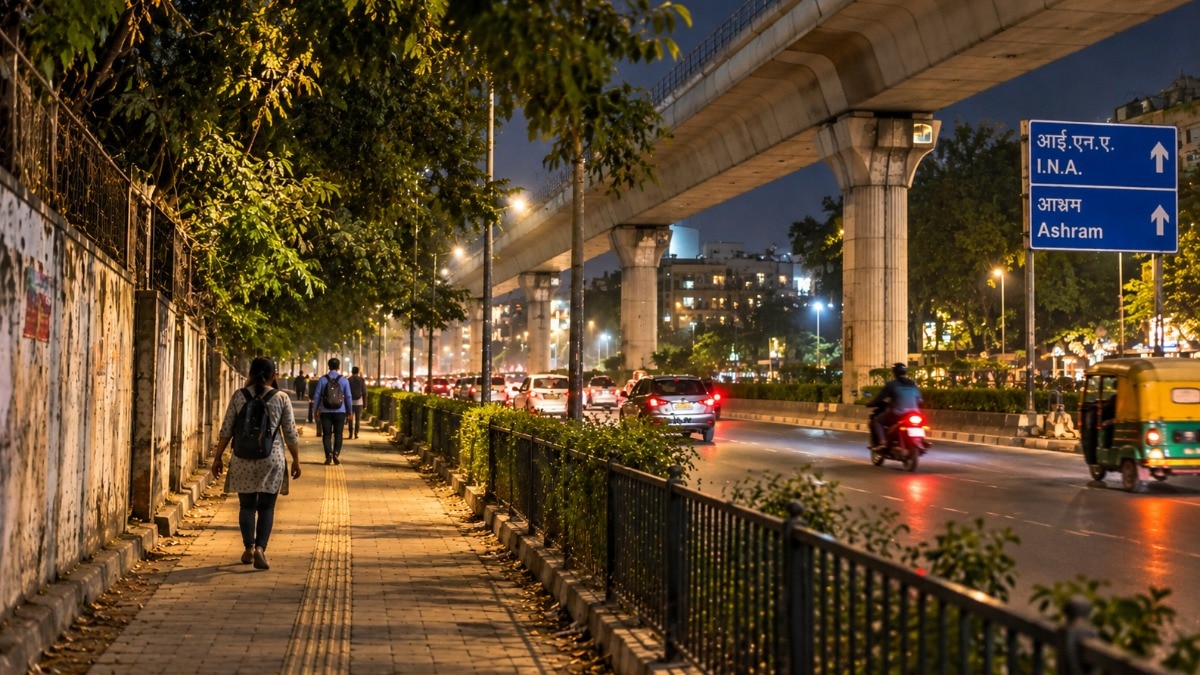
The Supreme Court on Monday took note of the multiple cases of rape and sexual assault in Delhi-NCR in recent days and ordered a detailed audit of safety measures in the national capital, including the mapping of vulnerable and dark areas, the functioning of CCTV cameras and streetlights and the technology-enabled mechanisms introduced after the 2012 Nirbhaya gangrape case.
A bench of Justice JB Pardiwala and Justice K Vinod Chandran directed the Delhi Police Commissioner to constitute district-level teams headed by a Deputy Superintendent of Police (DSP) to conduct an immediate survey and inspection of vulnerable areas. The teams have been asked to submit detailed mapping and audit reports within four weeks.
"The audit shall be based upon National Crime Records Bureau (NCRB) data, local intelligence, past and present complaints received, previous incidents and other objective indicators to identify locations prone to such crimes.
"These teams shall identify locations where poor lighting, lack of surveillance, insufficient patrolling, abandoned structures, poor access control or other deficiencies may increase the risk of crime. A district-wise vulnerability map shall be prepared and shared across adjoining police stations to ensure that information on recurring patterns of crime and habitual offenders is not confined to individual police-station jurisdictions," the bench said.
The court's intervention comes nearly a decade after an exercise to map Delhi's “crime hotspots” and “dark areas” was undertaken following the Nirbhaya case. The mapping exercise was ordered by the Delhi High Court in 2014, following which plans for CCTV cameras and streetlights were prepared for "hot zones" and "dark areas" across the National Capital. As many as 44 "high crime Red zones" had been identified in Delhi in 2014-15.
A decade later, a series of serious cases of rape and sexual assault, including an incident near the Lady Shri Ram College for Women, has prompted the Supreme Court to seek an assessment of whether the safety mechanisms and schemes introduced after Nirbhaya are actually functioning on the ground.
In its order, the bench observed that the current situation "draws painful parallels to the Nirbhaya case" and questioned whether "systemic law enforcement mechanisms have made any meaningful progress in the decade since then".
The Supreme Court has now called for detailed reports on the implementation and actual functioning of schemes and mechanisms established after the Nirbhaya case for monitoring and ensuring the safety of women and children.DISTRICT TEAMS TO MAP VULNERABLE, DARK AREAS
The Supreme Court directed the Delhi Police Commissioner to set up district-level teams to map vulnerable areas, with a DSP-level officer heading the team in each district.
The teams have been directed to carry out an "immediate survey and inspection of vulnerable pockets" within their respective jurisdictions, including the outskirts, isolated stretches, parks, transport hubs, markets, educational-institution zones and other public places.
The mapping is to be based on NCRB data, local intelligence, past and present complaints, previous incidents and other objective indicators to identify locations prone to such crimes.
The teams will also identify places where "poor lighting, lack of surveillance, insufficient patrolling, abandoned structures, poor access control or other deficiencies" may increase the risk of crime.
The court has ordered a "lighting and CCTV audit across all public parks and vulnerable zones".
The district teams have been directed to submit detailed audit and mapping reports within four weeks.
The Supreme Court has also directed authorities to take into account complaints received through the CM Jan Sunwai portal relating to streetlight and CCTV malfunctions and to take immediate remedial measures.SC ASKS: IS SAFE CITY PROJECT WORKING?
The Supreme Court has sought a detailed report on the functioning of the Safe City Project and specifically questioned whether the project is working effectively.
The report is to include the present status of CCTV coverage, command-and-control infrastructure, smart lighting, emergency response mechanisms and other technology-enabled measures.
Authorities have also been asked to specify the number of identified vulnerable locations covered by these measures and the mechanism in place to ensure that installed equipment remains functional.
The bench has also sought a status report on the functioning of the emergency response system and women's helpline.
For each scheme and mechanism under examination, the court directed the authorities to report whether it is currently operational, the geographical area and population covered, the officer or authority responsible for implementation, the number of complaints, calls, cases or interventions handled over the past three years and the average response time, wherever measurable.
The court has made it clear that the schemes and mechanisms established for women's safety should not “remain on paper”.SEEKS REPORT ON SEXUAL OFFENDERS DATABASE
The Supreme Court has also asked whether the National Database on Sexual Offenders (NDSO) is presently being utilised by the Delhi Police.
The court has sought a report on the identification of habitual offenders and the use of the database for identification of sexual crime perpetrators during the last five years, including antecedent verification.
The bench has separately asked whether the Ministry of Home Affairs is utilising the Investigation Tracking System for Sexual Offences (ITSSO).
The report on ITSSO is to detail the mechanism for monitoring investigations that are required to be completed within the statutory period, the officers responsible for monitoring them, the frequency with which cases are reviewed and the remedial steps taken.
The Supreme Court has also called for details on the operation of Mission Shakti schemes.
Authorities have been asked to provide details of the components of the programme, the agencies responsible for their implementation, the services actually available to women and children, and the mechanism through which the effectiveness and accessibility of those services are evaluated.
The court has also sought details of safety and security arrangements in public places, including parks, roads, public transport facilities, markets and educational institutions.
The authorities have been asked to provide details of arrangements during both the day and night.AASTHA KUNJ CASE A 'STARK REMINDER'
The Supreme Court described the Aastha Kunj gangrape case as a "stark reminder of the persistent vulnerabilities faced by women and children in spaces that ought to be safe and accessible to all." The bench said the safety concerns emerging from the incident "cannot be viewed in isolation".
The court also referred to pre-existing complaints of recurrent sexual harassment faced by students of Lady Shri Ram College for Women, situated in the immediate vicinity of Aastha Kunj Park.
"Regrettably, these prior grievances failed to serve as a wake-up call for the police or the local administration to rectify institutional security lapses through enhanced patrolling and vigilance before yet another victim fell prey to unscrupulous perpetrators," the court observed.
The bench also flagged the Swaroop Nagar gangrape and murder case and the alleged rape of a minor in a moving bus travelling from Greater Noida to Delhi.
These incidents, the court said, "starkly underline a systemic failure on the part of law enforcement and civil administrative authorities to guarantee basic public safety".'PUBLIC SPACES MUST REMAIN SAFE'
The Supreme Court said authorities are responsible for ensuring that public spaces remain safe. It observed that public spaces suffering from "inadequate illumination, deficient surveillance, or a lack of visible police patrolling and prompt interventional response mechanisms inevitably expose every citizen to heightened security risks".
"Where basic measures of public safety remain compromised, no individual, irrespective of age, gender, or sexual identity, can navigate public spaces with a sense of security," the bench said.REPORT SOUGHT ON FAST-TRACK COURTS
The bench has also called for a report from the Delhi High Court on the number of Fast Track Special Courts dealing with rape cases and dedicated Pocso courts.
The report is also expected to include data relating to pending cases and the disposal rate of these courts.
The Supreme Court's directions seek to examine not merely the existence of various safety schemes and mechanisms but their actual implementation, coverage, utilisation and effectiveness on the ground.
The bench also reminded the media of the "profound Constitutional and ethical duty" involved in reporting cases of sexual violence.
"Sensationalist headlines, graphic or lurid descriptions of sexual violence, and insensitive phraseology fail to serve any public interest and risk causing severe secondary trauma to victims and their families," the bench observed.
The court also reminded the media that the identity of victims must be protected under the law.- Ends
Aneesha Mathur is a Special Correspondent for India Today where she puts her LLB degree to use covering Legal issues and cases in the Supreme Court of India, Delhi High court and other courts/tribunals.
Aneesha joined India Today in October 2018. After graduating from St Stephen's College and Faculty of law,Delhi University, she spent the formative years of her career in print Media.
Her interest in journalism stems from experience while interning with Legal services and Juvenile justice board as a law student, where she learnt the importance of ensuring that accurate information reaches the world, and that stories about individual experiences and statistics that show a "bigger picture" must supplement each other so other people can see what the large impact of a small thing can be. When not working or thinking about the law and it's state, Aneesha hides from reality in fantasy novels, rom-coms and food.