‘A high probability’: Congress pushes tighter export controls following Nvidia scandal - Semafor
Republican and Democratic leaders are coalescing behind a new crackdown on advanced chip exports to China following the Nvidia scandal that could become law by the end of the year.
In the House, both Speaker Mike Johnson and Minority Leader Hakeem Jeffries favor strengthening chip export controls following revelations that Nvidia’s now former CEO, Jensen Huang, had an affair with an alleged Chinese spy. That’s raised national security concerns about the gargantuan chip manufacturer, which sold $4 billion in chips to Singapore company Megaspeed, which is suspected of diverting that technology to China and under investigation by the Justice Department.
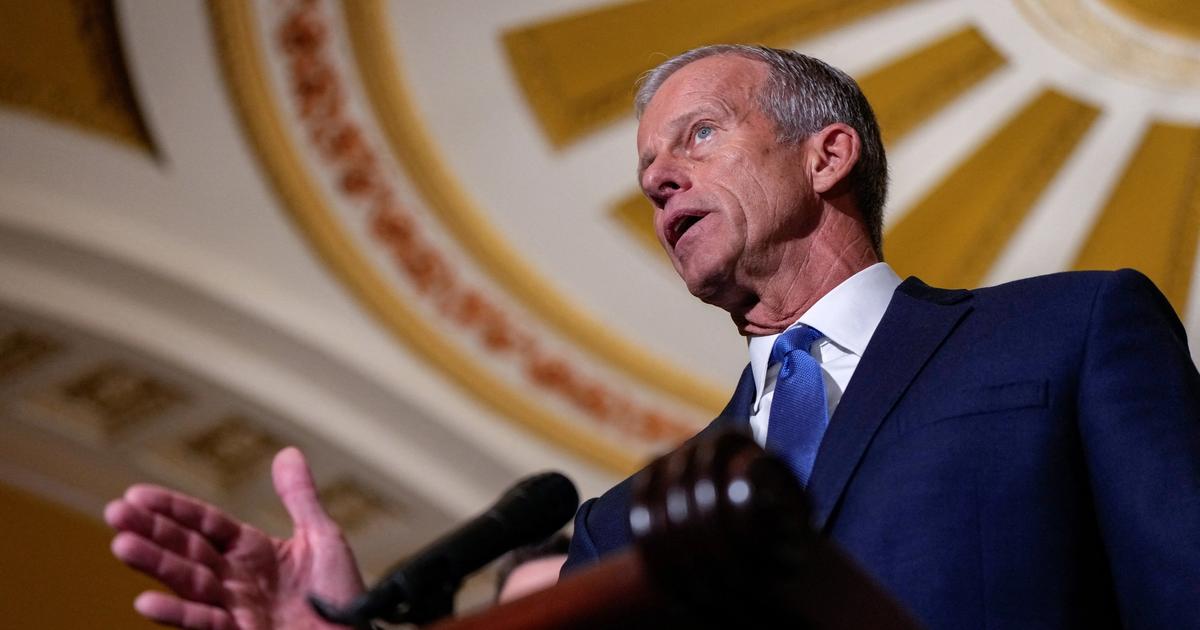
Senate Majority Leader John Thune told Semafor that there’s a “high probability” that Congress imposes more restrictions on chip exports to China. Three measures were included in the Senate’s version of must-pass defense policy legislation, known as the NDAA, however both Thune and Senate Armed Services Chair Roger Wicker, R-Miss., acknowledged there is no deal yet to include them in the final version of the bill currently under negotiation between both chambers.
“I give it a better than even chance,” Sen. John Kennedy, R-La., told Semafor of the possibility of strengthening export controls, which are handled by the Commerce Department. “I understand people have affairs but if you’re going to do it, try not to have an affair with a Chinese spy.”
There are three main bills that could be included in the NDAA and Senate Democratic Leader Chuck Schumer wants Congress to pass all three of them “to cut off China’s access to advanced American technology before it’s too late.”
The Chip Security Act aims to prevent illicit smuggling of advanced AI chips to foreign adversaries, partly by verifying their location once they’ve been shipped out. The MATCH Act closes loopholes around chipmaking equipment and export rules in allied countries. And the AI Overwatch Act would make it so chip sales are treated more like foreign arms sales and give Congress oversight of how Commerce approves or disapproves a license to sell chips to a “country of concern,” including China.
Johnson told reporters Thursday that there’s “a developing consensus in Congress” around more chip restrictions, calling it “an important position to take, especially in light of recent developments.” And Democrats like Jeffries have signaled their support for putting the AI-related provisions into the NDAA, as have some Republicans.
“I think the NDAA does provide us an opportunity to put guardrails around AI” or export restrictions, said Rep. Mike Levin, D-Calif., who said he’d otherwise defer to Rep. Adam Smith, D-Wash., the incoming House Armed Services chair.
Sen. Mike Rounds, R-S.D., argued the Nvidia debacle “reinforces” the need for Congress to include more export controls in the defense bill, adding that there’s “strong demand” to do so even as there’s no final agreement on what it will entail.
“Which plan takes priority in the final product, I don’t know yet. I think there’s several different strategies to be vetted yet,” Rounds said.
During last year’s NDAA fight, the GAIN AI Act from Sens. Elizabeth Warren, D-Mass., and Jim Banks, R-Ind., an earlier version of the AI Overwatch Act, made it into the Senate version of the NDAA but got dropped from the House version after pressure from Nvidia, the broader semiconductor industry, and the White House (including then-AI adviser David Sacks). Congress did include some investment controls, but senators in both parties wanted to do more.
This year, the bills are much further through the process, buoyed unexpectedly by the Nvidia scandal and gaining momentum among GOP leaders, one Senate Democratic aide told Semafor. Anthropic has publicly supported all three bills, and OpenAI has been warming up to them as well after initially being reticent to support the proposals.
Nvidia hasn’t stood alone in its opposition to the bills — the broader tech industry has also lobbied against them, with the Information Technology Industry Council arguing they would “undermine the American tech stack.” But Congress will feel more emboldened to act than ever giving the security risks exposed by the controversy.
Still, the defense bill, one of the few pieces of legislation that passes on an annual basis, could be imperiled by Democratic efforts to add provisions to sunset the war in Iran. Many in the party are pushing to use the must-pass legislation or a December government funding deadline as leverage over President Donald Trump, which could poison Republican support for the bills.
“We have leverage. Take when the appropriations bills run out. I want the war in Iran stopped. I think we should put provisions into that bill, into the NDAA for that matter to stop it,” said Smith, the incoming House Armed Services Committee chair.
Democrats face tough decisions about how hard to push for those provisions now and risking a government shutdown or the failure of the defense bill, especially when they could put the legislation together on their own terms next year when they take control of the House and Senate.
Sen. Maria Cantwell, D-Wash., said Congress has already done “a lot before more than people probably realize” on restricting chip exports to China and that they need to think before they do more.
There’s also worry about going too far and inducing more Chinese manufacturing of chips by denying China technology.
“This is a balance. Until someone comes up with a better construct, we need to put very strong export controls on the most powerful computer chips. That seems like a no-brainer to me,” said Sen. Todd Young, R-Ind. “Then the question is, how robust in terms of processing power can those chips be that we sent to them? … I don’t think it’s formulaic.”
Scandals move Congress and boy is this a scandal. And it comes at the perfect time for supporters of stricter chip curbs on China.
We’d be surprised if more export restrictions aren’t law in some fashion by the end of the year after the shocking downfall of Huang and national security concerns raised by his indiscretions.
Eleanor Mueller contributed reporting.