A month of Nepal's monster flood: Funeral of effigies, some hold on to fading hope
"When the flood left bodies unrecoverable, families in the region asked whether an effigy woven from sacred grass could stand in for the missing dead at the funeral pyre, so that the departed could still be released into their next state," wrote Rajan Khatiwoda in an article in Nepal Times on Friday.
Khatiwoda, an expert in South Asian studies is involved with the Nepal Heritage Documentation Project (NHDP) at the Heidelberg Academy of Sciences, was primarily writing in Nepal Times about how the Rasuwa–Nuwakot flood destroyed shrines, monuments and ghats that stood there for centuries.
"We lost neighbours, friends, and collaborators who had opened their homes and memories with us," he wrote describing the local families, priests and caretakers of shrines who helped the NHDP document the intangible heritage of the region.
Saturday is one month of the Rasuwa–Nuwakot flood in Nepal that killed 1,451 people and in which 6,000 are still missing. Of the missing, at least 275 people are from India, according to the Ministry of External Affairs (MEA). They were on a pilgrimage to Kailash Mansoravar.
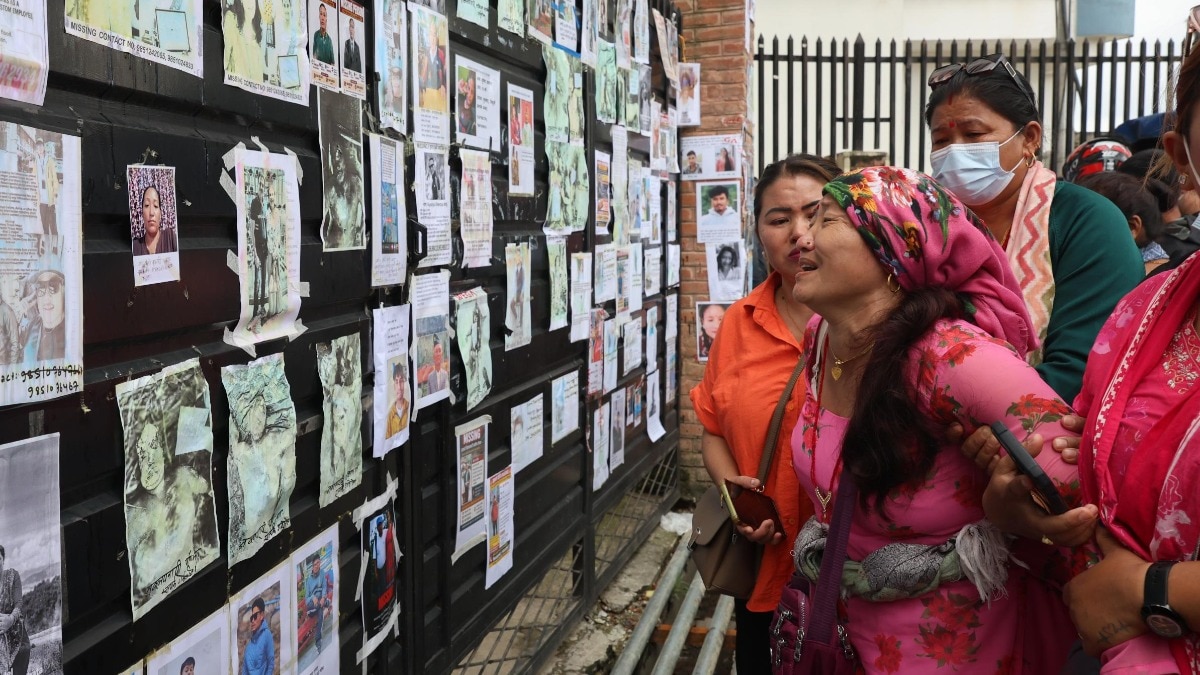
There is no closure for thousands of families of those missing in the mudslide that swept everything in its path away on August 26. Reason tells them that their loved ones are dead, but the heart clutches at hope.
Pramod Poudel has four family members, including his mother and wife, who are missing and tells BBC News he doesn't believe that they will be found.
My heart is still saying that there might be something there, but I have to be realistic and accept that they are not there anymore," Poudel, a 34-year-old who moved from Nepal to East Sussex, in England, in 2009, told the BBC. He said the tragedy struck at a time he was planning to return to Nepal and stay close to his loved ones.
One of the sites where a number of Indians or people of Indian origin were swept away is the Gyirong Port between China and Nepal.
Around 80 people who were on Kailash Mansoravar pilgrimage as part of Sadhguru's Isha Foundation and some team members were at the immigration centre when a wall of water and sludge swept it away.
On August 30, India Today Digital reported that Indians, whose loved ones had gone missing had been contacting embassies, government authorities and rescue teams, and, in some cases, checking recovered bodies, in the hope of finding their relatives.
For some, the wait hasn't ended, even after a month.
MEA Spokesperson Randhir Jaiswal said on September 22 that 275 Indians were missing in the Nepal flash floods of August 26.
An Indian forensic team is working in Kathmandu across several laboratories. The team has been working on around 3,000 samples and has so far generated 1,200 DNA profiles as part of the process to identify remains.
With most of the bodies that are pulled out of floodwaters or dug out of mud being damaged beyond recognition, such DNA profiles are practically the only way for relatives to identify their loved ones. Bimala Rokaya, wife of Mohan Lal Rokaya, who is still reported missing, breaks down during his symbolic funeral ceremony at the Pashupatinath temple in Kathmandu on September 18. (Image: AFP) THE DISASTER THAT OVERTOOK NEPAL ON AUGUST 26
The stories of people burning effigies to help their loved ones pass on, Indian forensic experts working relentlessly to generate digital profiles, and families still holding on to hope all stem from the disaster that overwhelmed the Himalayan nation last month.
To call the events of August 26 a disaster would be an understatement. It began when an enormous mass of ice and rock detached from the northern flank of the Langtang Lirung peak, at an elevation of around 5,200 metres in Nepal's Himalayas.
The ice-rock avalanche transformed into a highly destructive debris flow, sending water, ice, rocks and sediment racing through the Lhende Khola and into the Bhotekoshi river system. The deluge of muddy water swept down from an estimated nearly 2,000 metres (6,560 feet) above sea level.
The torrent tore through the Bhotekoshi and Trishuli river valleys, destroying bridges, roads, buildings and hydropower infrastructure along its path.
On the China side of the border, the Gyirong Port was destroyed. In Nepal, Rasuwa, Nuwakot, Dhading and other downstream districts were severely affected, with settlements inundated or buried under mud and debris and critical infrastructure swept away. The flood eventually travelled through the Bhotekoshi-Trishuli-Narayani system and into downstream areas.
The damage caused was enormous. Thousands of homes, schools, hospitals, roads, bridges were razed into rubble.
A Rapid Damage and Needs Assessment by Nepal’s National Planning Commission and the National Disaster Risk Reduction and Management Authority (NDRRMA) estimated that rebuilding after the floods would cost $4.73 billion. Of this, $57 million would be needed for immediate relief and short-term reconstruction, while $4.67 billion, or about 10% of Nepal's GDP would be required for long-term reconstruction.
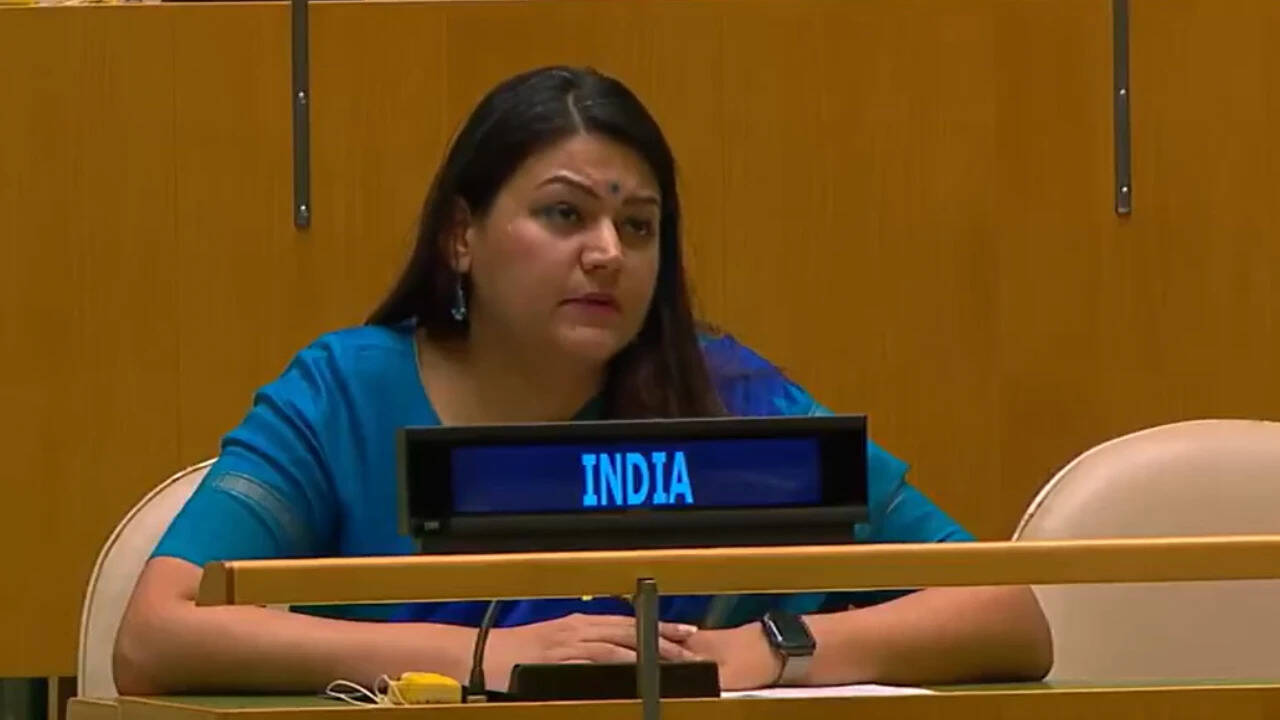
Speaking at the United Nations General Assembly (UNGA) on Thursday, Nepal's PM Balen Shah called for greater international support for the Herculean reconstruction effort ahead. "When a climate-driven disaster destroys the infrastructure of a poor country, the answer cannot simply be another mega loan or a patchwork of small grants," Shah said. "We need adequate grant-based support from the world."
And there is the human cost. As of September 21, Nepal has recovered the bodies of at least 1,451 individuals. An additional 9,287 were injured, while 13,795 people had been rescued so far. Meanwhile, the wherabouts of more than 6,000 souls remain unaccounted for. Rescuers use a wheel loader to rescue a 97-year-old woman following the flash floods. (Image: File) WHY ARE SO MANY PEOPLE MISSING IN NEPAL?
The unusually high number of people still listed as missing is partly a consequence of the sheer scale and force of the floods. The torrent of water, mud and debris swept people, vehicles and structures into the Bhotekoshi-Trishuli river system, carrying bodies hundreds of kilometers downstream.
Others may remain buried in mud and debris at destroyed hydropower projects and settlements. Take for instance, the Chilime hydropower project in Rasuwa district, where it took more than a week for teams from the Indian and Nepali Armies to dig through mud-choked tunnels and recover five deceased individuals.
But even when bodies are recovered, identifying them has become another battle. As a September 3 Kathmandu Post report noted, bodies pulled from floodwater can be swollen, discoloured and barely recognisable.
Prolonged soaking can damage skin and fingerprints, while currents strip away clothing and documents. Rocks and debris can fracture bodies or tear limbs from torsos, while mud can conceal tattoos and scars that might otherwise help establish identity.
The longer remains lie in warm, contaminated water, the less useful visual identification becomes, forcing forensic teams to rely on teeth and dense bone, which preserve DNA long after skin and muscle decompose.
At that point, forensic DNA testing may be the only reliable way to establish identity, but the process is painstaking and time-consuming. Of the 1,453 bodies recovered so far, only around 112 have been positively identified and handed over to families. The 19-member Indian forensic team began analysing DNA samples with Nepali counterparts at forensic laboratories in Kathmandu in early September. (Image: X/@IndiaInNepal) AS HOPE FADES, LOVED ONES TURN TO SYMBOLIC FAREWELLS
Some of the people in Nepal have conducted the funeral of those missing, in an attempt to help with the onward journey of their loved ones.
Twelve-year-old Rozel Shrestha conducted the funeral rites of his father by setting fire to a small effigy of barley and straw, according to an AFP report from earlier this September.
"We searched everywhere, went to morgues across the country, but could not find his body . . . So, the family sat down . . . and decided we have to do our traditional rituals to liberate his soul," AFP quoted Jeevan Shrestha, Rozel's uncle and brother of the deceased, as saying.
It reported that the family of truck driver Chandra Bahadur Newar also conducted his funeral after searching frantically for him for weeks.
"We had to do this to set his soul free, so that he is at peace and happy wherever he is," AFP quoted Newar's wife, Dolma Newar Tamang, as saying.
It has been a full month since floods tore apart Nepal on August 26. Reconstruction is ongoing. Debris are being trucked away. Bulldozers and wheel loaders are roaring away as roads are cleared and bridges are erected. The Prime Minister, Balen Shah, is warning the world about the dangers of climate change and garnering international support to rebuild his nation.
The world is beginning to move on from the catastrophe. But for the loved ones of the more than 6,000 people still reduced to names on a missing persons list, closure may remain difficult, if not impossible, to find.- Ends
A history and geopolitics buff, Shounak is a newly minted writer. He looks to bring his interests into his stories. When not at work, he can be found consumed in books, videogames and drawing.