
A warning or wake-up call? India sweat to beat Japan
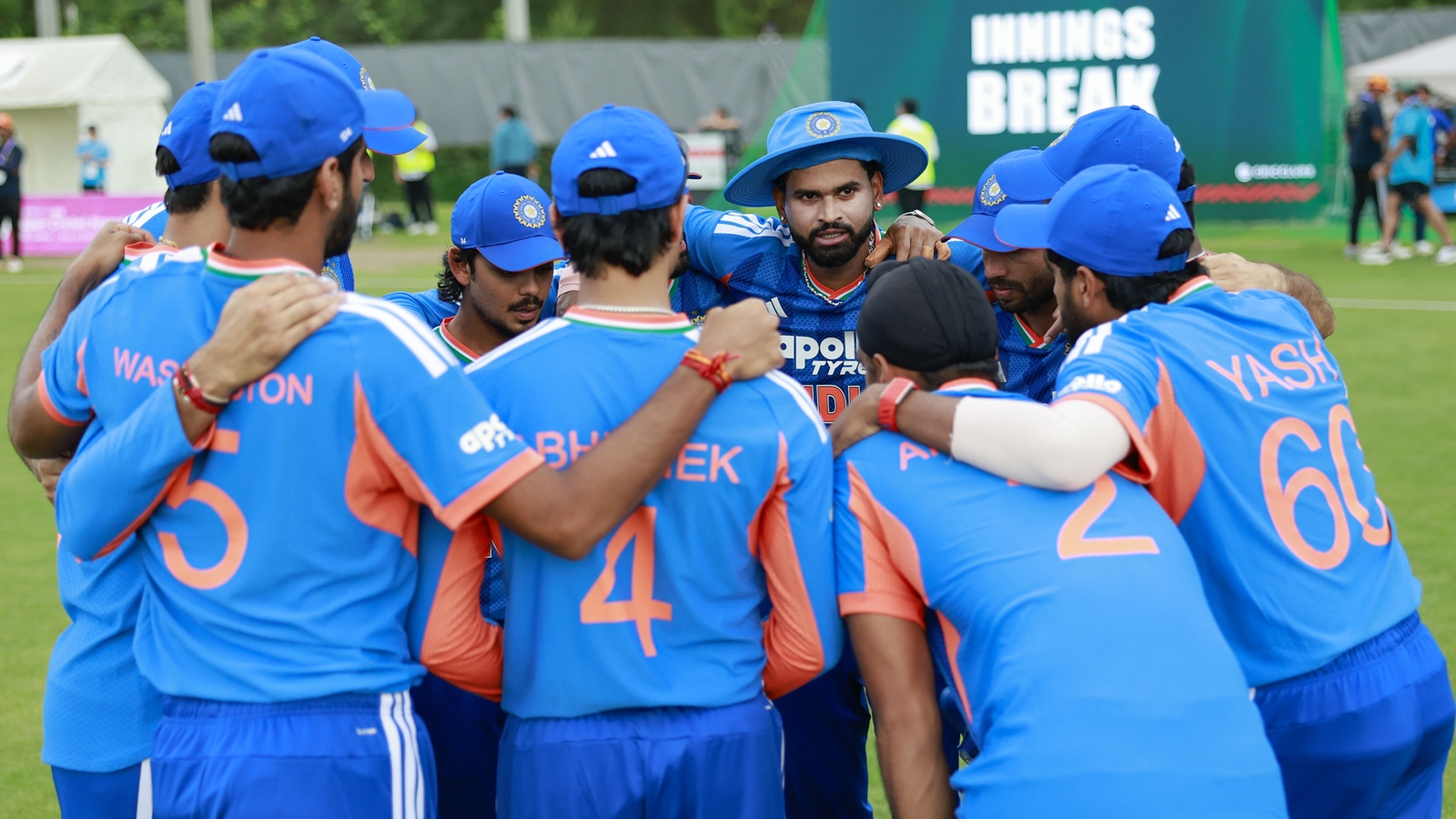
In the press conference on Monday, India captain Shreyas Iyer had spoken about the unknowns surrounding their first-ever meeting with Japan in Sano on Tuesday.
The match was part of celebrations marking 75 years of diplomatic relations between India and Japan, but once the players stepped onto the field, friendship was put aside.
And it was those unknowns that nearly came back to hurt India. On a pitch offering plenty of turn, Japan pushed them all the way and threatened a massive upset before Axar Patel held his nerve in the final over to pull off a two-run win in a five-over contest.
Japan needed eight runs from the final over after reaching 25/3 in their chase of 33. Axar came back for a second over with little room for error.
He began with a dot ball before Benjamin Ito-Davis and Alexander Shirai-Patmore took singles. There was then some confusion over wides down the leg side, with Iyer and wicketkeeper Sanju Samson questioning the calls. One decision was eventually reversed after the umpires had a discussion.
Japan were left needing four from the final ball. Shirai-Patmore could only manage a leg bye, allowing India to escape after being pushed far closer than they would have expected.
Defending only 32, India turned entirely to spin on a surface where the ball was gripping and turning appreciably. Axar gave India the start they needed. He conceded only two runs in the first over, which also included Lachlan Yamamoto-Lake being run out after challenging Ishan Kishan’s arm from the deep. Kishan hit the stumps directly to leave Japan 2/1.
Washington Sundar then struck in the second over. Ibrahim Takahashi slog-swept him for four but tried to repeat the shot off the next ball and found Ravi Bishnoi at deep square leg.
Japan, though, refused to go away. Captain Kendel Kadowaki-Fleming took on Bishnoi in the third over, scooping him for four as the hosts collected 10 runs. At 18/2 after three overs, Japan needed 15 from the final 12 balls to pull off a huge upset.
Benjamin Ito-Davis and Kadowaki-Fleming kept the chase alive against Sundar. Japan collected seven from the fourth over, although Sundar dismissed Kadowaki-Fleming for 12 off the final delivery. That left Axar with eight runs to defend, and the left-arm spinner did just enough.
Earlier, Iyer’s decision to bat first in the rain-shortened contest did not go to plan as Japan’s spinners used the turning pitch well to restrict India to 32/4.
Left-arm spinner Charlie Hara-Hinze set the tone in the opening over. Samson hit the first boundary of the innings, but Hara-Hinze struck with the final ball when Abhishek Sharma was caught for a golden duck.
Ibrahim Takahashi kept the pressure on in the second over. The off-spinner gave away only five runs and dismissed Samson for nine. The right-hander tried to hit him down the ground, but the ball turned and took the inside edge, with Ito-Davis taking the catch at deep mid-wicket.
There was little relief also against Ito-Davis’ off-spin. Ishan Kishan tried to create scoring opportunities with reverse sweeps but struggled against the turn. He eventually tried to go inside-out off a flighted delivery, only to mistime it to extra cover and depart for three off six balls.
India were 14/3 after three overs. Their top three had scored only 12 runs, the lowest aggregate by India’s top three against an Associate nation in T20Is.
Iyer tried to lift the scoring rate, but Japan continued to keep India quiet. He finally found a boundary against Hara-Hinze in the last over, hitting him over extra cover for four. Two balls later, however, he tried to go inside-out and was caught at deep extra cover for 16 off 12.
Hara-Hinze finished with 2/17, while India’s batsmen could score only two boundaries in the five overs, underlining how difficult batting had become on the surface.
For Japan, the performance was notable not only for how close they came, but for the way their spinners controlled an Indian batting line-up packed with experience in difficult conditions throughout the innings.
What had begun as a historic first meeting between the teams had turned into a genuine contest. Japan’s spinners first exposed India’s difficulties on the turning pitch before their batsmen took the chase to the final ball. India eventually avoided the upset, but only just.
Brief Scores: India 32/4 in 5 overs (Shreyas Iyer 16; Charlie Hara-Hinze 2/17) beat Japan 30/3 in 5 overs (Kendel Kadowaki-Fleming 12; Washington Sundar 2/13) by two runs.
Based in Mumbai, Shankar Narayan has over five years of experience and his reporting has ranged from the Ranji Trophy to ICC World Cups, and he writes extensively on women’s cricket. ... Read More
Stay updated with the latest sports news across Cricket, Football, Chess, and more. Catch all the action with real-time live cricket score updates and in-depth coverage of ongoing matches.
