Academy commends Jehovah’s Witnesses for easing blood transfusion restriction - The Guardian Nigeria News
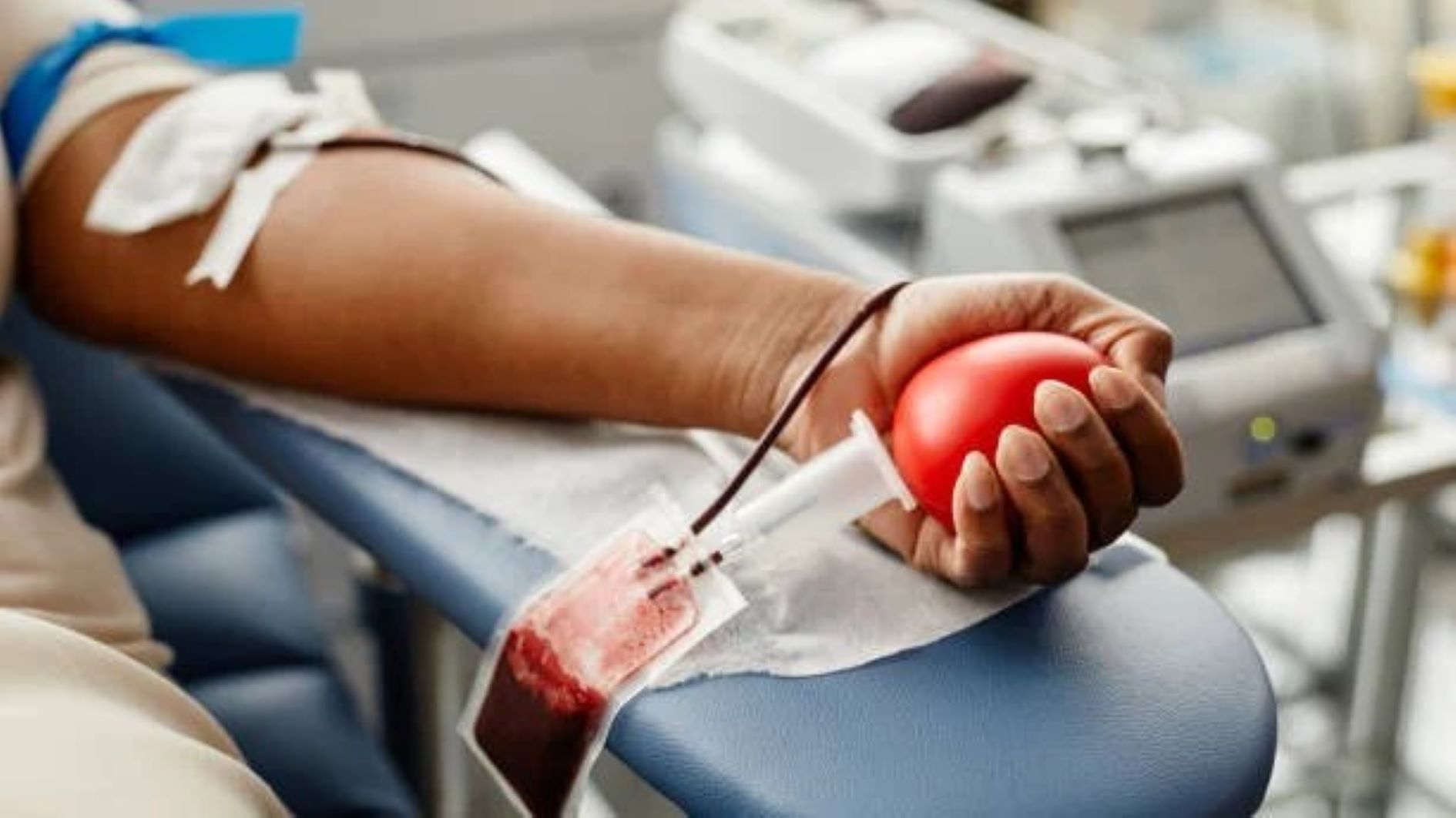
The Medico-Legal Academy has commended the leadership of Jehovah’s Witnesses for its recent decision to allow members to make personal decisions on receiving primary blood components during medical treatment.
The academy said the development marked a significant shift from the religious organisation’s longstanding opposition to blood transfusion and could help prevent avoidable deaths among adherents who require transfusion as part of life-saving treatment.
The commendation followed the organisation’s announcement, titled “Important Adjustment Regarding Primary Blood Components,” which extends personal decision-making, previously applied to plasma-derived therapies and autologous blood management, to primary blood components.
Under the adjustment, clinicians are expected to discuss the matter directly with individual Jehovah’s Witness patients, document their decisions and respect their choices.
Speaking on the development, the Provost/Chief Executive Officer of the Medico-Legal Academy, Ebenezer Egwuatu, described it as a welcome development that reinforces the principle of patient autonomy.
Egwuatu told The Guardian that the policy could reduce preventable deaths by giving members the freedom to accept blood transfusion when they consider it necessary to preserve their lives.
He cited the landmark principle of patient autonomy established in Schloendorff v. Society of New York Hospital (1914), in which Justice Benjamin Cardozo held that an adult of sound mind has the right to determine what should be done to his or her body.
According to Egwuatu, the change also has implications for previous legal disputes involving Jehovah’s Witness patients who refused blood transfusions on religious grounds.
He cited Medical and Dental Practitioners Disciplinary Tribunal v. Okonkwo (2001) 7 NWLR (Pt. 711) 206, involving a Jehovah’s Witness patient who died after expressly instructing her doctor not to administer blood.
Following her death, her mother and husband, who had witnessed the written directive, petitioned the doctor before the Medical and Dental Council of Nigeria. The doctor was suspended for six months by the Medical and Dental Practitioners Disciplinary Tribunal.
The Court of Appeal later overturned the tribunal’s decision, and the Supreme Court upheld the appellate court’s judgment.
The Supreme Court held that a competent adult has the right to reject life-saving treatment on religious grounds and that, in the absence of judicial intervention overriding the decision, a medical practitioner is generally required to respect the patient’s wishes.
Egwuatu said the decision demonstrated the importance of respecting the autonomy of competent adults while highlighting the different legal considerations that apply to children.
He also referred to Esabunor v. Fawaye (2019) 7 NWLR (Pt. 1671) 316, involving a one-month-old child, Tega, whose Jehovah’s Witness parents objected to a blood transfusion recommended by doctors because of their religious beliefs.
The doctor sought court intervention after the child became severely ill and anaemic. A magistrate authorised the transfusion, after which the child recovered and was discharged.
The mother subsequently challenged the order, but her case was dismissed by the Magistrate’s Court, High Court and Court of Appeal before the matter reached the Supreme Court.
The apex court held that while a competent adult has the right to accept or refuse medical treatment, different considerations apply to children who cannot make such decisions for themselves. It ruled that courts could intervene where parents refuse life-saving treatment for a child on religious grounds, with the child’s welfare and best interests taking precedence.
Egwuatu said the two cases illustrated the legal difficulties that could arise when religious beliefs conflicted with medical treatment, particularly where refusal of transfusion could result in death.
He noted that many other cases might never have reached the courts or attracted public attention. It would be recalled that Jehovah’s Witnesses had earlier this year eased their position by allowing members to receive transfusions of their own blood during planned surgeries, although the use of donor blood remained prohibited.
“Safe Care for Non-communicable Diseases” under the slogan “Safe Care for Life.”
Egwuatu said the development reinforced the importance of patient-centred care and respect for individual decisions in medical treatment.
He commended the leadership of Jehovah’s Witnesses for the adjustment, saying it would give members greater autonomy in making decisions about blood transfusion when receiving medical care.
![[Notice] Free Invitation to Health Chosun's Health Smart Lectures - 헬스조선](https://health.chosun.com/english/site/data/img_dir/2026/09/23/2026092302827_0.jpg)