
Adani's Jharkhand plant unit supplying power to Bangladesh trips amid Dhaka's woes
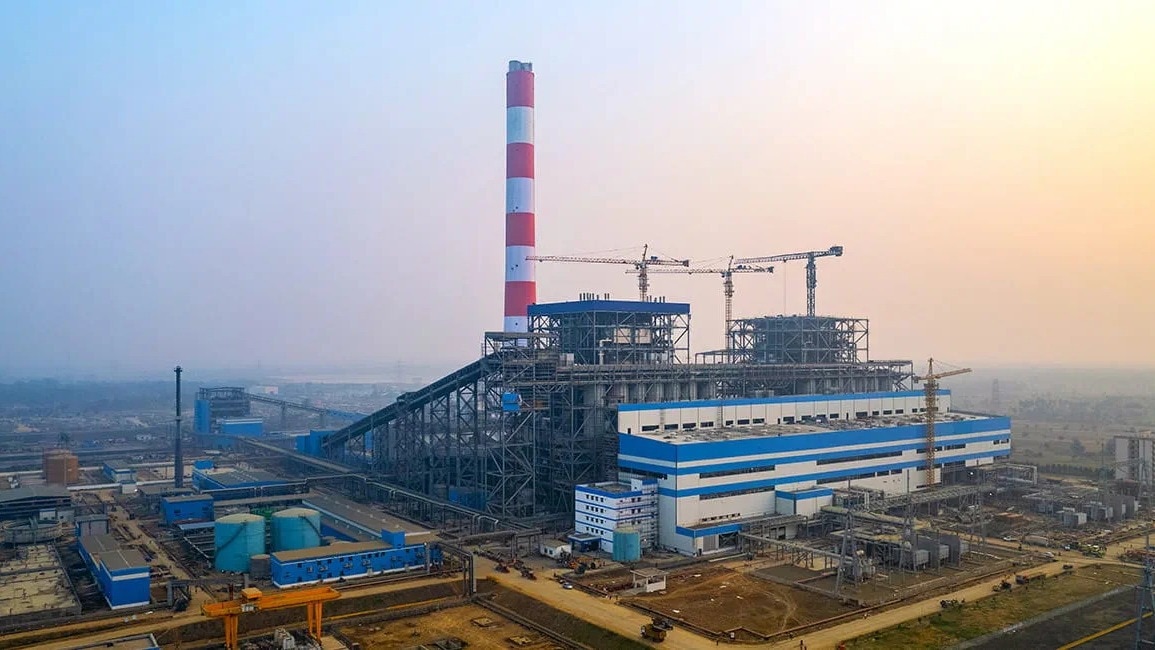
A technical fault at an Adani Power thermal power plant in Jharkhand, which primarily supplies electricity to Bangladesh, has deepened the country's ongoing power crisis. The restoration of power supply is likely to take several days, according to Bangladeshi officials. Such is the power crisis in Bangladesh that the government last month resorted to a curfew of sorts, asking malls and markets to shut shutters by 8 pm to conserve electricity.
A report in the Dhaka-based newspaper, The Daily Star, said one of the two units of the 1,600 Megawatt (MW) Godda plant in Jharkhand, India, had to be taken offline after developing a boiler problem late on Thursday. According to the report, the shutdown came just as the plant had begun ramping up generation after weeks of reduced output caused by coal transportation disruptions.
The 800MW unit, which has yet to be reactivated, effectively cut down the entire power plant's output by half. Power generation from Godda crossed 1,400MW on Thursday night before the unit tripped, according to data from the electric power distribution company
Power Grid Bangladesh data. Following the shutdown, supply fell to below 750MW, reported The Daily Star.
Officials of the Bangladesh Power Development Board (BPDB) told The Daily Star that repair work would take at least 48 hours to begin, with restoration requiring several more days.
New Age, a Bangladeshi news outlet, quoted BPDB member Mohammad Jahirul Islam as saying that the Board hadn't been informed about how long it would take for the Adani unit to be repaired.
Bangladesh depends on India for fuel and power, among other things.
While Bangladesh, part of pre-independent India, has had very strong ties with India, the relations have faced tests after the Sheikh Hasina government was pulled down by protesters in August 2024. Many of the fuel and power-supply pacts are from the Hasina era.
Many anti-India elements were part of the violent protests in July-August 2024. The interim set-up led by Muhammad Yunus was not favourable to India either. After the January general election, in which Hasina's Awami League wasn't allowed to participate, the Bangladesh Nationalist Party-led alliance came to power.
Ties have seen some warmth since then, but haven't been able to shake off the chill altogether.
Bangladesh Prime Minister Tarique Rahman on Friday declined an invitation to attend the ongoing BRICS Summit in New Delhi at the last minute. State Minister for Foreign Affairs Humayun Kabir had cited the reason as being that the invitation had been extended to Rahman in his capacity as BIMSTEC chair, rather than as Bangladesh's PM.BANGLADESH'S MOUNTING POWER WOES
The technical fault at the Adani-owned power plant comes at a difficult time for Bangladesh, which is in the midst of a worsening electricity crisis.
While the country has an installed power generation capacity of more than 30,000 MW, data from Power Grid Bangladesh shows it only produced around 13,000–15,000 MW on Friday, against a nationwide demand of more than 16,000MW, leaving a significant shortfall.
Part of this crisis can be attributed to a natural gas supply crunch. According to Power Grid Bangladesh, more than 40% of the country's installed power generation capacity (or around 12,472MW) comes from gas-fuelled plants.
However, figures cited by the Daily Star show gas operated plants producing only around roughly 4,700–5,100MW on Friday, thanks to a natural gas supply shortfall. According to some estimates, Bangladesh's power sector requires more than 1 billion cubic feet of gas a day, but is only able to acquire around 700 million cubic feet a day.
At the same time, the country's coal and oil-fired thermal power plants have also been unable to operate at full capacity due to a combination of supply disruptions and technical issues.
Bangladesh's electricity supply from Nepal has got stayed suspended since August 28 after the massive flash floods ripped apart the Himalayan country's hydropower infrastructure, according to New Age. That has added to the power crisis in Bangladesh.
Making the crisis worse is the reduced capacity at the Godda power plant.
Bangladesh imports up to 2,656 MW of electricity from India, including 1,160 MW through government-linked arrangements and another 1,496 MW from Adani Power's Godda plant.
The halving of Godda's output is therefore expected to further widen Bangladesh's electricity shortfall, which already stands at around 2,500MW.
The impact of the power shortfall has been wide-ranging. Last month, the government ordered shopping malls, shops and markets to shut by 8 pm to conserve electricity. The supply crunch has been particularly acute in areas like Mymensingh, Barishal, Rangpur, Sylhet, Rajshahi and Khulna, with most regions experiencing power outages lasting anywhere between three to even 10 hours a day. The crisis has also spilt onto the streets, with residents protesting prolonged outages and shortages in electricity supply.- EndsPublished By: Shounak SanyalPublished On: Sep 12, 2026 16:05 IST

