Africa’s fashion value lies in the stories only Africans can tell - IOL
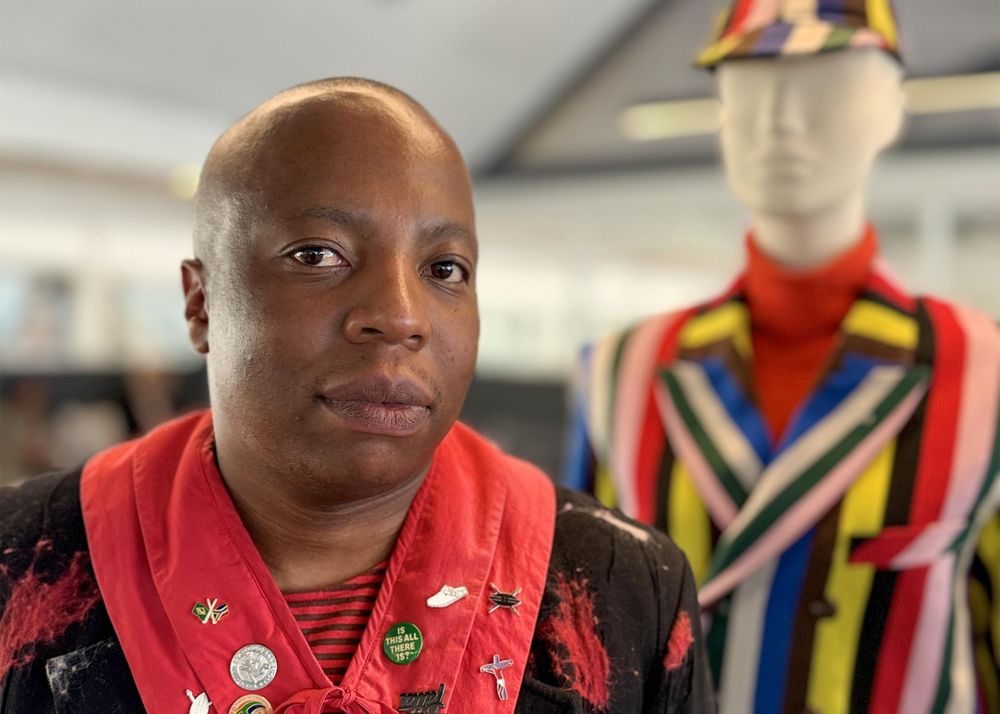
South African designer Wanda Lephoto argues that Africa’s competitive advantage in fashion is not only its fibre or factories, but the cultural knowledge, inherited craft and human collaboration that turn cloth into something the world cannot reproduce.
The fashion industry usually presents value as something added in stages: fibre becomes yarn, yarn becomes cloth and cloth becomes clothing. But for South African designer Wanda Lephoto, one of the most valuable inputs enters the process before a garment is cut.
It can begin with a family photograph, a street poster, a church garment or an old wooden headrest shaped by generations of use. These everyday objects carry histories that can be translated into contemporary fashion. And this gives African designers something that cannot easily be copied or manufactured elsewhere.
“My work has always existed at the intersection of design, research, memory and spirituality,” Lephoto said during a keynote on making African fashion at the 2026 Africa Textile Talks organised by Twyg. “I see design as more than the creation of clothing. It is a way of asking questions, of returning to histories and examining the cultural codes that shape how we understand ourselves and one another.”
UNESCO’s The African Fashion Sector: Trends, Challenges and Opportunities for Growth reaches a similar conclusion: “Thanks to their unique heritage, unreplicable technical skills, and distinctive creative vision, contemporary African fashion designers connect the dots between the past and present, tapping into their cultural roots to create clothes and accessories that help to shape unique and ever-renewed visual narratives about the identity and aspirations of the continent.”
Zulu spiritual references can meet Western tailoring. African symbols can appear on a T-shirt. Recycled synthetic material can carry a print about belonging. A familiar “Ghana Must Go” bag can be reinterpreted as an object of cultural significance rather than dismissed as ordinary, according to designer, Wanda Lephoto
Lephoto’s argument adds another dimension to Africa’s drive to capture more value from the materials it produces. Building farms, ginneries, spinning mills, textile plants and garment factories is essential. But the journey from cotton to cloth does not end when fabric leaves a loom.
“The importance of local textiles is that they show there are people behind these clothes; there are hands behind these clothes,” Lephoto told bird story agency in an interview. “Textiles represent human hands, and human hands represent human lives. Those lives represent histories that are really important to African design — to how we reflect the future, how the world sees us and, more importantly, how we see ourselves.”
Design, cultural authorship, craftsmanship, branding and storytelling can help determine which products command attention, build loyal markets and ultimately carry greater value.
Lephoto’s starting point is his father’s traditional Zulu headrest. Its worn wood, polished over time by the people who used it, offers a model for how he thinks about clothing: not as a disposable product, but as an object that accumulates meaning and can be passed on.
“To make clothes is to create inheritance,” he said. “To inherit an object is to inherit a conversation already in progress.”
That philosophy challenges a global fashion system built around speed, novelty and constant replacement. Instead, Lephoto asks how garments can be made to last, repaired and eventually inherited.
Khanyi Mashimbye, creative and cultural industries manager at Afreximbank, said sustainability is not treated as an optional extra by the bank’s Creative Africa Nexus, or CANEX, fashion programme.“Sustainability is not a feature in terms of this programme; it is the selection criterion,” she said.
The programme prioritises brands incorporating circularity, artisan livelihoods and lower-impact production into their businesses, at a time when international buyers are placing greater emphasis on the environmental and social credentials of products.
Lephoto’s ongoing research project, WL FOUND, identifies and reinterprets objects, images and creative work connected to South Africa’s history between 1850 and 1994. The research has taken the brand into museums, family collections, popular culture and Johannesburg’s streets.
For Lephoto, engaging with archives is not simply about reproducing the past. It is also about deciding which parts of that past should shape the future.
A historic image discovered in MuseumAfrica in Johannesburg, South Africa, became the starting point for a later collection. A Zulu clay snake was developed into an illustration and then placed on a shirt. Posters found in city centres informed not only graphics, but the typography, poses and attitude of a campaign.
“The philosophies that guide my work are memory, spirituality and lived truth,” Lephoto told bird. “We look at the ordinary to guide design, at oral and lived histories to guide design, and at spirituality - having faith in a better South Africa - to guide design.”
The World Intellectual Property Organization’s work on traditional knowledge and traditional cultural expressions has highlighted the difficulty of fitting community-held cultural expressions neatly within conventional intellectual-property systems.
For fashion, the issue extends from textiles and craft techniques to symbols, designs and other expressions of cultural heritage. As these assets become commercially valuable, questions arise around acknowledgement, permission, appropriation and how communities and artisans can share in the benefits generated by knowledge they have preserved.
“I hope my work inspires people to become more of themselves and to have pride in the places they come from,” Lephoto said. “We should stop being embarrassed by the things that pain us and use them as perspectives in design — as text, language and inspiration for the next kind of design we want to see.”
Lephoto also rejects the idea that African fashion must fit a single, easily marketable aesthetic.
He describes identity as plural: memory and imagination, inheritance and invention, spirituality and contemporary life can exist in the same garment.
Zulu spiritual references can meet Western tailoring. African symbols can appear on a T-shirt. Recycled synthetic material can carry a print about belonging. A familiar “Ghana Must Go” bag can be reinterpreted as an object of cultural significance rather than dismissed as ordinary.
“Start with yourself. Start with your personal story and the story of your family,” Lephoto said when asked what advice he would give young African designers. “Personal stories give you a context that does not exist outside you. The story of the self is the most important story you will tell.”
That proposition is increasingly being tested in international markets.
Afreximbank’s CANEX Presents Africa programme takes African fashion brands to international platforms and works with them on commercially important capabilities including costing, collection development, export documentation and sales.
By the end of 2024, Afreximbank reported that the programme had showcased 90 designers from 32 countries at international fashion weeks. Participating brands secured exposure and orders from buyers in markets including France, Germany, Japan, the United Arab Emirates, the United Kingdom and the United States.
For Mashimbye, the African brands attracting that attention demonstrate that cultural specificity does not have to confine African designers to a niche.
“This is not a niche offering,” she said. “It is really a competitor. It is a unique proposition for the world, for fashion and for the future.”
Ghanaian label Boyedoe offers one example. Founded by David Kusi Boye-Doe, the label combines contemporary design with Ghanaian heritage and craftsmanship, including kente, while reconstructing discarded or unused materials such as denim. In 2025, it became the first Ghanaian brand to reach the semi-finals of the LVMH Prize for Young Fashion Designers.
Boyedoe’s clothes do not depend on conventional representations of what “African fashion” should look like. Instead, heritage is embedded in the construction, craft and thinking behind the product.
That distinction matters as African countries seek to build more competitive textile and clothing industries.
Manufacturing capacity can keep more production on the continent. African designers capable of securing international orders can create demand for that capacity. But distinctive design, strong African-owned brands and cultural ownership can help determine how much of the value attached to the final product also remains on the continent.
Lephoto resists the mythology of the solitary designer. Photographers, stylists, musicians, models, makers and friends form what he describes as a creative ecosystem in which conversation changes the work.
Seen through the wider cotton and textile value chain, that ecosystem represents another stage of value addition: the point at which material becomes identity, craft becomes intellectual value and a garment becomes harder to reproduce anywhere else.
“I hope my work inspires people to become more of themselves and to have pride in the places they come from,” Lephoto said.
In a global industry capable of reproducing almost anything, that confidence in place, memory and identity may ultimately be one of African fashion’s most valuable resources.