After japa… When the dream meets reality - Vanguard News
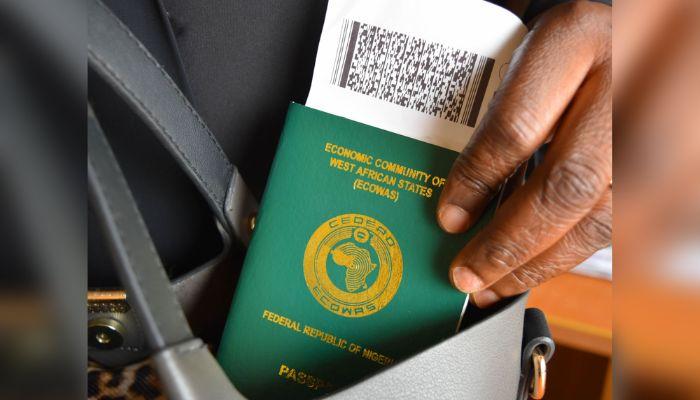
The photograph usually comes first. A young Nigerian stands at the airport, passport in hand, luggage beside him, smiling as family members gather for one last embrace. Someone captures the moment and posts it on WhatsApp, Instagram or Facebook: “Our own is leaving!” The comments quickly follow: congratulations, prayers, heart emojis and the familiar advice: “Please don’t forget us when you get there.” In that photograph, everything looks perfect.
Nobody sees the uncertainty waiting at the other end – the expensive rent, loneliness, unfamiliar systems, job struggles or the painful possibility that the dream of building a new life abroad could eventually collapse.
This is the complicated story of Japa, Nigeria’s popular expression for leaving the country in search of better opportunities. For many Nigerians, Japa is not a fashionable trend. It is an escape route: the nurse searching for better working conditions, the graduate looking for a career opportunity, the young couple seeking a more predictable future for their children, or the professional worn down by years of economic uncertainty. But what happens after the plane lands?
The numbers behind the dream The United Nations’ 2024 migrant-stock estimate counted about 2.1 million Nigerian migrants living abroad. That figure represents people already living outside Nigeria, not those who left in a particular year. The United Kingdom’s Office for National Statistics estimated that 120,000 Nigerian nationals moved to the UK on a long-term basis in the year ending June 2024, down from 141,000 the previous year.
In Canada, Immigration, Refugees and Citizenship Canada recorded 17,446 Nigerian permanent residents in 2023, a 38 per cent increase from 2019. The desire to leave is also strong. A 2024 Afrobarometer survey cited by the Migration Policy Institute found that 56 per cent of Nigerians expressed interest in emigrating for economic reasons. But aspiration is one thing. Life after arrival is another. When the dream hits reality For some, Japa changes everything for the better. They find jobs, pursue higher education, build businesses, acquire international experience and create opportunities for their families.
Their stories are real. But social media can make migration look deceptively easy: the foreign university, the winter coat, the new apartment, the car, the restaurant and the smiling family. The camera rarely captures the rent, taxes, long working hours, immigration paperwork, loneliness and uncertainty. Dora knows this reality painfully well. A nurse, she travelled abroad believing her professional qualifications would give her some security. But when she could not renew her Nigerian passport, her immigration situation became increasingly complicated. Eventually, she was repatriated to Nigeria. Her story illustrates a difficult truth: qualifications and determination do not, by themselves, guarantee the right to remain in another country. The airport that once represented possibility became the place of an involuntary return. A degree is not a passport For some Nigerian students, the disappointment comes after graduation.
Ezra travelled from Nigeria to the UK for an LLM, hoping to work there for some years or perhaps settle permanently. His his tuition. He studied, passed his examinations and graduated. Then came the reality he had not fully anticipated. A degree did not automatically give him the right to remain, work indefinitely or settle. Remaining legally required navigating immigration rules, securing the appropriate opportunity and meeting the relevant financial and visa conditions. Ezra could not secure the opportunity he needed and eventually returned to Nigeria.
He did not lose everything. He had his LLM and the experience that came with it. But the country where he studied did not become the country where he could build his career. For families who spend enormous sums sending their children abroad, that return can be particularly painful. When “making it” comes with a price Francis, a graduate of International Relations, travelled to the United States and married an American woman in an attempt to secure a future there. But marriage did not bring the freedom he expected. “I was a driver, and after our marriage, myfamily paid wife became a weapon fashioned against me. She was treating me as less human and was suspicious of everything I did. I couldn’t talk to other women, even in the Church. I could not associate with o t he r people in Church. It was like she owned me. I was h e r property.”
Eventually, his mother’s death brought him back to Nigeria for the funeral. He never returned to the United States. “I frustrated every move. She divorced me. I’m still in Nigeria, and I’m okay living here. The loneliness of being caged by her is gone. Here, I have a family that is physically close. A mother can visit her child. A brother can appear at the house. Friends can gather without elaborate planning.” For Francis, returning home became a form of relief. “Some Nigerians living abroad are faking happiness. The Nigerian who appears successful on social media may be spending evenings alone in a small apartment.” He also learnt that earning dollars does not automatically mean being wealthy. “Foreign currency does not mean wealth. Foreign earnings come with foreign expenses.” The American who came home Amaka’s story is different. Born in the United States, she was brought to Nigeria at nine, attended secondary school here and learnt to speak Igbo fluently before eventually returning to America. Yet life did not unfold as expected. According to a cousin, Amaka later admitted that she had not obtained a degree and had struggled to care for her child, who was eventually taken into government custody. “She told us she was embarrassed that she disappointed us, that despite her years in the United States, she didn’t turn out better. She said she sees our pictures on Facebook and other social media platforms, and we look much better and have more education than her. She told us that she’s just an American and that is all, and that she has not done well being American.”
But sometimes, it works It would be unfair to turn Japa into a story of failure. Chioma, who travelled to the United States for her Master’s, struggled with loneliness but eventually found her footing. “I was alone most of the time, and I was almost losing my sanity, and eventually I got my then boyfriend in Nigeria to come over. My parents made him pay the bride price. He came on a student visa, and we kept our visas alive by schooling. My boyfriend has become my husband. I’m a PhD student, and he’s doing his Master’s.” Stella Amos, a nurse, also has few regrets about leaving. She and her husband, a medical doctor, relocated after she had taken international examinations to advance her nursing career.
“Life is sweet over here,” she told a friend shortly after arriving. Her marriage eventually ended, but she says both she and her former husband are doing well. “Our children are growing. My now-former husband and I are still friends. Our last child turned 18 recently. We are all okay.” She misses Nigeria, but values the standard of living and professional opportunities abroad. “Before you leave, make sure you have a plan; it’s not enough to just japa. Some people come here and begin to labour and labour.” That may be the lesson hidden behind the airport photograph. Japa can be liberation. It can be disappointment. It can bring prosperity, loneliness, opportunity or sacrifice. The departure is only one moment.
Comments expressed here do not reflect the opinions of Vanguard newspapers or any employee thereof.