After Manoj Jarange-Patil fast, a Matang morcha: The Maharashtra quota conundrum
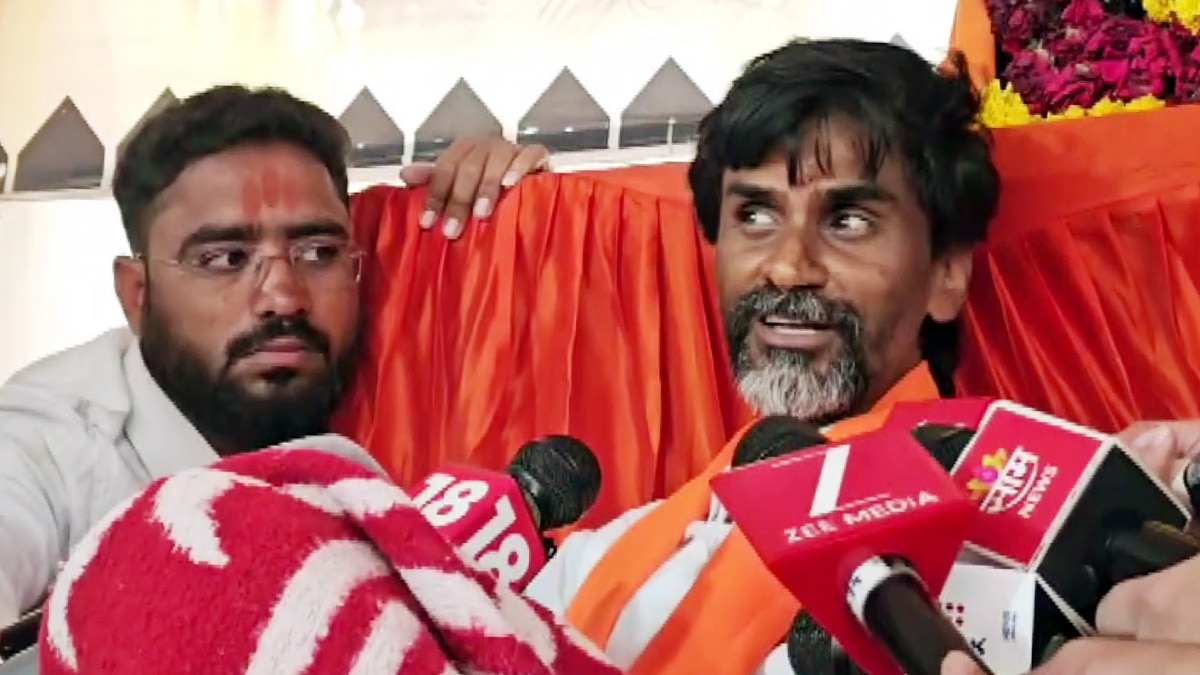
Even as the Devendra Fadnavis government in Maharashtra has managed to get Maratha reservation activist Manoj Jarange-Patil to call off his fast, it may have another caste quota conundrum to deal with. The Matang community has called for a morcha and protest in Mumbai on September 29 to press for sub-division of reservations in the Scheduled Caste (SC) category.
Leaders of the community, which include incumbent and former legislators, have given an ultimatum to the state government to take a decision about splitting the SC quota into four ring-fenced categories (A, B, C, and D) by September 25, failing which the community will hit the streets in Mumbai four days later in a morcha from Metro Cinema to the Azad Maidan.
In Maharashtra, SCs get 13 per cent reservation. However, some Hindu Dalit organisations, largely those of the Matang community, allege that Buddhist Dalits—erstwhile members of the Mahar community who converted to Buddhism with Dr Babasaheb Ambedkar in 1956—have secured most of the benefits at the cost of other groups. They claim that ring-fenced categories, or a system of quotas within the SC quota, would protect their interests. However, Buddhist Dalit leaders deny the charge.
SCs form around 12 per cent of the state’s population. A total of 59 castes are included the SC category, and Buddhist Dalits form the highest numbers.
The BJP and the Sangh Parivar are seen as having made inroads into the Hindu Dalit groups. Matang leaders, such as BJP MLC Amit Gorkhe, are seen as being pitted against Buddhist Dalit groups. Gorkhe said that the decision about the September 29 protest had been taken in a meeting at Mumbai, and followed around 75 morchas held across the state to press their demand.The BJP has developed an auxiliary constituency among the Buddhist Dalits, despite the community’s traditional antipathy towards its brand of Hindutva, which is perceived as Brahmanical. The party is trying to firm up its base among the Hindu Dalits by trying to politically isolate Ambedkarite Dalits.
However, Ambedkarite groups have also organised similar protests against the demand. Those for and against the sub-categorisation have taken their battle to social media.
In August 2024, a seven-judge constitution bench of the Supreme Court had allowed states to go in for a sub-classification within the SC and Scheduled Tribe (ST) quotas. This March, a one-man committee under former Patna High Court judge Justice Anant Manohar Badar submitted its report to the Maharashtra government regarding the framework for the sub-categorisation of SC reservations.
The state has appointed another committee, under chief secretary Rajesh Aggarwal, to invite suggestions and objections on this report and to conduct hearings before a proposal for the sub-categorisation is tabled before the state cabinet.
The demand for internal quotas has a precedent in the state as Other Backward Classes (OBCs), who have been given 30 per cent reservation, have been divided into the OBC category (19 per cent) and the Vimukta Jati and Nomadic Tribes (VJNT, 11 per cent). The VJNTs, in turn, are further divided into the VJ or denotified tribes (3 per cent) and nomadic tribes (NT) category B (2.5 per cent), C (Dhangar community, 3.5 per cent) and D (Vanjari community, 2 per cent).
Some like former minister and Nationalist Congress Party (NCP) MLA Rajkumar Badole have pointed out that while the Badar committee report had not been made public, suggestions and objections had been invited on it. Critics of the sub-categorisation demand state that any such exercise must be undertaken only after a caste-based census and availability of contemporary data on the economic, educational and political progress made by the various castes in the SC category.
Badole pointed out that while a presidential order is needed to include a caste in the SC category, it cannot be left to the discretion of states to go in for sub-categorization. Those against the move also fear that any quota within a quota would divide the sense of consolidation among Dalits, something which would prove to be detrimental when it came to fighting for quotas and against atrocities against weaker sections.
In 1965, the report of the Union government-appointed advisory committee on the revision of lists of SCs and STs had noted: “It has been in evidence for some time now that a lion’s share of the various benefits and concessions earmarked for Scheduled Castes and Scheduled Tribes is appropriated by the numerically larger and politically well-organised communities. The smaller and more backward communities have tended to get lost in democratic processes, even though more deserving of special aid. Though there is no escape from the larger and politically more conscious groups asserting themselves in the political field, it appears to us that in matters of planning and development, distribution of benefits needs to be focused on the more backward and smaller groups on a selective basis.”