
After topping PH TV sales, TCL pushes SQD-Mini LED - Inquirer Technology
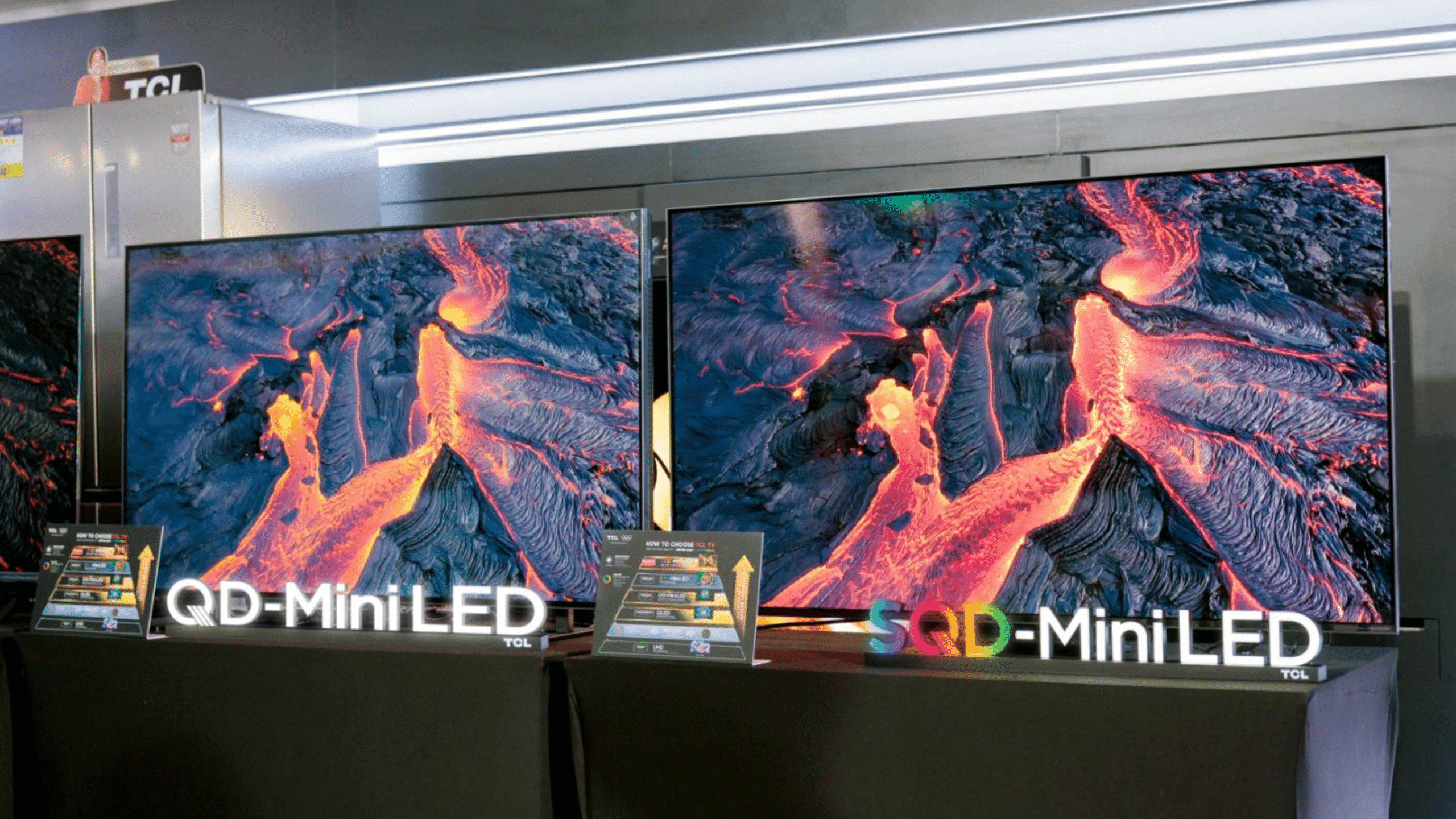
TV shopping has reached a point where a buyer can encounter terms such as Mini LED, QLED, QD-Mini LED, OLED, and now SQD-Mini LED before even deciding what screen size to get. TCL Philippines wants you to stop looking at the acronyms for a moment – which can get overwhelming – and look at what the screen actually does.
At a recent hands-on media session at TCL’s Manila headquarters, the company put its new C7L SQD-Mini LED TV through side-by-side demonstrations designed to make the differences in brightness, color, contrast, and backlight control easier to see. The C7L is the first television in the Philippines to showcase TCL’s new Super-QD Mini LED, or SQD-Mini LED, platform which is easy on the eyes but still crisp in color.
It arrives at an interesting moment for TCL locally, as the company was named the No. 1 Panel TV Brand in the Philippines for the third consecutive year, according to TRS Research’s 2025 Annual Cumulative Market Share Report, ranked based on nationwide brick-and-mortar retail performance.
TCL Philippines Sales Director Cyd Montebon said smaller TVs remain important to the local market, particularly for first-time buyers and households looking for a secondary set. But Filipino buyers are also moving toward much larger screens. “In the past three years, our 75-inch, 85-inch and, surprisingly, the 98-inch TVs have been really popular,” Montebon said during the session. She added that TCL’s reach across both smaller and more premium sizes has helped support its position in the market.
Despite the new name, SQD-Mini LED is not an entirely different species of screen. It builds on the same basic idea behind Mini LED, using a much denser array of small LEDs behind the LCD panel so different parts of the image can be brightened or dimmed more precisely.
The problem Mini LED manufacturers continue to work on is “blooming,” the visible glow that can appear around a bright object against a dark background. Think subtitles against a black screen or a streetlight at night.
As Mini LED TVs evolve with ultra-high zone counts and ultra-high brightness, the problem has expanded beyond simple brightness bleed into what researchers are calling color blooming — color crosstalk at high-brightness boundaries that becomes more sensitive, not just a halo of light but a halo of inaccurate color. This is the gap SQD-Mini LED is specifically designed to address.
SQD stands for Super Quantum Dots. Rather than switching to an RGB LED backlight — the approach other brands pursue, TCL’s SQD-Mini LED uses a traditional blue LED backlight combined with newly formulated quantum dots and an UltraColor Filter, which TCL claims allows it to reach 100% BT.2020 color coverage without the complexity and cost of a full RGB array.
The system combines what TCL calls its Precise Dimming Series with a higher-efficiency light-emitting chip, a condensed micro-lens system, Micro-OD construction, and its All-domain Halo Control Technology. SQD-Mini LED doesn’t just add more zones, it actually shapes and contains the light coming out of each one, reducing spill into surrounding areas for both brightness and color.
Mini LED, in other words, is a category. TCL has a tested formula to implement this play on light and colors to get the best picture possible. It’s one thing to have Mini LED technology. It’s another thing to be able to tune it well for your viewing pleasure. This is where TCL excels.
The “SQD” also represents an evolution of TCL’s quantum-dot approach.
The system combines Super QLED technology with an upgraded color filter in the panel. TCL says refinements to its quantum-dot material produce purer light before it reaches the screen, while its Ultra Color Filter is designed to separate colors with greater precision.
On the C7L, TCL claims up to 100 percent of the BT.2020 color gamut, although that figure is a TCL laboratory measurement and the company notes that results can vary depending on test conditions and individual products. Wider color gamut figures sound impressive, but the harder job for a TV is maintaining believable color across very bright and very dark scenes rather than producing one spectacular demo image.
TCL’s stated goal with SQD-Mini LED is to control both sides at once: keep highlights bright, keep black areas dark, and prevent neighboring colors from bleeding into one another.
During the presentation, TCL placed SQD-Mini LED at the top of its current TV technology hierarchy, above RGB-Mini LED, QD-Mini LED and conventional Mini LED. The distinction, at least from TCL’s point of view, is not simply brighter output or a higher zone count, but the combination of more precise light control and color management across the panel.
The flagship expression of SQD-Mini LED is TCL’s X11L, the world’s first TV using the technology. At the top end of the range, TCL lists up to 20,736 precise dimming zones and HDR brightness reaching 10,000 nits on the 98-inch model. The X11L also received the Innovative Display Technology Gold Award at the Global Top Brands Awards during CES 2026.
But the C7L is arguably the more relevant product for regular buyers, because it is positioned as the more accessible premium model.
In the Philippines, it comes in 55-, 65-, 75- and 85-inch sizes. Dimming-zone counts vary by size: the 55-inch model has 800, the 65-inch has 1,152, the 75-inch has 1,352 and the 85-inch reaches 1,624. Peak HDR brightness is rated at up to 2,700 nits on the 55-inch model and up to 3,000 nits on the 65-inch and larger versions.
Those figures should not be read as a direct guarantee of what every piece of content will look like. Peak brightness is measured under specific conditions, and dimming-zone count is only one component of image quality. But together with the panel and light-control system, they help explain why TCL is pushing the C7L as something more substantial than another QLED refresh.
The C7L also uses TCL CSOT’s HVA 2.0 panel, including a low-reflection layer intended to reduce glare and improve contrast in brighter rooms. Its TSR AiPQ Processor handles image optimization for clarity, contrast, color, and motion.
There is a strong gaming spec sheet for this model. TCL’s 288 VRR Game Accelerator can reach 288Hz with a compatible source through two HDMI ports. AMD FreeSync Premium Pro and Dolby Vision gaming are also supported which means that this is not just a television, but a full-fledged gaming monitor.
For now, the C7L sits between showcase technology and something more attainable. Where TCL takes SQD-Mini LED next will determine whether it remains a premium talking point or becomes the next step in the company’s mainstream TV lineup.
This article is brought to you by TCL.
