Ahead of Xi-Trump summit, China urges Iran, US to return to Islamabad pact, open Hormuz - Anadolu Ajansı
China on Wednesday urged the US and Iran to return to the Islamabad Memorandum of Understanding as Chinese President Xi Jinping was expected to meet his US counterpart Donald Trump next week in Washington.
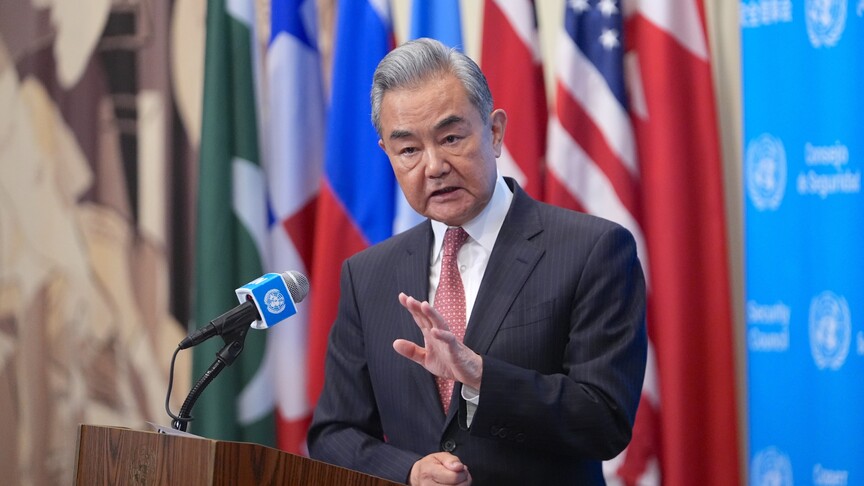
Chinese Foreign Minister Wang Yi made the call during his meeting with Iranian counterpart Abbas Araghchi, who is on a one-day trip to Beijing, according to a statement by China's Foreign Ministry.
The continued prolongation of the US-Iran conflict “is not in the common interest of the parties concerned and the international community,” Wang told Araghchi.
“China encourages Iran and the United States to stay rational and exercise restraint, return to the Islamabad Memorandum of Understanding at an early date, rebuild the negotiation mechanism on the basis of the consensus reached so far, and conduct substantive consultations on issues of respective concern,” Wang said.
The memorandum was signed in June after mediation by Pakistan and Qatar.
Backing Tehran's dialogue with Gulf states, Wang called for mutual respect for territorial sovereignty and national security, and “constructively safeguarding the common interests of the region.”
“We urge all parties to take effective measures to open the Strait of Hormuz as soon as possible, maintain the safety and smooth flow of international shipping lanes, and safeguard the stability of international energy transportation and supply chains,” said the Chinese foreign minister.
Since the US and Israel launched a war on Iran in February, Tehran has effectively closed Hormuz, while the Pentagon has imposed a blockade of Iranian ports since April.
The US-Israeli attacks targeted Iran's government buildings, military sites, missile infrastructure, and air defenses, while Iran responded with missile and drone attacks against Israel, as well as US bases across the region.
The conflict has since expanded across the region, while diplomatic efforts have continued to end the hostilities.
China does “not want regional tensions to spill further over into Yemen and the Red Sea,” Wang said, as the Yemeni Houthi group and Saudi Arabia engaged in airstrikes.
“We call on all parties to stop further complicating the situation and resolve issues through dialogue and negotiation,” he stressed.
Wang assured Araghchi that China, as a permanent member of the UN Security Council, “is willing to play a constructive role in resolving international disputes.”
“China and Iran are comprehensive strategic partners, and China is also willing to strengthen dialogue and cooperation with Iran to safeguard its legitimate rights and interests,” he said.
Wang last hosted Araghchi in Beijing in May, ahead of US President Donald Trump's summit with Xi in Beijing.
Wednesday's meeting marked their second in-person talks in the Chinese capital since the US and Israel launched strikes on Iran on Feb. 28.
China is one of the largest importers of Iranian oil as the two countries maintain a “comprehensive strategic partnership,” driven primarily by economic ties and discounted energy imports.
Bilateral trade volume climbed to over $41 billion last year.