Ahmed Timol was murdered in custody. Why did justice stop there? - IOL
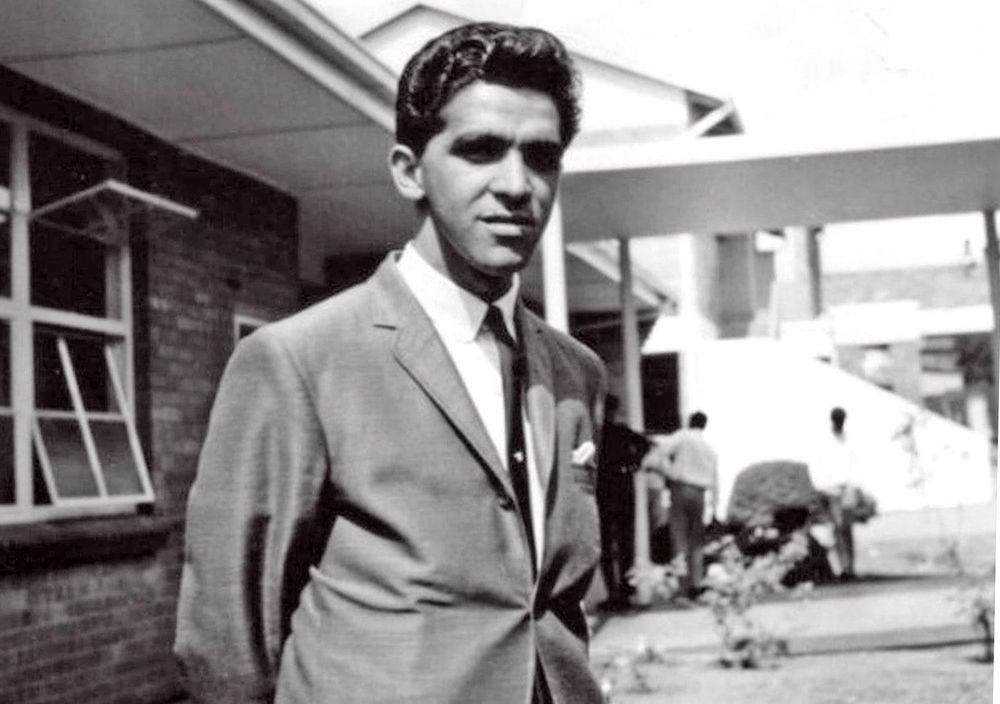
Ahmed Timol was a young schoolteacher in Roodepoort who opposed apartheid. He was arrested at a police roadblock on October 22, 1971, and died five days later. He was the 22nd political detainee to die in detention since 1960. His nephew is still seeking justice for him.
Murdered in police custody in 1971, then failed by a democratic state that chose not to prosecute.
The courts have called it a “timid retreat”. The truth is worse.
On 27 October 1971, Ahmed Timol fell ten floors from Room 1026 at John Vorster Square, the Johannesburg headquarters of the Security Branch. Two days later, posters on every street corner carried the police version: “Suicide” of Detainee.
The quotation marks did the real reporting. For some readers they marked a quote. For many more, they were a newspaper’s quiet way of saying it did not believe a word.
It took 46 years for a court to confirm what those inverted commas implied. Timol did not jump. He was pushed. What followed that finding is its own scandal: a state that knew, and for fourteen years chose to do nothing.
John Donne wrote that any man’s death diminishes us all. Fifty-five years on, the bell for Ahmed Timol is still tolling.
Timol was born in Breyten in 1941, one of six children of Haji Yusuf Timol, a Gujarati immigrant and close colleague of Yusuf Dadoo. Politics ran in the house.
He trained as a teacher and served as SRC vice-chairman at the Johannesburg Training Institute for Indian Teachers. In 1966 he left for the Hajj and travelled on to London, where he taught in Slough and joined the SACP and Umkhonto we Sizwe. In 1969 he studied at the Lenin School in Moscow alongside Thabo Mbeki.
He came home in 1970 to teach at a Roodepoort high school, play cricket and quietly distribute underground literature. That was his crime.
On Friday 22 October 1971, Timol told his parents he was going to the cinema. At about 11pm, police stopped him and Mohamed Salim Essop at a roadblock in Coronationville and found ANC and SACP pamphlets in their Ford Anglia.
Days later, police searching the family home told his mother Ahmed needed “a hiding”. When she said she had never hurt her son, they replied: “Because you didn’t hit him, we will hit him.”
They kept their word. Essop was found comatose in HF Verwoerd Hospital. The district surgeon listed sixteen separate injuries. Essop later described torture, electrocution and being urinated on until he lost consciousness. He also testified that he saw Timol, badly injured, hooded and dragged along a corridor by two officers.
The official story was that Timol, calm and unharmed, suddenly ran around a table and leapt from the window while Sergeant Joao Rodrigues stood by. To support it, police produced a Communist Party document urging detainees to commit suicide. Minister Jimmy Kruger would read the same document in Parliament five years later, after Steve Biko’s death.
The 1972 inquest accepted the police version. Pathologist Dr Jonathan Gluckman showed that Timol’s injuries were not fresh and could not have come from the fall. It made no difference. The magistrate ruled that Timol had been treated in “a civilised and humane way” and that nobody was to blame.
Inside the Security Branch, the death became a punchline: “Indians can’t fly.”
Former BOSS agent Gordon Winter later claimed Timol was dropped during interrogation. Another detainee described being dangled by the ankles from a high window while officers let go one leg at a time.
The Timol family never stopped. In 2017, Judge Billy Mothle reopened the inquest and overturned the 1972 finding. Timol, he ruled, was pushed from the tenth floor, with intent to kill. Rodrigues, he found, took part in the cover-up and should be investigated for defeating the ends of justice and as an accessory after the fact.
The Truth and Reconciliation Commission found several policemen responsible for Timol’s murder. None of them applied for amnesty. They gambled that the new state would not come after them, and they were right.
When Rodrigues sought a permanent stay of prosecution in 2019, Judge Jody Kollapen and two colleagues laid bare why. From 2003 to 2017, they found, investigations into TRC-era crimes were halted by “an executive decision taken at a high level”.
There was “no bold prosecutions policy rather what can only be described as a timid retreat.”
The NPA itself conceded the delay stemmed from “political interference” and “severe political constraints”.
Former National Director Vusi Pikoli said under oath that the justice minister expected him not to prosecute TRC cases. He objected in a memo dated 15 February 2007. By September that year he had been suspended.
The Supreme Court of Appeal called the moratorium “perplexing and inexplicable” and said it suggested “disdain” for the Constitution and for victims.
The judgments speak of “high level executive interference” without naming a name. The courts did not let the NPA hide behind politics either. Prosecutors, they said, had a duty to resist and to expose the interference to victims, Parliament and the public. They did neither. The judges asked the National Director to consider action under section 41(1) of the NPA Act, which carries up to ten years in prison, and demanded a public assurance it would never happen again.
Rodrigues died in 2021 without ever facing trial. Every year of the “timid retreat” was a gift to men like him.
Ahmed Timol was 29. His killers were protected first by apartheid, then by the silence of the democracy he died for. Until someone is held to account for that silence, the inverted commas around “suicide”, will not be the only lie in this story.
*Judge Christopher Nicholson has lived all his 80 years in KwaZulu-Natal. He practised as a human rights lawyer, assisting victims of apartheid, before majority rule was won in 1994. His efforts were recognised with two awards, and he was appointed a high court judge in 1995. He has published nine books and a play.