AI, War and Civil Unrest: Why the Rich Are Getting Their Bunkers Ready - Newsweek
"In your lifetime, do you feel like the world has become a better place or a worse place?"
That is the question Cory Hubbard asks prospective clients. As co-owner of DEFCON Underground, a U.S.-based manufacturer of bomb shelters, Hubbard caters to a growing, increasingly mainstream market of consumers seeking protection from worst-case scenarios.
From backyard bunkers in the Midwest to deep subterranean hideouts in Northern Europe and the Middle East, the industry offers a range of designs, locations, and price points. Developers told Newsweek that business is booming amid an era of heightened geopolitical and technological upheaval.
“Interest has grown sharply. I haven't put a precise figure on it, but the rise in inquiries and website traffic has been unmistakable,” Michael Brait, CEO of the Massachusetts-based Bunker Building Consulting LLC, said. “More people reaching out, asking more serious questions, and moving faster from curiosity to real planning than I saw even a year ago."
He added: “A subject once treated as fringe has become a mainstream conversation among people with the means to act on it.”
Those in the disaster preparedness business who spoke with Newsweek listed many reasons why a client might look into building or buying their very own bunker in 2026. Motivations range from specific to general, and from the simple desire for peace of mind to more acute existential fears.
“One person is worried about Iran and where that goes. Someone else is concerned about the grid or a cyberattack. We hear about AI, political unrest, another pandemic, natural disasters. Often a client will mention three or four things in the same conversation,” Naomi Corbi, partner and director of operations at Strategically Armored & Fortified Environments (SAFE), said. “There’s a general sense that the world feels less predictable than it did even a few years ago."
Hubbard told Newsweek that civil war is now a “common concern among our customers,” given many see the U.S. as “becoming increasingly divided and worry that it could eventually lead to civil unrest or conflict.”
“The risks posed by powerful, out-of-control AIs are not overblown,” says Andrew Yoon, head of research at the AI safety-focused nonprofit CivAI, who told Newsweek that—apocalypse or not—"we should approach these unprecedented and rapidly evolving risks with humility."
And reflecting the contemporary fears around AI agents going rogue, bunker businesses say the tech has joined the long list of topics being raised by would-be subterraneans.
Beyond presenting its own, Corbi said it's “acting as a catalyst” for existing threats in the cybersecurity and physical security space, and now “comes up much more frequently” in client discussions.
Four things have driven “heavy sales” since 2020, according to Ron Hubbard, CEO of the Atlas Survival Shelters, a Texas-based designer of bomb-proof bunkers and safe rooms. On top of COVID-19, the war in Ukraine, the Iran war and “illegal immigration,” he said AI can now be “added to the list.”
“It’s a cocktail for disaster in the future with no letup in sight, so business is good," he said.
And demand has grown alongside this list of perceived threats. James Anders Bourne, director of the United Kingdom-based Bunker Safe Ltd., said his company had witnessed “a significant increase in inquiries for both nuclear and non-nuclear shelters.”
And Dante Vicino likewise said inquiries had jumped notably in recent months alone. Vicino is executive director at the survival shelter outfit Vivos, whose story goes back to 1980, when Robert Vicino “was inspired to build a shelter for 1,000 people, deep underground to protect us from a coming life-extinction event.”
“Robert was not very religious at the time and had no motivation or cause to be alarmed,” the website reads. “Just a very strong inspiration, that he now believes was from God.”
Since officially launching in 2008, Vivos has been working toward a “global network of underground community shelters,” and currently offers clients private shelters built to withstand “virtually every threat” from nuclear war to economic collapse to a “global tsunami.” Its current selection includes an 80-person “nuclear hardened” accommodation in Indiana, built during the Cold War and able to absorb “a 20-megaton blast.” A single space is available for $50,000, with discounts offered to those “with needed skills.”
Its website also lists end-times prophecies from the Bible, non-Abrahamic faiths and history’s most famous clairvoyants to communicate to users the perils associated with waiting around—"it wasn’t raining when Noah built the Ark!”
But more tangible threats are the ones now driving demand.
“Global political tensions and rising concerns of AI are at a near-breaking point and many think that we are at the brink of WW3,” Vicino told Newsweek.
Brian Camden, founder and president of Hardened Structures, a Virginia-based bomb shelter and fortified facility firm, told Newsweek his company has $100 million worth of projects currently underway. It's even assisting foreign governments in the Middle East, Poland, Spain, and Ukraine to build their own "hardened facilities" with the approval of the U.S. State Department.
Despite the price tags on these projects, the industry appears reluctant to appeal exclusively to the super rich.
“We cater to a wide variety of people as we have never wanted to be in the business of 'bunkers only for the elite/one percent,'” Vicino said. “Great for those who do so and desire it, but that's not our focus.”
“[I]nquiries have come from across a broad cross-section of people—not just the wealthy—from the general public and private individuals through to serious approaches from major companies and overseas parties,” Bourne said. However, he said that most inquiries come from those with a limited understanding of the costs and logistics involved, as opposed to the “very serious, high-value projects.”
But others appear less uneasy about any association between doomsday bunkers and exorbitant wealth—targeting the ultra-affluent appearing a mark of exclusivity to some.
On the “media” section of its website, SAFE links to dozens of articles and news features referencing its “billionaire bunkers,” including a special called “Protecting the Super Rich” and a Realtor.com article on its “$300 Million Members-Only Luxury Doomsday Bunker.”
“We do not sell premanufactured steel shelters that are delivered on a truck,” Camden told Newsweek. “So, most of our clients are affluent, millionaires, billionaires, combined affluent individuals for multi-unit retreats, and corporations. We mostly work through the client’s attorneys.”
“We don’t design around predicting what might go wrong,” Corbi said. “We design around what happens when it does.”
And the facilities SAFE’s clients can purchase are therefore multi-function and heavily fortified. The bespoke bunkers on offer are all fitted with electromagnetic pulse (EMP) protection, Chemical, Biological, Radiological, and Nuclear (CBRN) air filtration, their own energy systems, medical suites and “command centers.”
But Corbi refers to these as “residences,” and notes that SAFE also offers “high ceilings and long sight lines, full kitchens and bedroom suites, gyms, pools, wellness and medical spaces, areas for children, pets, greenery, fireplaces, circadian lighting and architectural displays that can create the effect of windows or exterior views”—for the discerning doomsday prepper.
“And yes, we also design for the animals,” she added. “We have four dogs and a rabbit ourselves, and I’m certainly not leaving them upstairs with a note.”
Mark Cyphers, the business development lead at Hardened Structures, told Newsweek that most “high net worth” clients are interested in the company’s "Generational Home”—a luxury property underneath which sits a ballistics- and Electromagnetic weapon-proof bunker with CBRN filtration.
As well as reserves of food and water, Cyphers said each contains an armory, communications room and decontamination room, as well as standard living quarters.
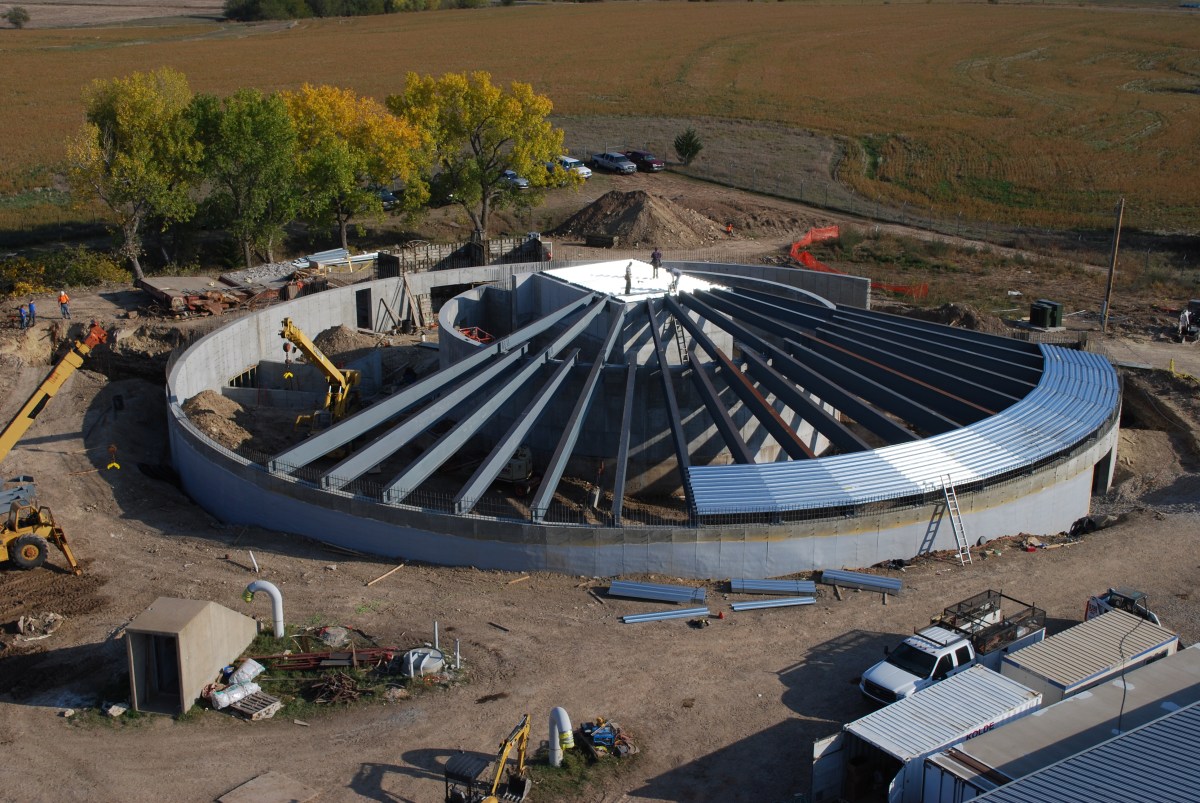
Another example is Survival Condo, a bunker in northern Kansas capable of housing and sustaining 75 individuals for several years. Larry Hall purchased the decommissioned missile silo in 2008 for $300,000 before turning it into the 15-storey, 20,000-square-foot bunker it is today.
Hall told Newsweek he has been contacted by a number of “ultra-high-net-worth clients,” who were initially interested in private bunkers, but later decided the silo’s community aspect was more appealing.
He also noted specific requests from affluent clients, such as "James Bond" heliport and an underground mosque—the latter from a Middle Eastern customer who was “discussing facility-wide upgrades because they were looking to buy the entire facility.”
Survival will always be the species’ chief imperatives. But alongside declining faith in humanity and the future, the bunker business reveals a stratified search for safety—in many ways limited to those with the means to afford it and are quick to answer Hubbard’s question:
“In your lifetime, do you feel like the world has become a better place or a worse place?”
Newsweek’s reporters and editors used Martyn, our AI assistant, to produce this story. Learn more about Martyn here.
Contact Newsweek editors for this story: Tobias Meyjes and Anthony Murray.