Airlines ‘Panicking’ as Trump Admin Launches AI Air Traffic System—Democrat - Newsweek
The Federal Aviation Administration (FAA) on Monday rolled out a new artificial intelligence-supported tool designed to spot potential air traffic problems before they happen and reduce delays and cancellations, as Representative Don Beyer called for the system to be suspended.
The Virginia Democrat said airlines had reportedly been “privately panicking” over the rollout of the system, called SMART, claiming that air traffic controllers were not adequately consulted or trained.
“Unfortunately, I was informed today that air traffic controllers were not consulted on the ‘SMART’ system’s design and development, and were not trained on using it prior to the system’s adoption at local airports,” Beyer said in a statement Monday, adding that controllers were also told the system could adjust flight schedules and potentially routes.
The FAA describes SMART as a tool that makes recommendations to aviation specialists, who can then decide how to address potential problems.
Leadership of major airlines, however, have publicly backed SMART. The CEOs of United, Delta, American and Southwest praised the system in statements released by the FAA, citing its potential to reduce delays, improve efficiency and better manage the nation’s airspace.
“If it works as we think it can, it will do more to reduce delays and cancellations than anything that’s happened in decades,” United Airlines CEO Scott Kirby said in a statement.
Delta Air Lines CEO Ed Bastian similarly said the company “fully supports” the FAA’s efforts to modernize the National Airspace System through investments in technologies that can “enhance operational efficiency, improve situational awareness, and help reduce congestion,” including SMART.
Newsweek reached out to the FAA and National Air Traffic Controllers Association.
The Strategic Management of Airspace, Routes and Trajectories centralizes 200 data streams into one platform, according to the FAA. This includes weather patterns, flight paths, traffic flow and controller staffing metrics.
The system is designed to combine data to show where planes are going, how much traffic the system can handle and possible snags.
The FAA says SMART is designed to address those issues before they arise, with the goals of reducing flight delays and cancellations, optimizing airspace, making operations more predictable and lowering ticket prices.
“By fundamentally reshaping how we manage our airspace and preventing problems before they happen, SMART will slash those frustrating delays, reduce stress on air traffic controllers, and lower travel prices,” Transportation Secretary Sean Duffy said.
SMART analyzes demand, weather and airspace constraints to identify potential congestion and help officials plan ahead. The goal is to help the FAA anticipate air traffic disruptions rather than react to them.
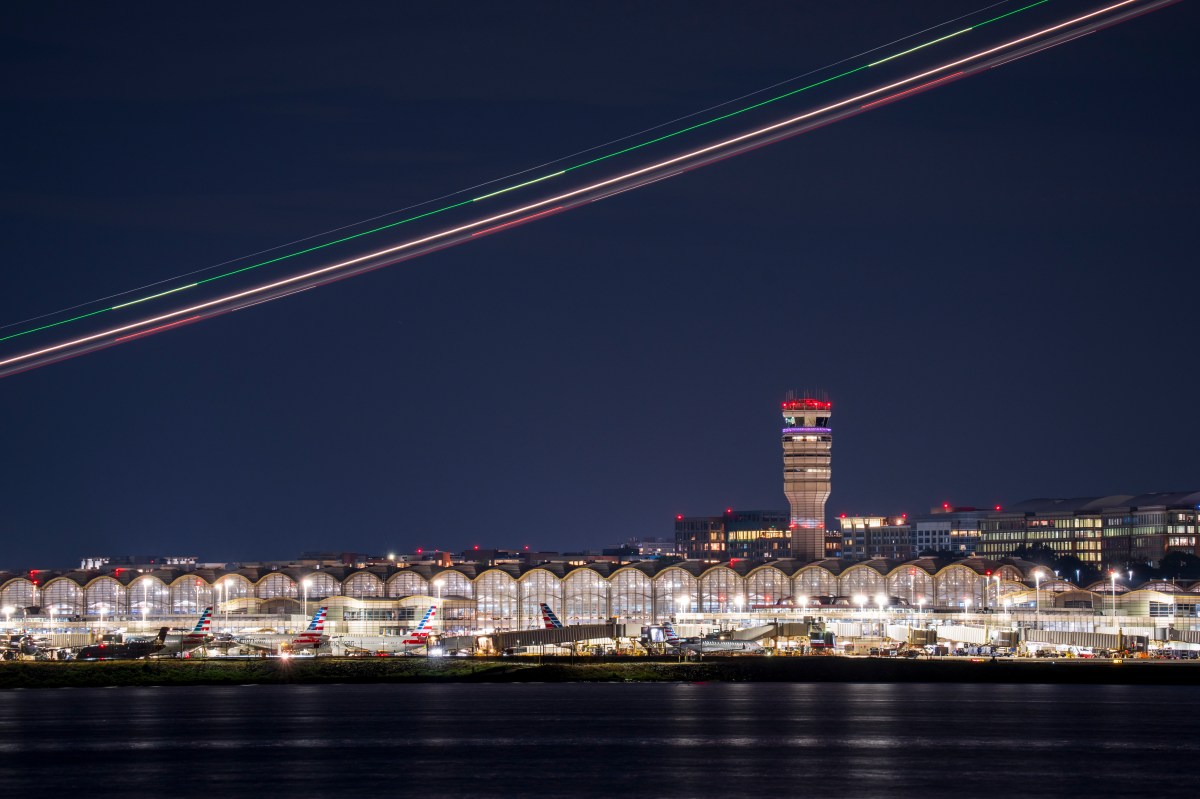
The system was launched in a limited mode Monday around Washington, D.C., with plans to eventually expand across the country.
“SMART cannot be used to replace the critical role air traffic controllers play or take over control of an aircraft,” according to the FAA. Agency staff will review the system’s recommendations, while local air traffic control leadership can choose whether to accept or pass on its scheduling suggestions.
“Its potential to strengthen safety, increase capacity and improve efficiency will have a direct positive effect on American travelers and the shipping public, reducing delays and cancellations across the country,” Airlines for America CEO & President Chris Sununu said.
Beyer, who represents a Northern Virginia district that includes Ronald Reagan Washington National Airport, criticized the rollout in light of last year's fatal accident.
“The FAA should not use my constituents as guinea pigs for an unproven AI air traffic control system,” he said.
Beyer added that residents in the region are “still uncertain” about air safety following the deadly midair collision near DCA in January 2025. An American Airlines regional jet and a U.S. Army Black Hawk helicopter collided over the Potomac River, killing all 67 people aboard the two aircraft.
The National Transportation Safety Board found that systemic failures contributed to the collision and described it as the nation’s deadliest aviation accident since November 2001.
The rollout came as the FAA separately dealt with a major equipment failure Monday that disrupted flights across the Northeast. The outage was unrelated to SMART.
The technology failure, involving a fiber-optic cable, was affecting flights across the Northeast, the FAA previously told Newsweek.
Duffy said an Amtrak construction crew accidentally cut into a fiber line in New Jersey, triggering a telecom outage and forcing the FAA to pause flights in the Northeast.
As of 6 p.m. ET Monday, he said, the telecom lines had been repaired, and all airport operations in the Northeast are resuming.
More than 1,100 flights were canceled within, into, or out of the U.S. on Monday and nearly 7.900 others were delayed, as of 10:30 p.m., according to FlightAware.