
Althia Raj: Whatever good is in Mark Carney’s Building Canada Strong Act is poisoned by the toxic rest - Toronto Star
The government frames this law as part of its “Canada Strong” plan — and frankly, some parts are good — but toxic with good is still bad.
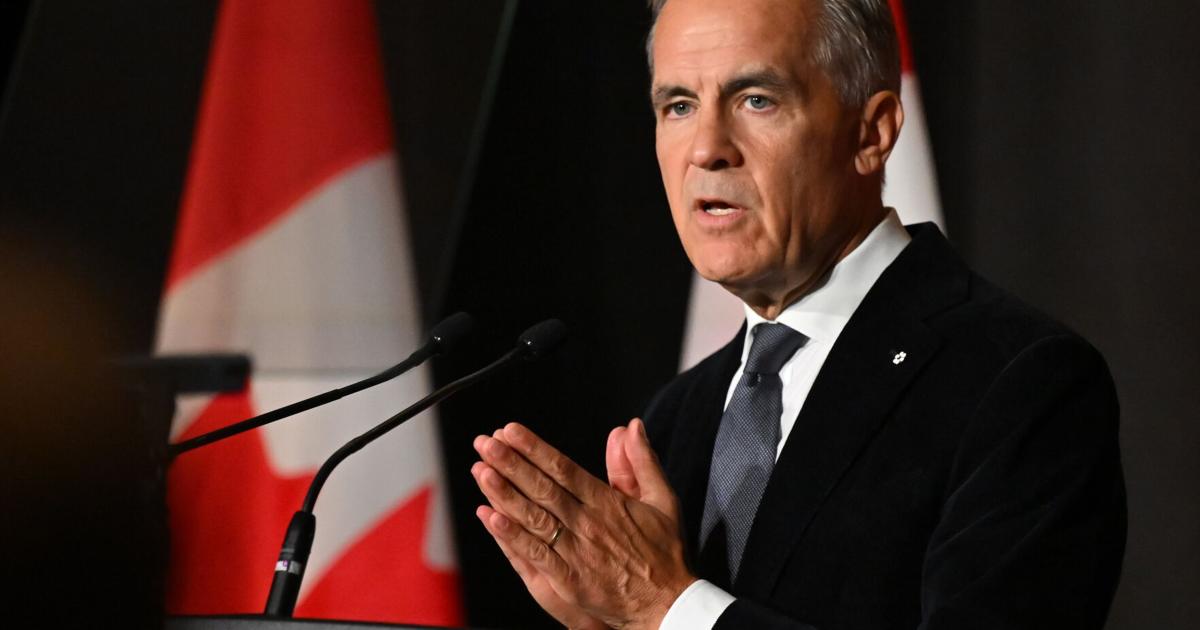
Prime Minister Mark Carney’s government Carney government tabled a sweeping bill Monday that will overhaul environmental and labour rules.
Althia Raj is a national politics columnist for the Star. Follow her on Twitter: @althiaraj
Prime Minister Mark Carney speaks eloquently about shared values of democracy, addressing climate change, fighting for human rights, and walks his talk of like-minded countries banding together to preserve the rules-based international order. Whether its penning an op-ed in the Financial Times to announce Partners for Multilateralism with the presidents of Brazil, Kenya and the European Council, or sounding the alarm at the World Economic Forum in Davos, or at the European Parliament in Strasburg, Carney has made Canadians proud.
At home, he is praised for his stance against U.S. President Donald Trump’s threats. Because of the current political realities — and Carney’s capacity to lead — a significant majority back his agenda, recent byelections saw the Liberals win all three seats by more than 50 per cent of the vote.
But that agenda is increasingly different from the one the Liberals put forward in the last election: massive increases in defence spending, big subsidies to oil and gas, the abandonment of United Nations peacekeeping, net-zero climate goals that won’t be met, the selling off of Canada’s largest airports to private operators, and a loophole reform to Canada’s project approval process.
Monday, the Carney government tabled C-39, the “Building Canada Strong Act.”
It’s legislation that Conservatives can only dream Canadians would have allowed them to table. But Liberals who spent years saying their assessments wouldn’t result in lawsuits, and that science-based decision making that considered impacts on nature, climate, Indigenous Peoples, was required — now stand by watching it dismantled by one of their own.
Now, one can believe that it takes too long to get projects done in this country and reform is needed, and still conclude that what the prime minister proposes is a radical departure from what Canadians expect.
Building Canada Strong Act is a 243-page omnibus bill that amends several pieces of legislation. It wasn’t given to journalists until 35 minutes into a 45-minute technical briefing. When ministers took the podium, reporters had no chance to thoughtfully review the bill. This isn’t the way sweeping legislation should be explained.
Setting that aside, what the bill does is vast in scope. It doesn’t just speed up timelines for reviews and permitting to one year, it amends the “Building Canada Act,” the controversial bill C-5, to allow for “regions of national interests,” essentially gives the government another loophole by which to fast-track projects, where it can pick and choose what laws to apply.
The new bill also gives a designated minister — for now, Internal Trade Minister Dominic LeBlanc — the power to remove conditions from projects already approved.
“One of the things that’s holding Roberts Bank Terminal Two back from construction, are some conditions that were imposed under the environmental assessment to prevent harm to Southern Resident Killer Whales,” said Anna Johnston, a staff lawyer at West Coast Environmental Law. “The proponent had to come up with a plan for shipping at night so as to more minimally impede orcas when they’re hunting.
“The minister now, in this bill, will have the power to just remove that condition of approval,” she said.
The bill mostly follows what was presented last May for public consultation. Cabinet will pre-approve big pipeline projects before routing details or the Canada Energy Regulator’s review of environmental conditions and impacts on Indigenous Peoples is complete, for example. But one thing the government backed away from — after receiving 26,000 emails — are changes to Species At Risk Act that would have allowed cabinet to approve projects that could lead to the extinction of species. Unfortunately, the changes proposed Monday, and the change made in C-5 last year, allow the Carney government to do the same run around Canada’s environmental protections for species at risk, like the orcas, just without the public closely watching.
This is far from the only poison pill in C-39: the bill gives the CER — now the reviewer of major pipelines — the ability to remove conditions, to suspend a variety of laws from applying, including for example, now allowing a company to start constructing a pipeline without meeting the conditions set out in its certificate (those very conditions upon which the certificate was granted).
The bill also amends the Canada Labour Code to expand on the labour minister to use section 107 — a power that the Liberals have used several times since 2024, including last summer under Carney, to shut down strikes and impose binding arbitration.
Labour groups had called on the Liberals to eliminate section 107 — arguing it was unconstitutional (four ongoing court cases may settle that). Instead, the Grits have codified it and offered conditions by which the minister’s power can be exercised.
The government frames this law as part of its “Canada Strong” plan — and frankly, some parts are good — but toxic with good is still bad.
Error! Sorry, there was an error processing your request.
There was a problem with the recaptcha. Please try again.
You may unsubscribe at any time. By signing up, you agree to our terms of use and privacy policy. This site is protected by reCAPTCHA and the Google privacy policy and terms of service apply.
Opinion articles are based on the author’s interpretations and judgments of facts, data and events. More details
Althia Raj is a national politics columnist for the Star. Follow her on Twitter: @althiaraj


