America's Best Community Colleges 2027 - Time Magazine
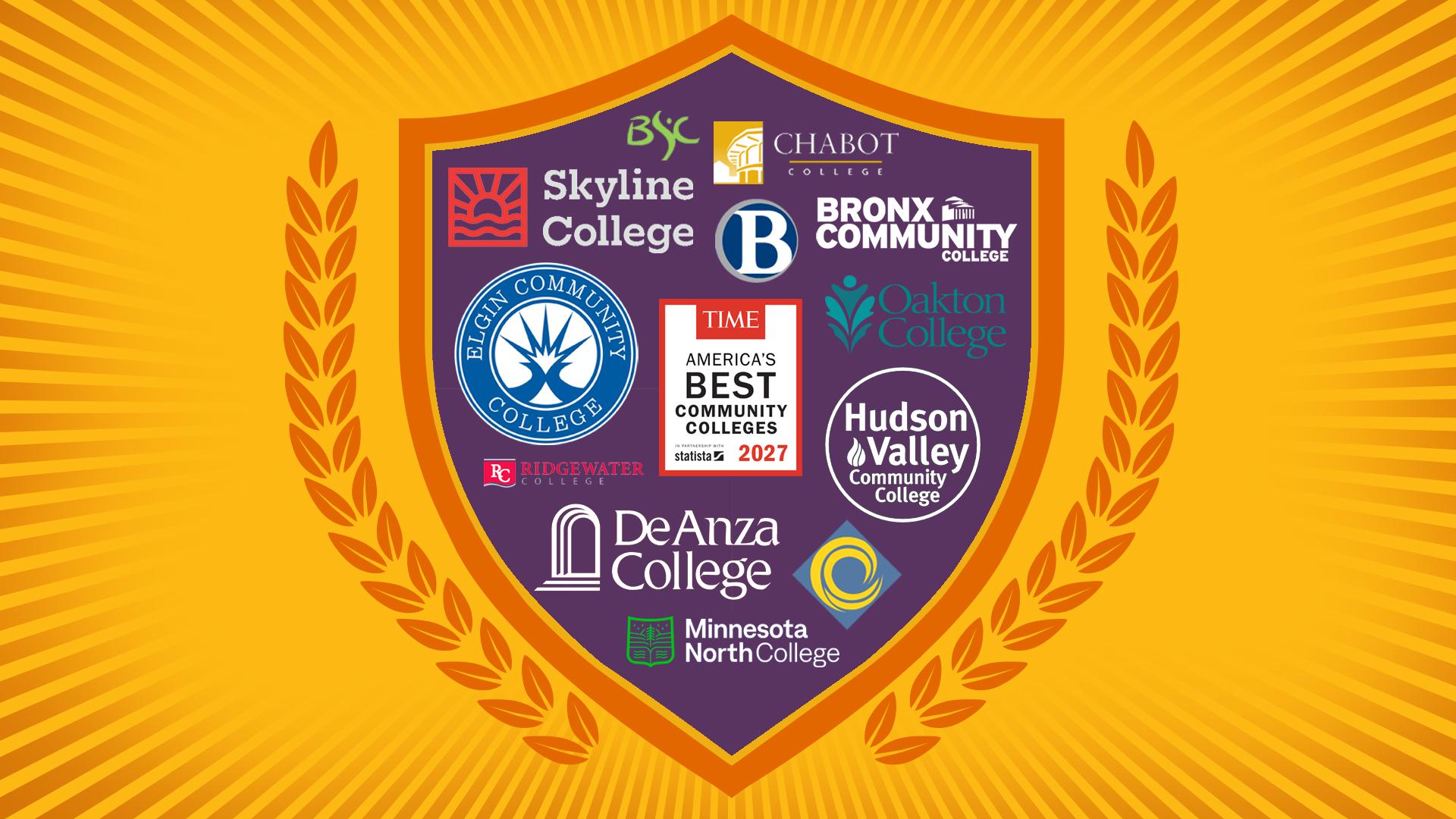
TIME and data firm Statista have released a report card on the best community colleges, an unranked list of the top 250 schools out of the approximately 1,100 community colleges in the U.S.
The list debuts at a time when community college enrollment is growing. In the 2024-2025 academic year, students aged 18 to 20 made up the largest share of first-time associate degree earners for the first time, according to a 2026 report by the National Student Clearinghouse Research Center. And Pell grants are now available to students doing workforce training at community colleges under President Trump’s “One Big Beautiful Bill.”
To be eligible for the TIME-Statista list, schools had to be financially-solvent, public and accredited associate colleges enrolling more than 100 students and offering two year degrees in the 50 U.S. states or Washington, D.C. Drawing on publicly available data from IPEDS and College Scorecard, the list measured schools by student-faculty ratio and core expenditure per student, diversity, graduates’ earnings, graduation rate, transfer rate, and campus resources.
Community colleges have a long history in the United States. The first one opened 125 years ago in Illinois—Joliet Junior College in 1901. But enrollment at these schools really ramped up when the Pell Grants program established in 1965 made education more affordable. Now the more than 10 million community college students in the U.S. make up about 44% of all undergraduates, according to the think tank Community College Research Center.
There’s a common misconception that community colleges are seen as the “also-rans of higher ed when they're at the core of higher ed in our country,” says Josh Wyner, author of What Excellent Community Colleges Do: Preparing All Students for Success, and founder and executive director of the College Excellence Program at the Aspen Institute. So why do some Americans choose a two-year college over a four-year college?
“Affordability is the most obvious reason that you start in a community college,” says Wyner. “Tuition at a community college is typically about half the rate of a public four-year institution.” Many Americans who go to two-year community colleges transfer into a four-year university. For example, students who complete the requirements at Northern Virginia Community College—which appears on the TIME list—can go straight to George Mason University. Others are enrolled in community colleges to do continuing education—finish a GED, take English as a Second Language classes.
Increasingly, high school students are enrolling in community college classes so they can start earning credits for—and reduce the cost of—college degrees. These students make up about 22% of all community college students, according to the think tank Community College Research Center. “It's been an astonishing growth,” says Wyner. “It's larger than AP now.”
According to the U.S. Department of Education, the majority of community college degrees were granted in Liberal Arts and Sciences, General Studies and Humanities, and Health Professions and Related Programs. And community colleges are expanding their offerings in the era of AI. Some of the colleges on the TIME list, like Austin Community College in Austin, Tex. and West Valley College in Saratoga, Calif., offer certificates to prepare students to enter the semiconductor industry as the leading chipmakers face a shortage of qualified workers.