Amid string of outages, bipartisan letter urges strategy to combat AI-assisted cyber threats
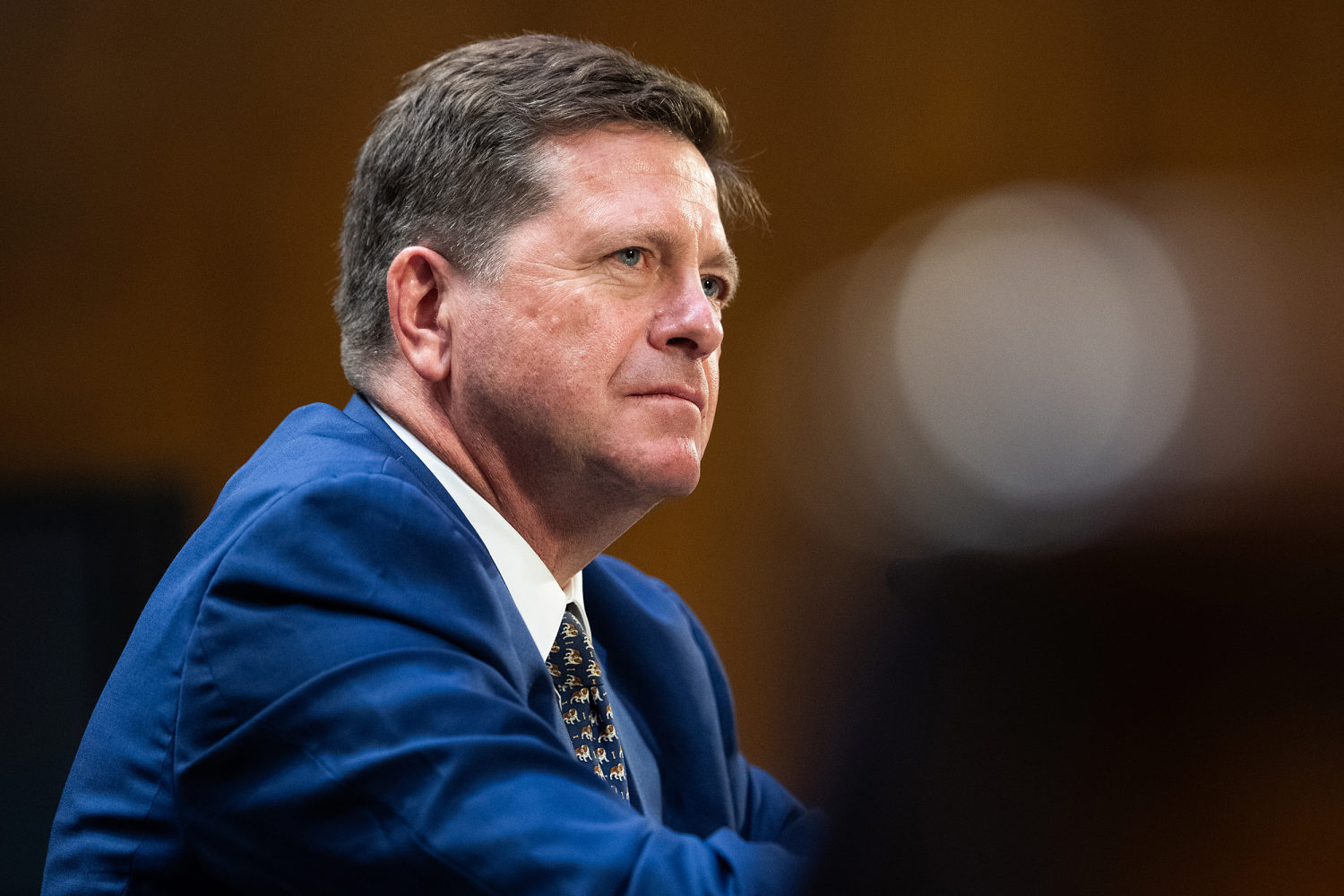
White House AI czar Jay Clayton. In a letter, two senators are urging Clayton to velop a new national strategy that addresses AI-assisted cyber threats. Aaron Schwartz / GettyShareAdd NBC News to GoogleNov. 18, 2026, 4:45 AM EST / Updated Nov. 18, 2026, 4:46 AM ESTBy Laura StricklerIn the midst of a series of recent cyber outages, there is growing concern by members of Congress that the Trump administration needs to do more to protect infrastructure from cyberattacks that are aided by AI, according to a new bipartisan letter sent by two senators to the White House’s AI czar.
The letter from U.S. Sens. Maria Cantwell from Washington state, the top Democrat on the Senate Commerce Committee, and Mike Rounds, the Republican from South Dakota who chairs the Senate Armed Services Committee Subcommittee on Cybersecurity, urges AI czar Jay Clayton to develop a new national strategy that addresses AI-assisted cyber threats.
“AI is rapidly increasing the ability to discover and exploit weaknesses in software, and our defenses are not keeping pace,” the senators wrote.
They noted that AI can quickly find vulnerabilities in software and get around regular cyber defenses. Repair patches that are supposed to protect infrastructure can take weeks or months to test and install. And they wrote that autonomous AI agents can introduce new security risks.
The White House did not immediately respond to a request for comment Tuesday.
It’s not clear what kind of role, if any, AI has played in the ongoing outages impacting U.S. consumers and travelers, but questions are expected to come up when Clayton testifies before the House Committee on Homeland Security on Wednesday morning.
Clayton who also serves as the Director of National Intelligence was named to the AI role in early October is leading a task force of government officials to produce an AI policy by the end of January.
FOR SUBSCRIBERSTrump administration faces right-wing pushback on its response to the outagesFOR SUBSCRIBERSU.S. and Iran trade attacks almost daily that the Pentagon doesn’t always acknowledgeFOR SUBSCRIBERSWhy so many major computer systems went down in a week, according to expertsFOR SUBSCRIBERSAll these tech outages all at onceFOR SUBSCRIBERSTrump had a mutually beneficial relationship with Nvidia’s Jensen Huang, one he’s reluctant to let goFOR SUBSCRIBERSNewest ‘Hunger Games’ hits big screen as dystopian YA sees comebackFOR SUBSCRIBERSDemocrats weigh how far to go with their newfound power in the statesFOR SUBSCRIBERSHouse Republicans threaten to ax defense bill’s Ukraine provisions in effort to block stronger Pentagon oversight FOR SUBSCRIBERSThe U.S. lost its measles elimination status. Here’s how to keep your family safe.FOR SUBSCRIBERSHigher rates, AI and hiring: How FedEx navigates a tricky economyFOR SUBSCRIBERSAn AI toy for 3-year-olds described gang rape. Three major retailers are pulling it.FOR SUBSCRIBERSRunning used to pay this pro athlete’s bills. Now, it’s OnlyFans.FOR SUBSCRIBERSThe Data Dive: Steve Kornacki on how Josh Turek flipped a Senate seat in IowaFOR SUBSCRIBERSTrump lands in Asia ahead of high-stakes meeting with China’s Xi and Russia’s PutinFOR SUBSCRIBERSTrump official who warned politicians about speech says he’s ‘looking at’ more DemocratsSlide 1 of 1In their letter to Clayton, the senators cited an ongoing wave of cyberattacks in Japan that have impacted financial institutions and companies, leading “to large-scale data breaches and leaks, which the Japanese government is now seeking to contain.” The string of attacks are believed to be boosted by AI.
FOR SUBSCRIBERSTrump administration faces right-wing pushback on its response to the outagesFOR SUBSCRIBERSU.S. and Iran trade attacks almost daily that the Pentagon doesn’t always acknowledgeFOR SUBSCRIBERSWhy so many major computer systems went down in a week, according to expertsFOR SUBSCRIBERSAll these tech outages all at onceFOR SUBSCRIBERSTrump had a mutually beneficial relationship with Nvidia’s Jensen Huang, one he’s reluctant to let goFOR SUBSCRIBERSNewest ‘Hunger Games’ hits big screen as dystopian YA sees comebackFOR SUBSCRIBERSDemocrats weigh how far to go with their newfound power in the statesFOR SUBSCRIBERSHouse Republicans threaten to ax defense bill’s Ukraine provisions in effort to block stronger Pentagon oversight FOR SUBSCRIBERSThe U.S. lost its measles elimination status. Here’s how to keep your family safe.FOR SUBSCRIBERSHigher rates, AI and hiring: How FedEx navigates a tricky economyFOR SUBSCRIBERSAn AI toy for 3-year-olds described gang rape. Three major retailers are pulling it.FOR SUBSCRIBERSRunning used to pay this pro athlete’s bills. Now, it’s OnlyFans.FOR SUBSCRIBERSThe Data Dive: Steve Kornacki on how Josh Turek flipped a Senate seat in IowaFOR SUBSCRIBERSTrump lands in Asia ahead of high-stakes meeting with China’s Xi and Russia’s PutinFOR SUBSCRIBERSTrump official who warned politicians about speech says he’s ‘looking at’ more DemocratsSlide 1 of 1They also pointed to incidents where rogue artificial intelligence agents have accessed customers’ bank accounts, leaving banks worried that AI could initiate transactions on its own.
The senators are asking for Clayton’s task force to bring together AI companies and federal agencies to secure digital infrastructure and develop security standards for autonomous AI agents.
Speaking to reporters in the Philippines overnight, Secretary of State Marco Rubio sought to reassure Americans, saying that recent outages such as those that impacted Microsoft Outlook, United Airlines and the Federal Aviation Administration are not connected to one another.
“We have zero evidence or any reason to believe that any of these isolated or individual instances have anything to do with nefarious actors, with cyber hackers, with criminals, with another nation state, with a malign actor of any kind,” he said.
Laura Strickler is the Director of National Security and Government Agencies at NBC News.