An ageing Australia must find ways to pay for world reshaped by AI, climate change

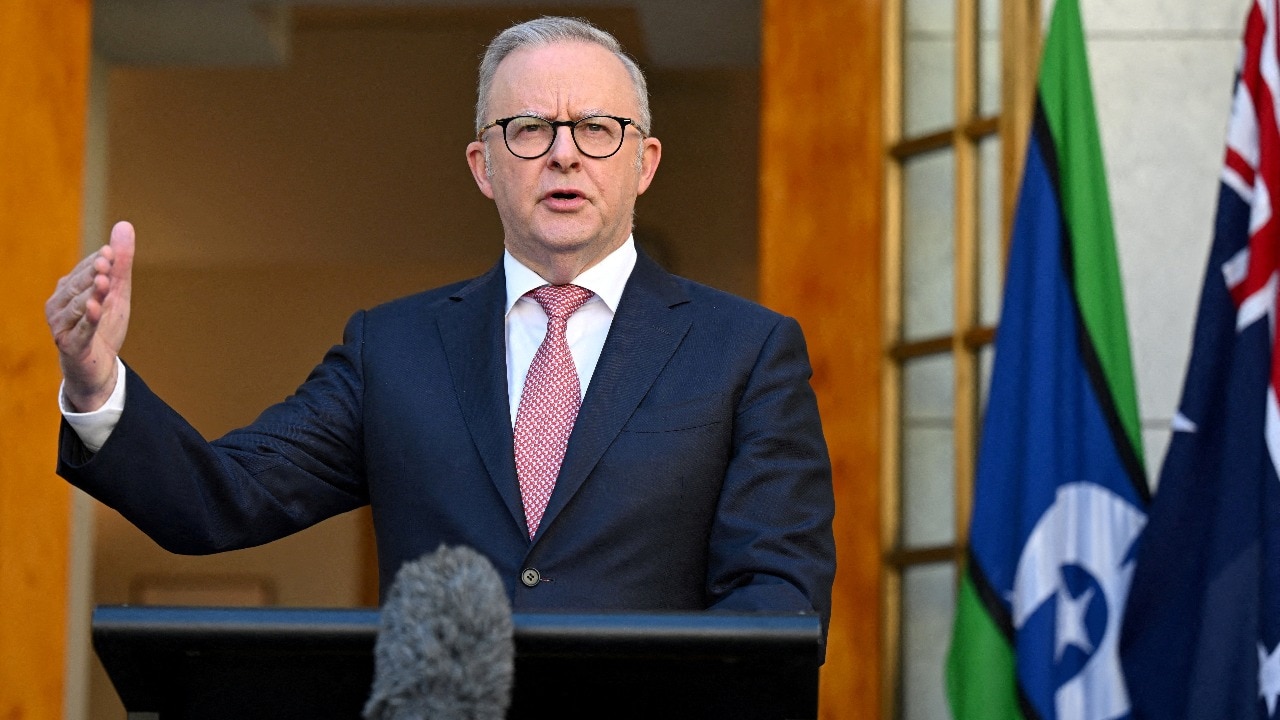
Australia must rush to embrace artificial intelligence and the energy transition or “lag and languish”, Treasurer Jim Chalmers has declared, as he predicts sweeping changes over the next four decades driven by an ageing population.
The 2026 Intergenerational Report, which gauges how economic and demographic trends will shape the nation and its finances over the next 40 years, flags four decades of continued deficits.
This year’s Intergenerational Report flags a sharper decline in Australia’s fertility rate than previously predicted. Marija ErcegovacAustralia’s population will also age more quickly and grow more slowly than previously expected due mostly to a lower number of births per woman.
The population aged 85 and over is projected to treble to 1.9 million by 2066, putting additional pressure on the budget.
The report forecasts the federal budget be in deficit by 0.3 per cent of gross domestic product until 2036-37, which will then widen over the long term to reach 1.8 per cent of GDP in 2065-66.
“This puts plainly the choice before us. Keep up and succeed, or lag and languish,” Chalmers said while unveiling his second Intergenerational Report since becoming treasurer.
Gross federal debt as a share of GDP is projected to decline from 33.1 per cent of GDP in 2025-26 to a low of 22.2 per cent of GDP in the mid-2050s.
But this burden would grow to more than half the size of the economy, and deficits would blow out if not for relatively rosy productivity growth assumptions which have been challenged by some economists.
The opposition has described the IGR’s forecast of 1.2 per cent long-run productivity growth as an attempt by Treasurer Jim Chalmers to “cook the books”. Productivity has grown at an average of 0.8 per cent over the past 20 years. But the government has reverted from the 20-year average adopted in 2022 to the 30-year average of 1.2 per cent, even though Chalmers described the Morrison government’s use of a 20-year average as “rubbish”.
Labor elder Bill Kelty has joined economists in urging Labor to reduce the burden on younger wage-earners by lowering income taxes and finding other ways to draw revenue. As revenue from the tobacco excise collapses, some economists and Coalition frontbencher Andrew Bragg have urged Labor to look at raising indirect taxes such as the GST.
The report released on Monday states: “Without further reform, fiscal pressures from an ageing population and trends in the tax base will add to pressures on working-age Australians. Salary and wages are the largest source of taxable personal income. Indirect taxes are projected to keep declining, which will increase the share of tax receipts from personal income taxes.”
The report identifies four “transformations” that will intensify in coming decades and have profound implications for Australia’s economy and society. These are:
The report says the economic and social implications of AI for Australia are “profound”, although this will depend on the evolution of the technology and how broadly AI is adopted. Australia is well positioned to benefit from the global AI revolution, given our stable institutions, abundant renewable energy potential and well-developed international connectivity, including in the Indo-Pacific region.
Conflict and competition between countries is intensifying, the report warns. Economic relationships will increasingly be shaped by security and strategic alignment – not just the efficiency of production.
“Economic openness will continue to deliver growth, put downward pressure on inflation and drive productivity in Australia, but countries and companies will need to balance supply chain efficiency with national security and resilience,” the report said.
The shift to renewable energy will be more important and urgent as global energy supply chainsface disruption. But households will benefit from cheaper electricity as the transition matures.
“The energy transition will become even more urgent in the context of competition and conflict, and the increased importance of energy security,” the report said.
As the population ages, increased demand for care and support services will reinforce shifts in the economy towards services. This long-run trend towards services and the care economy will coincide with the adoption and diffusion of AI and broader changes in the industrial base.
“The long-run shift towards services is expected to continue, with growth in household services and the care economy underpinned by population ageing and rising incomes,” the report said.
The intergenerational report predicts Australians will be wealthier, live longer and remain healthier over the next 40 years.
Real gross national income per person – the average amount earned by each Australian domestically and overseas – is projected to increase by 55 per cent by 2066. However, the average annual growth rate in national income per person is projected to slow to 1.1 per cent over the next 40 years, compared to 1.9 per cent over the past 40 years.
Life expectancy for women is forecast to reach 89.5 years and 86.1 years for men by 2065-66 supported by ongoing improvements in health care, healthy lifestyles and medical innovation.
Population growth is expected to grow at 0.9 per cent per year over the next 40 years, down from 1.4 per cent over the past 40 years, primarily driven by a lower fertility rate.
The total fertility rate – the number of expected births per woman – is expected to fall from its current level of 1.48 to 1.34 children per woman by 2065-66
The population is projected to grow from 28 million today to 39.3 million by 2065-66.
Deaths are projected to outnumber births by the 2060s as Australia ages, the first time this has been forecast in Australia. This milestone has already been surpassed by countries including Japan and Germany.
Cut through the noise of federal politics with news, views and expert analysis. Subscribers can sign up to our weekly Inside Politics newsletter.
You have reached your maximum number of saved items.
Remove items from your saved list to add more.