An Ontario doctor can prescribe a breakthrough cancer drug in three clicks. Globally, other doctors are forced to ‘play God’ - Toronto Star
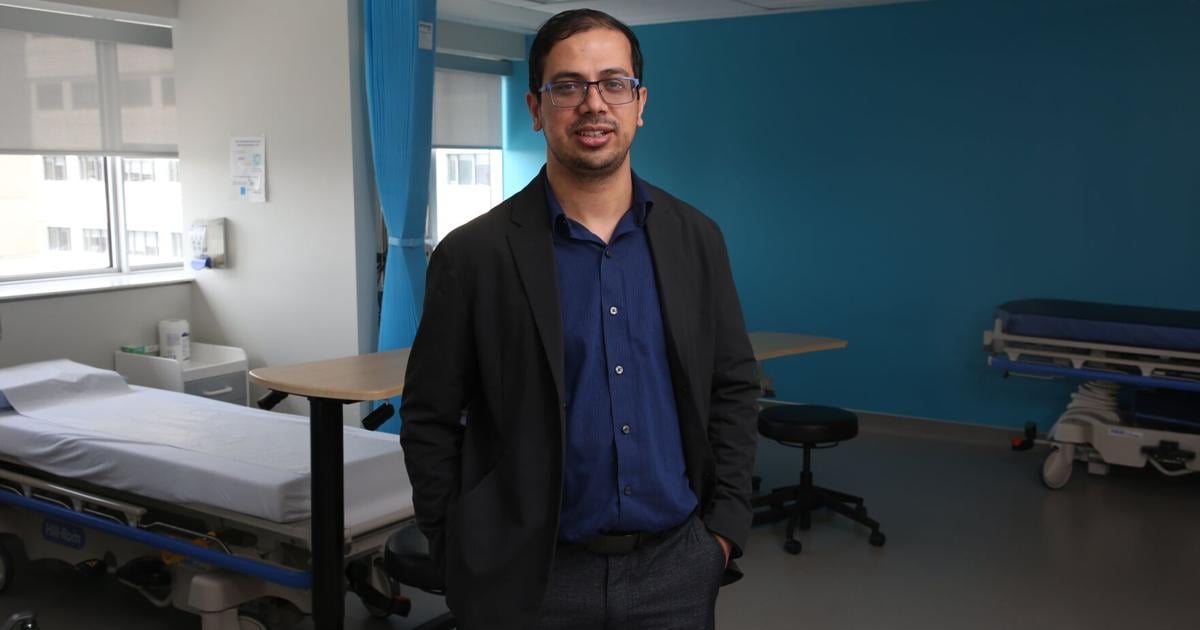
Drugmaker Merck & Co says the safe and consistent delivery of Keytruda to patients 'is heavily dependent on health system readiness.'
It’s little more than a simple administrative task for Dr. Bishal Gyawali to prescribe a high-cost cancer drug to his Ontario patients.
“With three clicks of a mouse I can make it happen,” said Gyawali, a medical oncologist at Kingston Health Sciences Centre. “I can easily prescribe a drug that costs the health-care system $15,000 a month.”
Gyawali doesn’t begrudge this prescribing ease for drugs like pembrolizumab — also known by its brand name Keytruda — and other cancer immunotherapies that have transformed survival rates. He calls them “true game changers” that can extend the lives of patients by years.
What’s harder for Gyawali to accept is that access to a breakthrough drug like Keytruda remains largely unaffordable in many countries around the world, including in Nepal, where he was born and trained as a physician.
“Ninety-five per cent of the Nepalese population cannot afford this drug,” said Gyawali, a professor in the department of cancer care and epidemiology at Queen’s University. “It’s heartbreaking.”
A yearlong investigation by the International Consortium of Investigative Journalists has revealed a stark global divide over who can access Merck & Co’s blockbuster drug Keytruda.
The Cancer Calculus project detailed how the costly therapy strains health budgets and locks out patients in lower-income countries — despite the drug generating more than $30 billion (U.S.) in revenues last year alone.
• In Brazil, the world’s sixth most populous country, most cancer patients can’t afford Keytruda, and thousands turn to the courts to try to get it.
• In South Africa, where the vast majority of citizens are not able to afford private health care and the typical monthly income for a household is under $500, a single dose of Keytruda costs roughly 10 times as much: $4,904.
• In Guatemala, one doctor dealing with limited access had to choose two among his many patients to receive the drug. “What’s left for me to do? To play God,” said Julio Ramirez, head of the oncology unit at the regional public hospital in Quetzaltenango, Guatemala’s second largest city. “The first patient who arrives, that’s who I’m going to give the treatment to because that’s all I can do.”
• Canada’s list price for a 100 mg vial is $4,400 (Canadian), according to Canada’s Drug Agency. This puts one year of Keytruda treatment at an estimated sticker price of $150,000, though experts say the discounted price negotiated with the drug manufacturer would be lower.
Merck Canada said it has a long history of responsibly pricing its medications “to reflect their value to patients, payers and society.” The company also said it prices its products “differentially across markets, and sometimes within markets, according to numerous factors” to ensure their products “reach as many patients as possible.”
The investigation also revealed that Keytruda’s high list prices have led to counterfeit production and black-market sales of the drug in multiple countries.
Keytruda is the world’s top-selling brand drug.
The ICIJ and its Mexican media partners found four cases of fake Keytruda supplied to hospitals, three of which were administered in publicly run institutions. Merck, known as MSD outside the U.S. and Canada, confirmed to the ICIJ that at least one patient died while receiving fake Keytruda in Mexico.
ICIJ media partners in India also documented counterfeit versions of Keytruda being sold to patients. And the World Health Organization has since 2019 recorded at least 36 product reports of falsified Keytruda, though these numbers likely capture only a fraction of the problem, according to the ICIJ.
Safely and consistently delivering therapies like Keytruda to patients “is heavily dependent on health system readiness,” a Merck spokesperson told the Star.
“Our global access strategy for KEYTRUDA is guided by health system maturity, accelerating access through timely reimbursement in markets where the required infrastructure is available and working with global health partners and governments to invest in health system strengthening in others.”
Gyawali, who has a research focus on global oncology and equitable access to drugs, often gets emails from Nepalese patients from his home country who are desperate for Keytruda.
“These are patients who would live a long life if they had access to this drug,” he said, adding that a 2025 study he led found Keytruda is only available in one out of four of Nepal’s government hospitals.
Research into the “financial toxicity” facing cancer patients in Nepal found that three-quarters had to sell their house and their livestock, while also borrowing money, to access chemotherapy, Gyawali said.
“For Keytruda, I can’t imagine what the situation is like,” he said, noting Keytruda’s list price in Nepal is 20 times the average GDP. “They must have sold everything possible to get access to this drug.”
With files from Amy Dempsey Raven; Sydney P. Freedberg, Brenda Medina, Denise Ajiri, Nicole Sadek and Isabella Cota of the ICIJ; and Anonna Dutt of The Indian Express
Megan Ogilvie is a Toronto-based health reporter for the Star. Follow her on Twitter: @megan_ogilvie or reach her via email: mogilvie@thestar.ca.