
Analysis: Study backs Lara Resende’s inflation thesis but leaves fiscal puzzle unresolved - Valor International
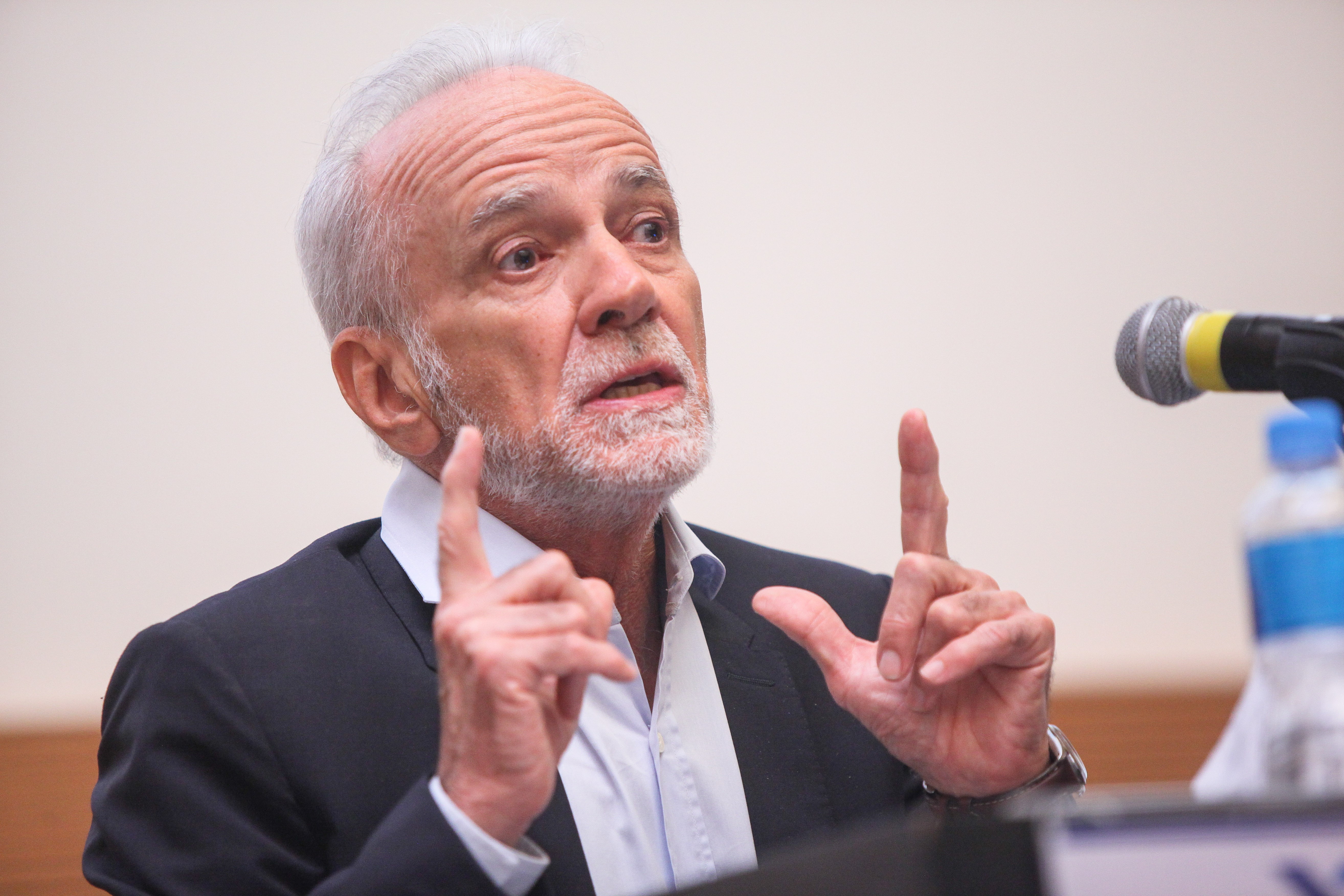
Economist André Lara Resende, who advocates a drastic cut in the benchmark interest rate to solve Brazil’s fiscal predicament, had been challenged by his peers to offer more tangible evidence that his theory works. On Monday (16), he pointed critics to a newly published academic paper that tests the measures he has proposed.
The paper offers quantitative support for the argument that, when public finances are fragile, higher interest rates can fuel inflation by raising the cost of public debt without future primary surpluses to offset it. This lends support to one of Lara Resende’s main arguments: that the Central Bank’s high interest rates are adding to inflation, so lowering them would help bring it down.
However, the paper falls several steps short of demonstrating that cutting rates along the lines Lara Resende proposes would be enough to resolve Brazil’s fiscal problem.
The study’s author, Dejanir Silva, is a professor at Purdue University with a PhD from the Massachusetts Institute of Technology (MIT). He built a distinguished academic career after starting out in public schools in Diadema, in the Greater ABC region of São Paulo state.
One pillar of Lara Resende’s argument is that when the Central Bank raises rates, it increases the cost of servicing public debt and worsens the fiscal picture unless the tightening is accompanied by spending cuts or tax increases.
Silva’s findings back this up: fiscal shocks not offset by measures that generate future surpluses account for 38% of the variation in headline inflation over five years. The logic is that when the Central Bank raises rates without a matching fiscal adjustment to contain the growth in the nominal deficit, public debt rises. Under the fiscal theory of the price level adopted in the paper, one way to counter that trend is for inflation to rise and erode the debt’s real value.
The theory has been developed over several decades. One of its recognized starting points is the 1981 paper “Some Unpleasant Monetarist Arithmetic,” by Thomas Sargent and Neil Wallace. The arithmetic is unpleasant because it leads to a paradox: the prevailing view among economists is that raising rates allows the Central Bank to bring inflation down to target. Under certain circumstances, however, the opposite can happen.
The issue is full of nuance. Even more conventional economists acknowledge that fiscal policy can undermine the fight against inflation; the disagreement is over how large the effect is. Outside special circumstances, though, higher interest rates are generally expected to reduce inflation on net, not raise it.
In Brazil today, economists repeatedly debate whether the country is in one of these exceptional situations. Since the election, for example, some have questioned whether raising the Selic further from its already exceptionally high 13.75% would actually push inflation up, given the weakness of public finances.
The Central Bank, for its part, defends interest rates as an effective tool for controlling inflation, citing the many times dire forecasts from private-sector economists did not come true. The paper’s conclusions point the other way. Its numerical estimates show that if the Central Bank cuts rates in a way markets believe is permanent, long-term inflation will fall.
In these estimates, Silva uses Lara Resende’s proposal, which calls for lowering the Selic benchmark rate from the current 13.75% to 7.5% a year over about 12 months. Under this scenario, long-term inflation would fall from 6.1% to 0.24%.
There are important caveats, however. The plan lowers long-term inflation but not the long-term real interest rate, which stays at 7.25% a year in Silva’s calculations. For the path of public debt as a share of gross domestic product (GDP) to improve, the real rate would also have to fall.
In his recent articles, Lara Resende assumes real interest rates would fall and converge toward a level close to GDP growth. What is still missing, then, is firmer evidence for his central argument: that cutting interest rates could ultimately improve the fiscal situation.
Lara Resende has drawn attention to the current figures. The primary deficit, which measures government revenue and spending excluding interest on public debt, stands at 0.52% of GDP. Interest payments amount to 8.99% of GDP, producing a nominal deficit of 9.51% of GDP. That nominal deficit is the main driver of growth in gross public debt, which rose by five percentage points of GDP in the 12 months through September, to 82.9% of GDP.
Another important point is that, according to Silva’s calculations, the path from a Selic cut to lower inflation would be far from smooth. Inflation would first rise from 6.1% to 9.4% before beginning a sustained decline. The initial increase would stem mainly from currency depreciation and the repricing of public debt.
One encouraging finding is that, in Silva’s numerical analysis, the Central Bank could neutralize the inflationary pressure arising mainly from a stronger dollar by intervening in the foreign exchange market with part of its international reserves.
But this is contested ground. Economists often disagree on how effective central bank intervention is in curbing a rise in the dollar. Central Bank President Gabriel Galípolo recently warned in a speech about the risk of Brazilians shifting their capital into assets denominated in other currencies.
Silva’s calculations also show how much execution matters. If the government spends the savings from lower interest payments on other items, inflation could easily exceed 20%.
In his article published Monday (16), Lara Resende himself highlights these points, saying Silva’s paper shows that “spending the savings generated by lower interest payments would undermine the outcome and that, for the decline in real interest rates to be lasting, it is necessary to reduce the foreign exchange risk premium or adjust the public accounts.”
Some left-leaning economists who back Lara Resende’s plan overlook that his proposal calls for creating a monetary and fiscal committee: they embrace lower interest rates but not fiscal discipline.
Silva’s numerical exercises also show that rate cuts must be perceived as permanent to deliver the hoped-for reduction in inflation. If the market believes the Central Bank will raise rates again, the magic disappears.
It is unclear, however, how firm a commitment to the cuts the Central Bank would be making under Lara Resende’s proposal. In his article, he complained that some critics wrongly say he is proposing an interest rate cap.
Rather, according to the article, published on the Substack newsletter platform, the plan would set an interest rate target akin to “forward guidance,” in which a central bank communicates its intentions for the future path of the Selic.
Forward guidance comes in several forms, from softer versions that markets find harder to regard as credible to more stringent ones that create mechanisms tying the Central Bank’s hands and effectively compelling it to carry out a pre-established plan. If forward guidance is stringent enough to make the cuts credible, the practical distinction between it and an explicit Selic target may blur.
Silva’s working paper, “Neo-Fisherian Adventures in the Tropics: Monetary Policy and Fiscal Inflation in Brazil,” can be downloaded from his personal website.
This article was translated from Valor Econômico using an artificial intelligence tool under the supervision of the Valor International editorial team to ensure accuracy, clarity, and adherence to our editorial standards. Read our Editorial Principles.
