Analysts explain why the ANC retains support as MK gains ground in KwaZulu-Natal - IOL
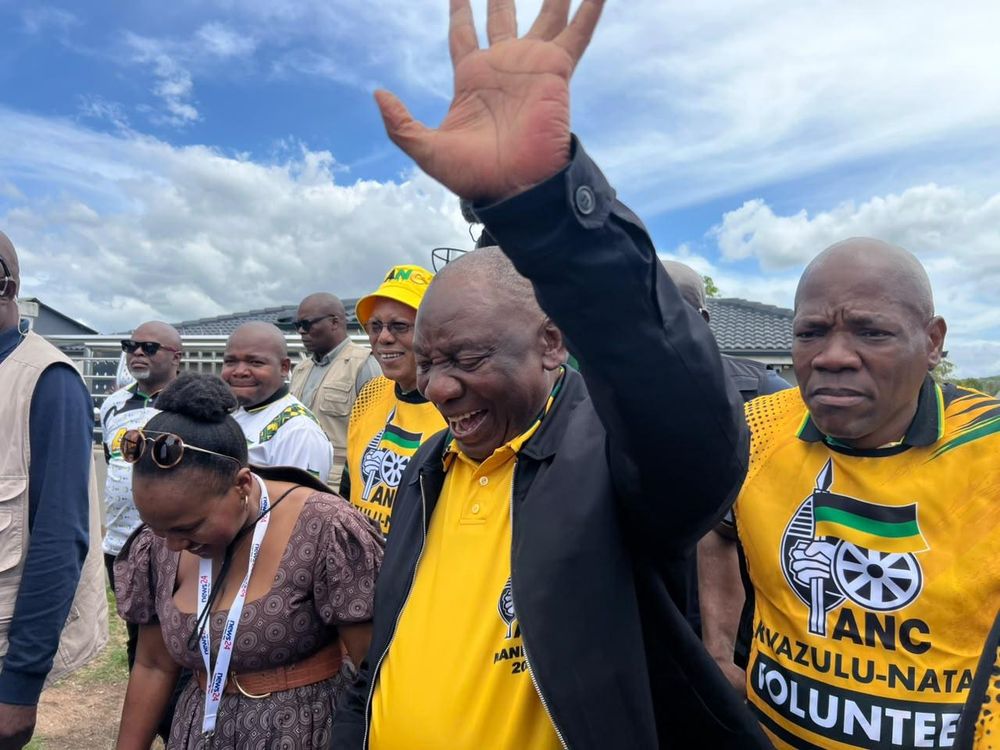
As MK Party makes gains in KwaZulu-Natal, analysts say the ANC’s liberation legacy, local networks and delivery of social programmes continue to influence some voters.
As MK Party makes gains in KwaZulu-Natal, analysts say the ANC’s liberation legacy, local networks and delivery of social programmes continue to influence some voters.
Despite the shifting political landscape, early election results suggest that the ANC continues to retain support among some voters, with political analysts pointing to loyalty, historical ties and the party’s legacy as factors that may explain its continued backing.
Analysts said the party’s share of the vote had declined sharply but cautioned that counting was still under way.
Current results from the IEC show 74% of votes counted, with the national results reflecting ANC at 31%, the Democratic Alliance (DA) at 24% and Umkhonto Wesizwe Party (MKP) at 9%.
The KwaZulu-Natal results include: MKP at 34%, IPF at 22% and ANC at 21% and eThekwini shows MKP in the lead with 49%, DA at 22% and ANC at third with 17%.
The outcome of this local elections will help shape the political landscape ahead of the 2029 national election and could influence the succession battle within the ANC as President Cyril Ramaphosa nears the end of his term as party leader in 2027.
Political analyst, Dr Purshottama Reddy from the University of KwaZulu-Natal, said it was still too early to make firm and conclusive remarks on the votes or support received by each party in the elections.
"The ANC still does have a strong historical support base as it was the political party that brought liberation to South Africa. It was also the party which introduced a very futuristic local government system for the country, although there have been challenges with the implementation," he said.
Reddy revealed that the ANC did a good job in the first decade of democracy.
"We had municipalities and municipal functionaries who performed well. The loyal ANC supporters or voters have not forgotten that. However, the party needs to transition to that level again to restore confidence in the local electorate," he said.
Dr Jabulani Nyawo, another political analyst from UKZN, said it was crucial to note that these figures are provisional, and voting districts were still being counted.
"It is still early to speculate whether the ANC will continue to lead, as more than 70% of the votes have not yet been counted. But, if I can comment on the early results, several factors can be put forward as to why certain voters have been persuaded to vote for the ANC," said Nyawo.
He said some of the factors include ANC loyalty and liberation legacy.
"The majority of older South Africans, particularly in rural areas, continue to associate the ANC with the liberation struggle and the transition to democracy. The ANC has maintained deep local structures for decades, and the older voters are more likely to attend community meetings and belong to veterans' organisations linked to ANC networks," said Nyawo.
He said such longstanding relationships create trust and familiarity that newly established political parties often struggle to replicate.
"Even when these voters are not happy with the local government's performance, party identity remains a powerful influence during elections. The ANC's liberation credentials create a form of political loyalty that may survive dissatisfaction with contemporary governance."
However, Nyawo said that another crucial factor is the material transformation since 1994.
"Although ordinary citizens continue to face enormous challenges, numerous households have benefited from government programmes associated with the democratic state.
“These include social grants, subsidised services or free basic services for qualifying households, expanded access to water and electricity, especially in rural communities, and expanded access to education and public healthcare," he said.
Nyawo said that for some voters, these improvements were not abstract policy achievements, but tangible changes in their everyday lives.
"Strong support in some traditional ANC provinces; the ANC remains dominant in provinces such as Eastern Cape, Northern Cape, Mpumalanga and Limpopo, where early results show it leading comfortably.
“These are some of the provinces that provide a significant voter base, helping sustain the ANC nationally. The opposition parties have not consistently convinced the voters that there are better alternatives. When some voters are dissatisfied with the ANC's performance, this does not mean they will vote for other opposition parties, and that is why many voters who have no trust in the ANC decide to abstain," said Nyawo.
He said this is called the opposition credibility problem.
"For instance, the Democratic Alliance (DA) has often presented itself as a party of administrative competence, financial discipline and improved municipal management.
“However, some voters remain concerned about whether the DA adequately represents their interests, particularly in relation to issues regarding racial inequality, economic transformation and representation of historically disadvantaged communities.
“Such perceptions that voters hold do not necessarily reflect the DA's actual policies, but they reflect how some voters interpret its political identity and whether they believe it can represent their interests," said the political analyst.
Nyawo said the Economic Freedom Fighters (EFF) has attracted many younger voters through its emphasis on economic transformation, land redistribution and radical economic change.
"However, some voters have reservations about its policy proposals, especially regarding illegal foreigners and the leadership style. Based on the current results, one can say there are a few factors that drove some voters to support the ANC: party loyalty, opposition weaknesses, provincial strongholds, social protection, and local political relationships," he added.
The ANC won 46% of votes in the 2021 municipal elections, down from 62% in 2011.
Its main competitor, the DA, had hovered around 22% of votes in recent years, while a number of smaller parties have vied for space.