ANC will not field candidates in two municipalities after court ruling - IOL
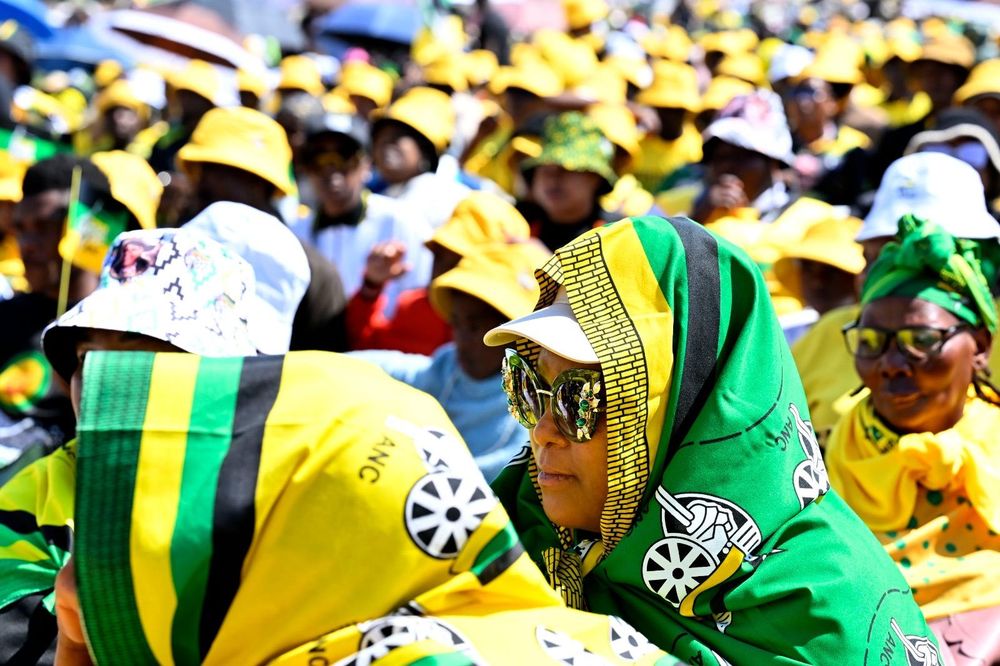
The ANC will be absent from the ballot in Ngquza Hill and Port St Johns after losing its Electoral Court challenge over disputed candidates ahead of November’s local government elections.
The ANC will not field candidates in two municipalities in the November 4 local government elections after the Electoral Court dismissed the party’s appeal over 181 disputed candidates.
The party will be absent from the ballot in Ngquza Hill and Port St Johns in the Eastern Cape, where it failed to submit candidate lists before the August 28 deadline.
The ruling also affects the ANC’s proportional-representation candidates in Mangaung in the Free State, uMshwathi in KwaZulu-Natal, and Walter Sisulu and Sundays River Valley in the Eastern Cape.
In those four municipalities, the ANC will still contest ward seats, but its affected PR candidates will not appear on the ballot.
The 181 candidates affected by the dispute comprise 130 PR candidates and 51 ward candidates.
The ANC has said it will pursue further legal remedies against the ruling.
The party’s exclusion comes less than seven weeks before voters head to the polls, with political parties now campaigning ahead of the November 4 elections.
Political analyst Professor Theo Neethling, a research fellow in the Department of Political Studies and Governance at the University of the Free State, said the immediate electoral consequence was that the ANC’s participation in the affected municipalities had been significantly restricted.
“This is particularly significant in Mangaung, where the party’s candidate list was not accepted, as it affects the ANC’s ability to present its full political platform to voters.”
The significance of the ruling went beyond the number of candidates who had been excluded from the ballot and could affect how the ANC is perceived ahead of the elections, he said.
Neethling said the development created the image of a party that had failed to manage its organisational and administrative processes in time.
This follows the IEC’s indication that, two days before the August 28 deadline, the ANC had formally submitted candidate lists for only 18 of the country’s 257 municipalities.
“In terms of internal ANC politics, the ruling may be more significant than the sheer number of candidates lost,” Neethling said.
He said the outcome placed ANC secretary-general Fikile Mbalula and the party’s national election management team under increased pressure.
Even if the ANC pursued further legal action, questions around internal accountability would remain.
“The most significant potential consequence, therefore, is that the candidate list crisis could spark a new internal debate regarding organisational competence, factionalism, and Mbalula’s responsibility as secretary-general.”
He said the candidate-list dispute could also become part of the ANC’s internal debate over its performance after the local government elections if the party subsequently performed poorly.
University of KwaZulu-Natal political analyst Zakhele Ndlovu said exclusion from the elections would have consequences beyond the individual candidates affected.
He said the development would be damaging for a party already facing challenges in retaining support across different levels of government.
“It’s not going to look good for a party that is already struggling to retain power nationally, provincially, locally,” Ndlovu said.
“It means there will be fewer and fewer municipalities under the ANC’s control.”
Ndlovu said some voters who would ordinarily support the ANC could choose not to vote or could consider alternatives.
“Voters who would ordinarily support the ANC could abstain or vote for the MKP,” he said.
The ruling also represented “a huge setback for the ANC’s broader campaign and its credibility going forward”.
Asked about the impact on perceptions of the ANC’s organisation, Ndlovu said the party’s handling of the matter would make it difficult for voters to take its organisational processes seriously.
The impact is particularly notable in the Eastern Cape, where the ANC has historically held majorities in both municipalities.
In the 2021 local government elections, the ANC won 46 of 63 seats in Ngquza Hill and 31 of 39 seats in Port St Johns, retaining outright majorities in both councils.
In Port St Johns, the EFF was the second-largest party with three council seats, while the remaining seats were shared among smaller parties and independents.
The political landscape has since changed, with the emergence of the MK Party as a significant electoral force following the 2024 national election.
However, in a December 2024 Port St Johns ward by-election, the ANC retained Ward 11 with 88% of the vote, while the MK Party received 12%.
The 2024 national election also showed the ANC retaining a strong position in Port St Johns, with the EFF recording the second-highest share of the vote and the MK Party receiving a smaller share.
The November election will therefore take place against a changed political backdrop, with voters able to choose from the parties and independent candidates on the certified ballot.
The ANC has maintained that it remains committed to the 2026 Local Government Elections.
Following the ruling, ANC spokesperson Mahlengi Bhengu said the party would continue presenting its programme to voters, engaging communities and seeking their support.
The party also called on its members, leaders and supporters to remain calm and disciplined while its legal representatives consider the next steps.
The local government elections will be held on November 4.