ANC Women’s League calls for death penalty debate amid Gauteng killings - IOL
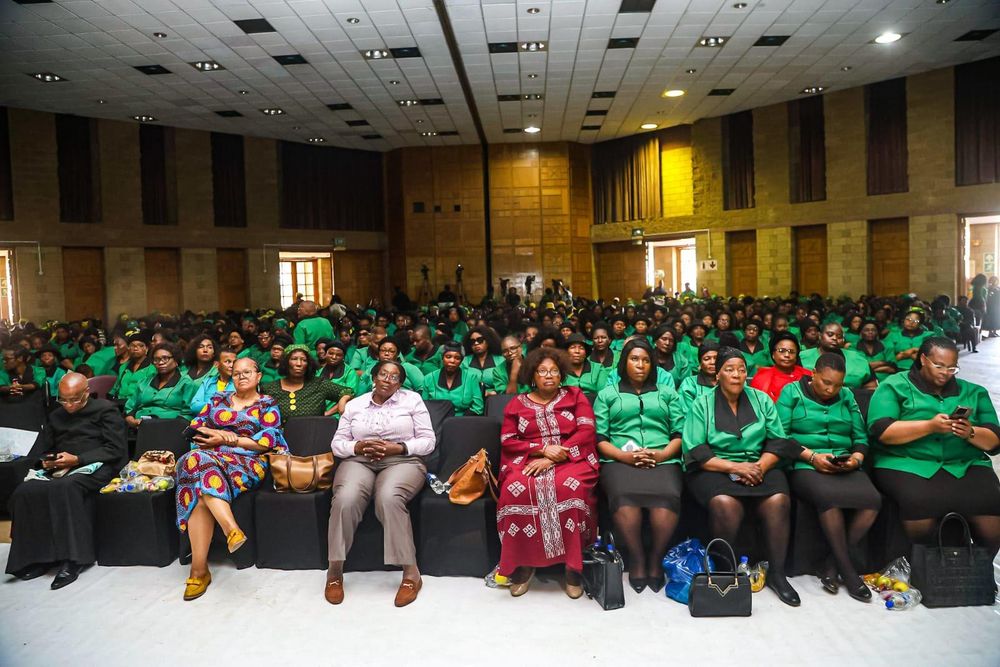
The ANC Women’s League says South Africa must not shy away from discussing the death penalty amid a surge in killings of women, including the discovery of 12 women who were allegedly murdered in Ekurhuleni, Gauteng.
The ANC Women’s League says South Africa should not shy away from discussing the death penalty amid a recent spate of killings of women, including the discovery of 12 women who were found dead in Ekurhuleni, Gauteng.
The killings have renewed concerns over the safety of women and the country’s ongoing gender-based violence and femicide crisis.
Police have said investigations into the murders are continuing.
The ANC Women’s League held a prayer and memorial service for victims of gender-based violence in Alberton on Sunday.
The service was attended by faith-based organisations and churches.
The league’s spokeswoman Boitumelo Moiloa said the organisations came together because addressing gender-based violence requires a collective effort.
“We have realised that working in silos is not going to help,” Moiloa said in an interview with broadcaster Newzroom Afrika.
“The reason why we then decided to work together, all of us, is that, you know, this thing is happening every day. It’s worse than what happened in Ekurhuleni. We are not saying others are not worse, but what happened here is worse than what we have thought.”
Moiloa said churches and communities should play a greater role in addressing gender-based violence, rather than leaving the responsibility solely to government.
“The churches, different churches, they were saying to us, you know, now that this thing is affecting all of us. And it’s us who are living in the homes,” she said.
She said even people who appeared to be safe in their homes could become victims of violence.
“You wake up with a partner; you need to find that that partner wants to kill you or the partner can kill you. So it says a lot,” she said.
Moiloa said churches, which have regular contact with large congregations, could help communities identify and address the problem.
“We can’t say only government should do something. We must also take part in making sure that we assist ourselves, because our women and our kids, our mothers are being raped, they are being killed miserably by these perpetrators.”
The ANC Women’s League has faced questions about its role in combating gender-based violence, particularly because of its links to the governing ANC.
Moiloa said the league had consistently taken action and called on government to do more.
“As the Women’s League, we have done everything. We went to marches, we went to calls. If you remember, we even mounted a march to the Union Buildings,” she said.
She said the league had also marched to Treasury to demand funding after gender-based violence and femicide were declared a national crisis.
“We have even gone beyond to march to Treasury to say, even if a president is declaring this as a national disaster, you can’t declare it as a national disaster and not fund it,” she said.
“We need action now that will assist us.”
Moiloa said preventing gender-based violence also required greater attention to boys and young men, whom she said society had neglected.
“One thing that is lacking, that as a society we are supposed to do also, is the neglect of a boy child,” she said.
She argued that society had invested considerable attention in empowering girls while failing to provide similar support for boys.
Moiloa also pointed to the absence of fathers in many households and social expectations that discourage boys from expressing their emotions.
“We are saying to a boy child, you must not cry. You must be strong,” she said.
“At the end of the day, that boy child, when he grows up, he has that thing inside him that I must not cry.”
She proposed creating spaces where men could speak openly about challenges in their relationships and homes, with male social workers available to provide support.
“We are saying to them, let us have a men’s lounge,” she said.
“Let them have these male social workers whom they are going to sit around the table and talk about things that they experience at home.”
She said early intervention was needed to prevent unresolved anger and emotional problems from escalating into violence.
Moiloa called on families, including uncles and other male relatives, to play a greater role in mentoring boys, particularly where fathers are absent.
“As an uncle, with your sister having the boy kids, you must start talking to the boys,” she said.
She said previous programmes involving boys had revealed that some young people turned to drugs because they longed for relationships with their fathers.
“In the North West, we used to have the session where we only take boys. And you will get shocked when they go there and tell us that some of them, the reason why they got into drugs is that they are longing for their fathers,” she said.
Moiloa called on the government to fund such programmes and ensure they become part of efforts to prevent gender-based violence.
“Talking is cheap. It won’t do anything. But it must invest in that so that we nurture our boy children,” she said.
Meanwhile, reports have suggested that ANC first deputy secretary-general Nomvula Mokonyane may have raised the possibility of bringing back the death penalty.
Asked whether the death penalty should be reconsidered, and whether the Women’s League supported the reported suggestion, Moiloa said she had not heard Mokonyane make the remarks herself.
However, she said the issue should form part of a national discussion.
“But we, as the nation, we must start talking about it. We must not run away from it. We must not shy away from it,” Moiloa said.
She acknowledged that the death penalty was not necessarily the ultimate solution but argued that legal experts and society should consider all possible measures to address the killings.
“It’s not the ultimate solution to that, but we must start weighing,” she said.
“The legal gurus, whoever has the knowledge, must come together. And we must start thinking, how do we deal with this thing?”
Moiloa also acknowledged the possibility of wrongful convictions and people being framed for crimes.
“Mind you, there are those who will frame others, because we know that these things do happen,” she said.
She nevertheless argued that the issue should not be excluded from the national conversation.
“The death penalty must not be completely ignored. It must be part of the discussion, and then, if indeed, it wins the day, perhaps, let’s discuss the modalities.”
South Africa abolished the death penalty after the Constitutional Court declared it unconstitutional on June 6, 1995.