Andrew Phillips: Paul Theroux sees Canadians’ anger at Trump but misses who’s part of the push-back - Toronto Star
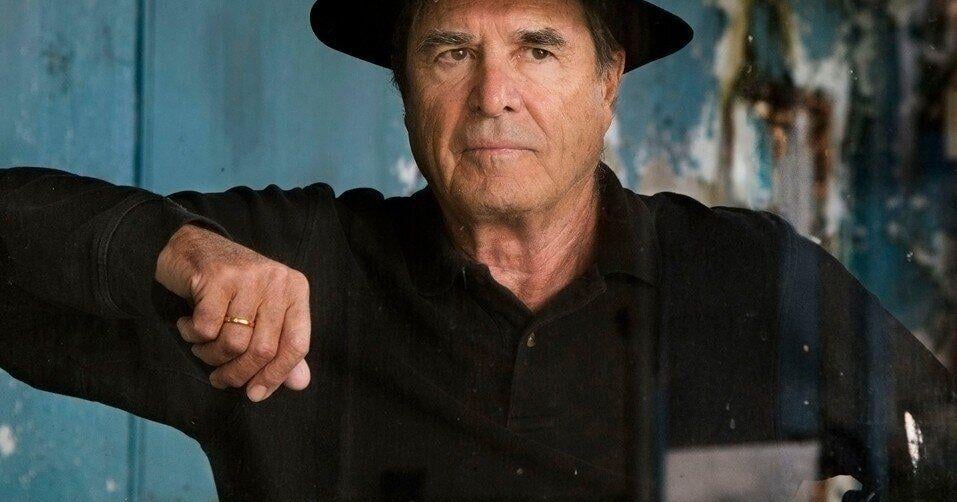
Theroux sees the anger against Trump across the country but incorrectly concludes that minorities aren’t part of that national push-back.
Paul Theroux travelled across Canada over several years and wrote about it. The timing his just released book “True North: On the Road in Canada” is boosted by Donald Trump’s attacks.
Andrew Phillips is a Toronto-based staff columnist for the Star’s Opinion page. Reach him via email: aphillips@thestar.ca
It’s definitely a double-edged-sword situation when a writer as renowned as Paul Theroux turns his eye — and his pen — on Canada.
On the one hand, we can’t help but be flattered by the attention. Canadians have lingered in obscurity for so long that we still crave the validation that comes from being noticed in the metropolis, especially from the United States (Theroux is from Massachusetts).
On the other, it means we must finally be “interesting” — which isn’t a good thing at all. If Americans are glancing north there must be some kind of crisis here to wrench them away from their usual single-minded obsession with themselves.
And crisis there is, thanks to U.S. President Donald Trump making Canada his villain of choice, a decision so bizarre that it’s made this country (the “strangers next door” in Theroux’s phrase) interesting to Americans for maybe the first time ever. It also makes Theroux’s new book, “True North: On the Road in Canada,” more relevant than even he could have hoped it would be.
Theroux made his reputation in the 1970s and ’80s with books like “The Great Railway Bazaar” and “The Old Patagonian Express,” which took readers along on arduous journeys through “exotic” (a word he’d no doubt hate) locales. He says he always wanted to write about Canada (he has ancestral roots in Quebec) and it’s serendipitous that he got around to it only in his 80s, at a moment when the country is going through a deep self-examination.
Theroux made several trips to Canada between 2020 and 2025, rambling around the country, driving alone along the Trans-Canada Highway, stopping mainly at cheap motels where, he says, people are a lot more inclined to share their stories than at luxury hotels where the rich pay for privacy.
“True North: On the Road in Canada.”
So there are lots of random encounters with chatty locals from Newfoundland to British Columbia. That’s how Theroux works — getting ordinary folk to talk about what’s on their minds and interspersing that with what he’s gleaned from a deep reading of Canadian literature and chats with Canadian writers (he seems to know them all).
Not surprisingly, a lot of the people he encounters have Trump and America on their minds. Theroux can’t bring himself even to write Trump’s name, though “the American president” is referenced scores of times in “True North.”
Theroux clearly shares Canadians’ anger at Trump and sympathizes with our bafflement at suddenly being treated like enemies. But anyone looking for special insight into the state of the Canada-U.S. relationship will go away disappointed.
For one thing, Theroux is drawn to the places where most Canadians aren’t — those big empty spaces between the cities that he likens to “urban islands” surrounded by woods and wilderness. He loves nothing more than a lonely road leading to a small town full of colourful characters he can mine for another memorable encounter.
The reality of Canada is that it’s one of the most urbanized societies in the world. We live mostly in big cities, though the cult of the wilderness remains strong. And it’s notable that when Theroux does visit a big city he can’t get out fast enough. Places as important as Montreal and Calgary rate barely a drive-through.
Like so many before him, Theroux grapples with the age-old question of Canadian “identity.” How, he wonders, can a country so determined to make newcomers welcome and comfortable develop a shared sense of itself? Are we too sensitive to differences to agree on any common identity?
He worries particularly about the concerns of Indigenous people, whom he tellingly calls the “most displaced and the most overlooked, aliens in their own land.” And he worries about what he calls “ethno-bubbles,” in which minorities (notably Chinese and Sikhs) can exist in their own separate realities, set apart from any shared Canadian-ness.
But Theroux gets that fundamentally wrong. He sees the anger against Trump and the Maple Leaf flags flying across the country but worries that minorities aren’t part of that national push-back. “No bubble dwellers,” he writes, “seemed much troubled by the American president’s threat to make Canada the fifty-first state.”
If we’ve learned one thing over the past year and a half, though, it’s that there’s a deep sense of commonality across the country once an external threat emerges. So-called “bubble dwellers,” along with almost everyone else, feel it in their bones. It’s a shame that after all that travelling Theroux seems to have missed such a fundamental point.
Error! Sorry, there was an error processing your request.
There was a problem with the recaptcha. Please try again.
You may unsubscribe at any time. By signing up, you agree to our terms of use and privacy policy. This site is protected by reCAPTCHA and the Google privacy policy and terms of service apply.
Opinion articles are based on the author’s interpretations and judgments of facts, data and events. More details
Andrew Phillips is a Toronto-based staff columnist for the Star’s Opinion page. Reach him via email: aphillips@thestar.ca