Animal rescuers severely injured in Russian drone attack while saving dogs in Ukraine
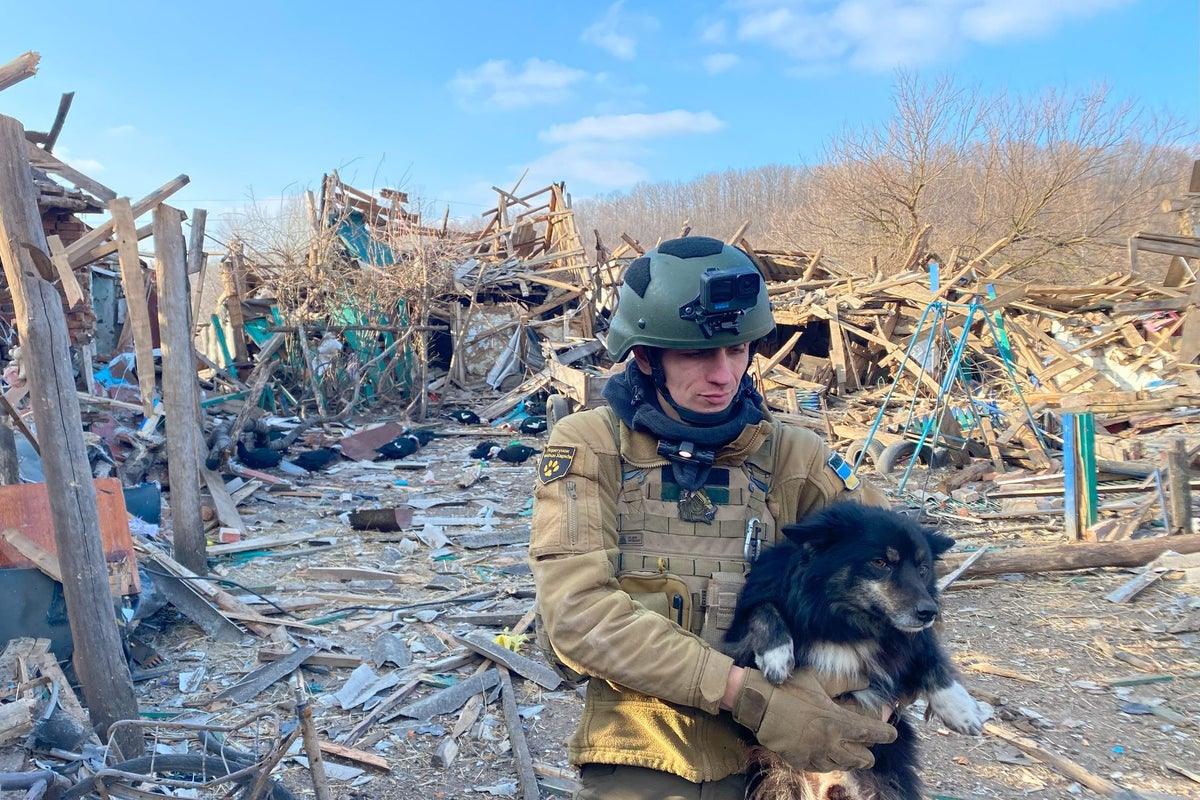
A Ukrainian animal rescuer has said he is “grateful to be alive” after his car was struck by a Russian drone while rescuing a group of stranded dogs from near the frontline.
Ruslan Horbal, a volunteer for Animal Rescue Kharkiv (ARK), was on a rescue mission in Ukraine’s war-torn eastern city of Kramatorsk, when a Russian drone hit the vehicle, killing one of the rescued dogs. He had only just gathered the animals into the back of the car when the attack took place.
“It happened very fast. There was an explosion, smoke and glass everywhere,” recalls Mr Horbal, who was hospitalised after the attack, in an interview with The Independent. “At first, I was confused. It took me a moment to understand what had happened. Then I started checking if everyone was alive and if the animals were OK. That’s when I realised I was badly injured too. There was a lot of blood.”
Mr Horbal, 43, says he and a French volunteer, called Florian, are lucky to be alive after being severely injured in the drone attack on Kramatorsk, one of the most heavily-bombarded Ukrainian cities in the eastern Donetsk region.
Florian was badly injured in the arm and eye, while Mr Horbal suffered wounds to his eye and ear. He was pulled from the vehicle by Mr Horbal, who applied a tourniquet on his arm, before urgently changing the car’s damaged tire and driving them to a hospital in Kramatorsk.
Both required surgery after the strike on 31 August.
The ARK, which is financially supported by PETA, has brought more than 32,500 animals in Ukraine to safety since Moscow launched its full-scale invasion in February 2022. The work is extremely dangerous, with volunteers weaving in between missiles, drones and shelling as they seek out stranded animals who are trapped in frontline areas from which civilians have fled.
“Of course, we are afraid,” he says. “We are not crazy. We know the danger. But the animals are still there. They cannot understand the war, and they cannot get themselves to safety. So we go and get them.
“The drones are especially dangerous because they can see our vehicles from above, and sometimes you have almost no warning. We are always listening, always watching the sky.”
He adds: “I know how lucky we were. But I also know there are still animals near the front line who need us.”
The Kharkiv and Donetsk regions are among the deadliest regions in Ukraine, coming under heavy, sustained Russian bombardments. Kharkiv city has been a primary target of Russian assault since February 2022.
It can take hours for volunteers to reach the animals stuck near the frontline, many of which are struggling to feed themselves and are accustomed to having human companionship - but are now left stranded under intense bombardment.
The rescue teams go into some of the worst hit areas to help the animals, usually finding them “alone, hungry, injured and frightened”.
Rescuers bring food and supplies for many animals while evacuating the most vulnerable, bringing them to safer areas and providing them with veterinary care before either reuniting them with their families or finding them a new home.
“I’m grateful to be alive, and very thankful for all the messages and support. I’m still recovering. I need more treatment and surgery, so for now I have to focus on getting better,” Mr Horbal adds.
But the death of one of the dogs that was rescued, he said, was difficult for the team to process.
“Sadly, one of the dogs we had just rescued was killed. We had gone there to bring him to safety, and then this happened. That was very hard. The other animals survived and were taken to safety.”
Despite the incredible dangers, Mr Horbal has no intention of stepping away from his role and says that once he is recovered he will return. “I don’t know exactly when, but I will go back. I have seen what happens to animals left behind – alone, starving and frightened,” he adds.
“Knowing they are still out there, waiting for help, I cannot just stay home.”