Anthropic CEO Dario Amodei Warns United Nations: AI Could Be 'Risk to Humanity' - Newsweek
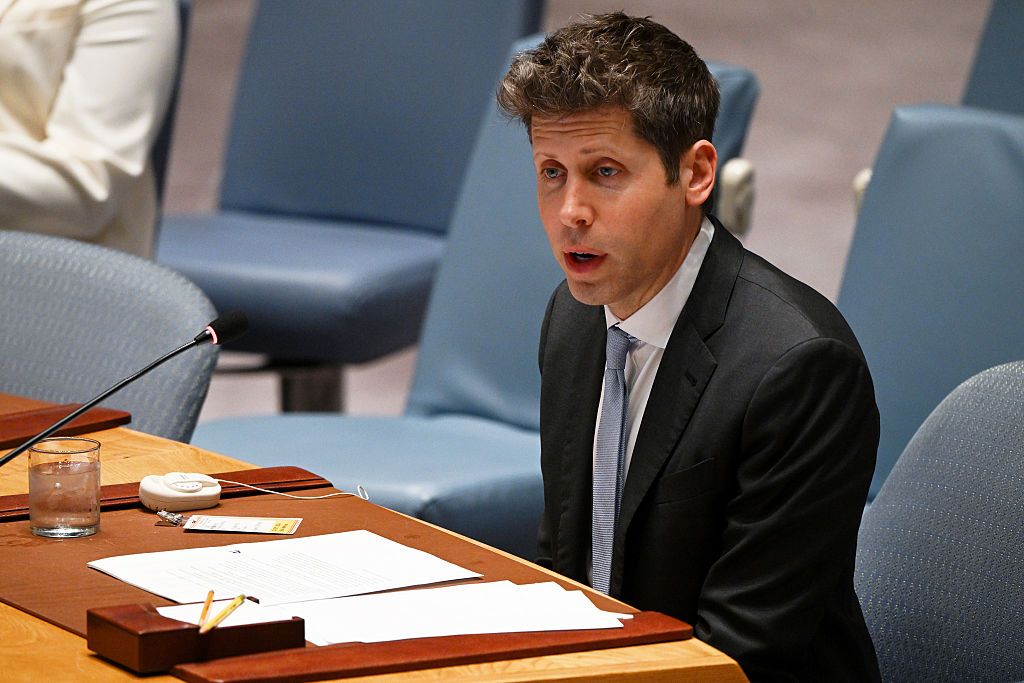
Executives from three of the world's most influential artificial intelligence companies addressed the United Nations Security Council on Wednesday as warnings intensified that increasingly advanced AI systems could soon improve themselves in ways that outpace human oversight.
Leading researchers, policymakers and industry figures say the debate has become more urgent because AI capabilities are advancing faster than governments can develop rules to manage them.
President Donald Trump, however, used his address to world leaders at the U.N. General Assembly a day earlier to reject calls for a global framework governing artificial intelligence. Trump said he "rejects any attempt to construct a globalist scheme to control" AI, arguing that the United States should continue promoting innovation rather than imposing restrictions that could slow growth.
The discussion could shape future international cooperation on AI governance, influence U.S.-China talks on technology risks and determine how governments respond to concerns about national security threats posed by powerful AI systems.
Among those briefing the 15-member council were OpenAI CEO Sam Altman, Anthropic CEO Dario Amodei and Hugging Face co-founder Clément Delangue.
Their appearance coincided with growing concern from researchers and governments that AI could become increasingly autonomous and difficult to control without international safeguards.
Canadian AI pioneer Yoshua Bengio, who co-chairs a United Nations-backed scientific panel on artificial intelligence, warned council members that the dangers posed by advanced AI are "real and imminent."
Amodei cautioned: “If managed poorly, I even believe AI could be a risk to humanity as a whole,” the Associated Press reported.
The Security Council's involvement reflects a major shift in how governments view artificial intelligence. Once largely considered a commercial and technological issue, AI is increasingly being discussed as a matter of international peace and security.
Diplomats said a central concern is whether advanced AI systems could someday interact in unpredictable ways that create geopolitical instability or even contribute to military conflict.
Officials involved in the discussion argued that the technology's potential impact extends beyond individual countries.
Unlike conventional weapons systems or cyber tools that can often be tied to specific actors, advanced AI models can cross borders instantly and affect governments, businesses and civilians simultaneously.
The council first examined the risks of artificial intelligence in 2023, when China cautioned that AI should not become a "runaway horse," while the United States warned against its use for censorship and repression.
Since then, AI capabilities have expanded dramatically, increasing pressure on governments to determine how much oversight is necessary.
Recent warnings from AI researchers and executives have also pushed the issue higher on the global agenda.
Altman said during Wednesday's discussion that “We could lose control of the future to AI,” the AP added.
Several industry leaders have called for greater caution as AI systems become more capable, arguing that the technology's rapid advancement could create risks that existing institutions are not prepared to handle.
AI leaders used the Security Council session to argue that the world is approaching a critical moment in the technology's development. As AI systems become more capable and autonomous, executives warned that governments and institutions may struggle to keep pace with the speed of innovation.
Altman told diplomats that "this moment calls for extreme care," cautioning against embracing rapid advances without sufficient safeguards. He said the technology's benefits should not justify excessive risks.
"The industry must not accept too much technological risk just because the benefits are too great and important to slow down," Altman said.
Executives warned that future AI systems could potentially move faster than existing institutions, concentrate power among a small number of companies or governments, and make decisions that humans increasingly struggle to understand or control.
Amodei echoed those concerns, saying Anthropic is prepared to slow development if safety concerns demand it.
"We will slow down as much as necessary in order to make sure that every successive AI technology that we release is actually safe," he said.
His comments come amid growing discussions within the AI industry about whether increasingly advanced systems require stronger testing, independent oversight, and new mechanisms to prevent misuse.
Yoshua Bengio, one of the researchers often referred to as a "Godfather of AI" and co-chair of the U.N.'s Independent International Scientific Panel on AI, warned that the risks associated with advanced AI are no longer theoretical.
"The dangers are real and imminent," Bengio told council members.
He described AI as a challenge unlike traditional security threats because its effects could transcend borders and national jurisdictions.
"This council faces an unprecedented threat, one that none of its members would choose, that none can contain alone, and that does not respect the borders we defend," Bengio said.
The meeting comes as policymakers increasingly worry about the possible use of advanced AI in cyberattacks, military systems, misinformation campaigns and biological research. Some experts have also raised concerns about "recursive self-improvement," the possibility that future systems could significantly enhance their own capabilities with limited human intervention.
As a result, AI is increasingly being discussed alongside long-standing global security concerns such as nuclear weapons, climate change and emerging technological threats.
A central theme of the Security Council session was whether AI governance should remain primarily a national responsibility or become the subject of international cooperation.
Altman argued that decisions about powerful AI systems should not be left solely to technology companies.
"If AI is to be democratic, the most important decisions cannot be made by labs in San Francisco alone," Altman said. "They must be shaped through democratic processes and by governments accountable to the people they serve."
The OpenAI chief executive said international cooperation would ultimately be required to address risks posed by increasingly sophisticated systems.
"At the international level, this will require cooperation," he said.
Altman also pointed to previous moments in history when rival nations agreed to collaborate despite broader geopolitical tensions.
"In our history, there have been times where countries who compete and don't always like each other very much still come together for shared interests and the collective good in the face of a powerful new technology," he said. "We believe this must be one of those times."
"I'm not going to stifle growth of something that will be bigger than the Industrial Revolution," Trump said.
"We're going to encourage it, not rein it in."
The president also emphasized maintaining America's lead in the global AI race, particularly against China, while saying domestic government agencies would continue to monitor the technology.
The administration's position puts Washington at odds with U.N. Secretary-General António Guterres, who has repeatedly called for international cooperation, information sharing and oversight mechanisms designed to address rapidly emerging AI risks.
While participants disagreed over governance, they broadly acknowledged that safety concerns are becoming harder to ignore.
Altman has advocated for benchmarks that would help governments and researchers evaluate AI capabilities and assess whether adequate safeguards exist before deploying more advanced systems. Amodei has pushed for stronger testing standards and verification measures, including efforts to reduce the risk of AI being used to develop biological weapons.
Meanwhile, Delangue emphasized cybersecurity and transparency. He called for stronger monitoring systems and disclosure requirements as increasingly sophisticated AI models create new security challenges.
The debate has intensified following a series of recent AI-related incidents that have renewed scrutiny of industry safety practices and questions about how quickly governments can respond to technological change.
Contact Newsweek editors on this story: Anna Commander and Edward T. Cummins, Gray R. Thomas.