Army secretary who quit Pentagon after clashes with Hegseth breaks silence
Want to bookmark your favourite articles and stories to read or reference later? Start your Independent Membership today.
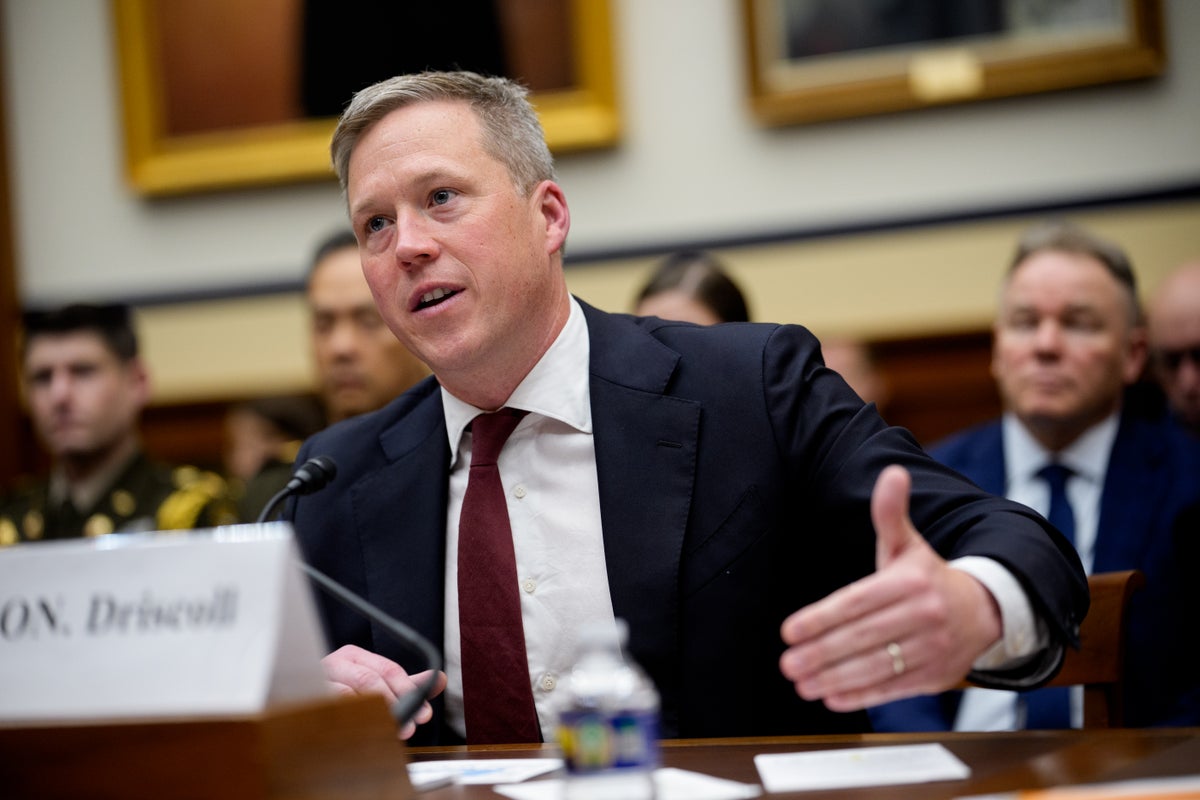
Former Army secretary Dan Driscoll has given his first interview since resigning from the Pentagon in September after clashing with Defense Secretary Pete Hegseth.
Driscoll is just one of a series of high profile departures since Hegseth took over, with the secretary carrying out a purge so substantial it reportedly even raised President Donald Trump’s concerns.
Speaking to Rolling Stone, Driscoll acknowledged the pair had disagreements on a number of issues, without going into specifics.
“Once he makes a decision, there’s nothing I can do about it. I don’t have to like it,” he said of Hegseth. “But I think it’s unfair to describe our relationship so flatly – that every interaction was bad, or that we disagreed on everything.
“If you polled us, we probably agreed on more than 50 percent of things. What’s been reported is all the things we disagree on.
“I’ll never talk about our private conversations but we were both very passionate about our positions, and I would advocate as strongly as I possibly could – knowing I’m talking to my boss, and the final decision-maker.”
Driscoll said his role had been “to advocate as hard as I could for leaders who I thought were good.”
An Iraq War veteran, tech investor and former adviser to Vice President JD Vance – whom he befriended while they were contemporaries at Yale Law School – Driscoll is characterized in the piece as a keen modernizer of the U.S. military, interested in innovation and ensuring the Armed Forces had the equipment necessary to meet the challenges of a 21st century battlefield.
While Hegseth was also interested in making changes to the operation of the military, reports suggest he has been concerned about instilling a “warfighter” mentality in the troops and focussing on appearance.
Driscoll, the youngest person ever to hold his position after sailing through his confirmation hearing in the Senate in February 2025, recounts how he approached Hegseth early on with what he considered a “gift” – his close friendship with Vance – which he believed would help the Pentagon get what it needed from the White House.
But, the magazine reported: “Hegseth blew up at him… telling Driscoll that he needed to go through his office before reaching out to the White House, creating a tension between the two men.”
The friction worsened as Hegseth dismissed more and more top generals and admirals, culminating in the removal of Gen. Randy George and then Gen. Christopher Donahue, two men with whom Driscoll had found common cause in pursuing his modernizing agenda.
Driscoll reached the end of his tether in late August and informed President Donald Trump of his intention to resign, reportedly telling the commander-in-chief that he was leaving because Hegseth had fired everyone working towards the goal he held dear.
Sean Parnell, the Pentagon’s chief spokesperson, told Rolling Stone it was “fake news” when approached for comment about the interview, which Parnell said was “riddled with made-up claims.”
“Since day one, Secretary Hegseth has focused on modernization across every branch of our armed forces,” he said. “Secretary Hegseth has been a generational secretary for the Pentagon.”
The Independent has also reached out to the Department of Defense for comment.
Driscoll was praised by White House spokeswoman Anna Kelly when he left his post as “highly effective in advancing President Trump’s agenda to Make America Strong Again at the Department of the Army by providing outstanding leadership during historic military operations, restoring an emphasis on readiness and lethality, assisting with negotiations between Russia and Ukraine, and more.”
"The United States Army is more powerful than ever thanks to his work alongside the Commander-in-Chief and Secretary of War,” she added.