As America turns on Flock cameras, Trump throws his support behind them
President Donald Trump has thrown his support behind Flock cameras, despite a growing number of communities across the country rejecting the automatic license plate readers over privacy and safety concerns.
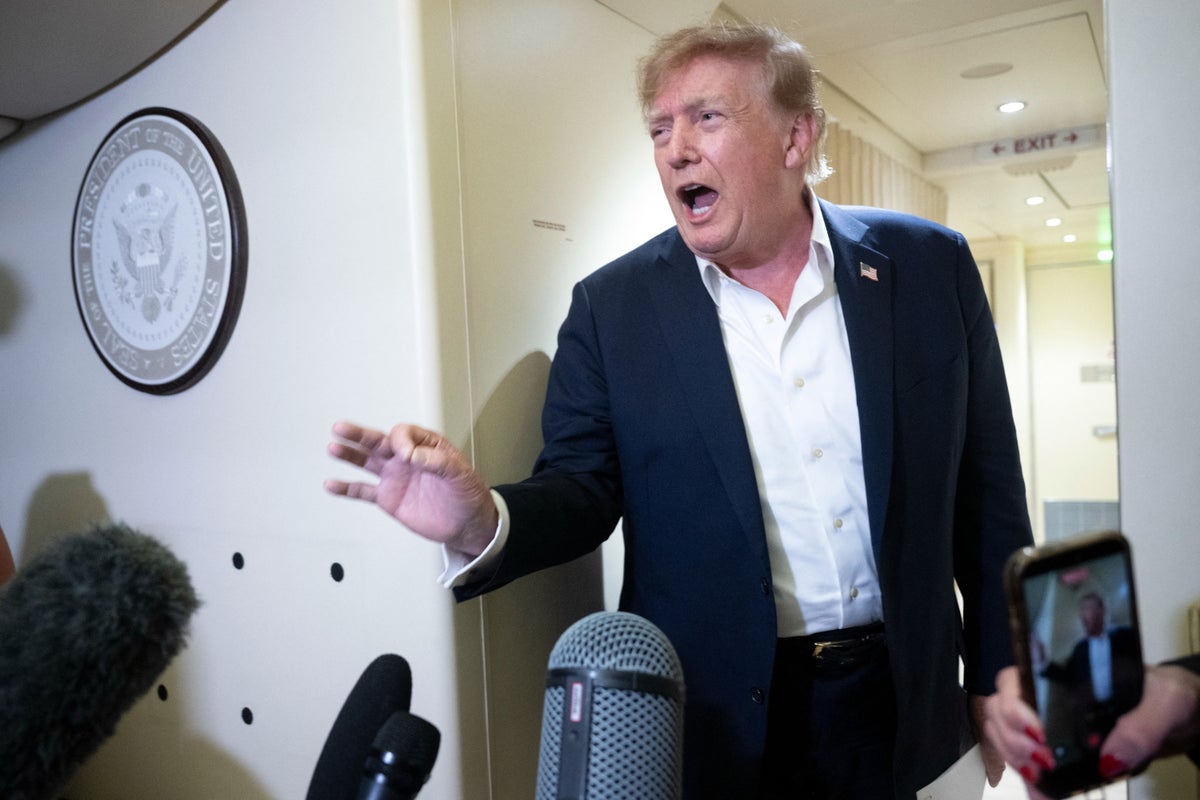
Trump was asked about Flock’s network of AI cameras as he spoke to reporters on the return journey Sunday from his Ireland trip.
Law enforcement agencies in every state, apart from Alaska, are using the technology to scan license plates and compare to criminal databases. While the cameras have helped catch criminals, reports have also emerged of law enforcement officers using the system to stalk partners or exes.
“Flock cameras, you haven’t talked a lot about these Flock cameras. A lot of law enforcement say they really help them, would you be willing to back that?” a reporter asked Trump on Air Force One.
“I sort of like ‘em because of that, because of law enforcement,” Trump replied. “But some people don’t. They think it’s an infringement.”
“They help catch a lot of criminals,” the reporter said. Trump then added: “But I like them.”
Flock cameras have caused widespread disquiet among communities. A database, released by the nonprofit Institute for Justice, revealed that over 200 local governments across the U.S. have canceled or failed to renew their automatic license plate recognition contracts since the start of 2025.
Flock CEO Garrett Langley has responded to the criticism and told Fox News’ “Saturday in America” co-host Kayleigh McEnany last month that the technology is vital for safety.
"When people talk about just one of these, privacy or safety, they're prioritizing the wrong thing, and what we have to prioritize as a country is compromise," Langley said. "How do we have our safety, and how do we balance privacy?"
The distrust of the surveillance cameras has become so rampant that politicians on both sides of the aisle have lodged complaints against the company. Last month, Florida’s Republican Governor Ron DeSantis said he didn’t “want to have this become a surveillance state.”
In the weeks since, Florida’s state transportation office banned license plate readers, including Flock cameras, from being installed on state highways, according to Reuters.
Some politicians have used the subject of Flock cameras as a talking point ahead of midterm elections.
Ohio Democrat Kristina Knickerbocker said that her opponent, Republican Mike Turner, “pushed for more Flock cameras in downtown Dayton,” according to Axios.
“Now those cameras have been caught running thousands of searches that broke our cities rules,” she said.
Chaz Molder, Democratic nominee in Tennessee’s 5th District, also argued against the use of Flock cameras. “That kind of big government overreach has no place in our country or Tennessee,” he said.
Abdul El-Sayed, the Democratic nominee for Senate in Michigan, shared a video on X linking his Republican opponent, former Representative Mike Rogers, to Flock cameras.
"There's been this mass proliferation of Flock cameras, any and everywhere, watching your every move to collect information without you even noticing," he said, as the song “Somebody’s Watching Me” plays.
Flock, which is based in Atlanta, Georgia, has been under fire since reports of widespread misuse of the cameras by law enforcement officers. The Washington Post earlier reported that at least 50 law enforcement officers were charged with or accused of misusing Flock cameras and other surveillance systems, including to stalk women.
The company, which has an estimated 120,000 cameras across the U.S., has defended its product. Langley also told Newsweek that his company’s “end goal isn’t a dystopian future of surveillance; it’s one where we all feel safe.”
Flock announced some changes last month as a result of the backlash, including that it would shorten the default and recommended periods for retaining data from 30 days to seven. The changes are set to be implemented by January 1.