As Amit Shah envisions Indian dominance in lab diamonds, why challenges persist
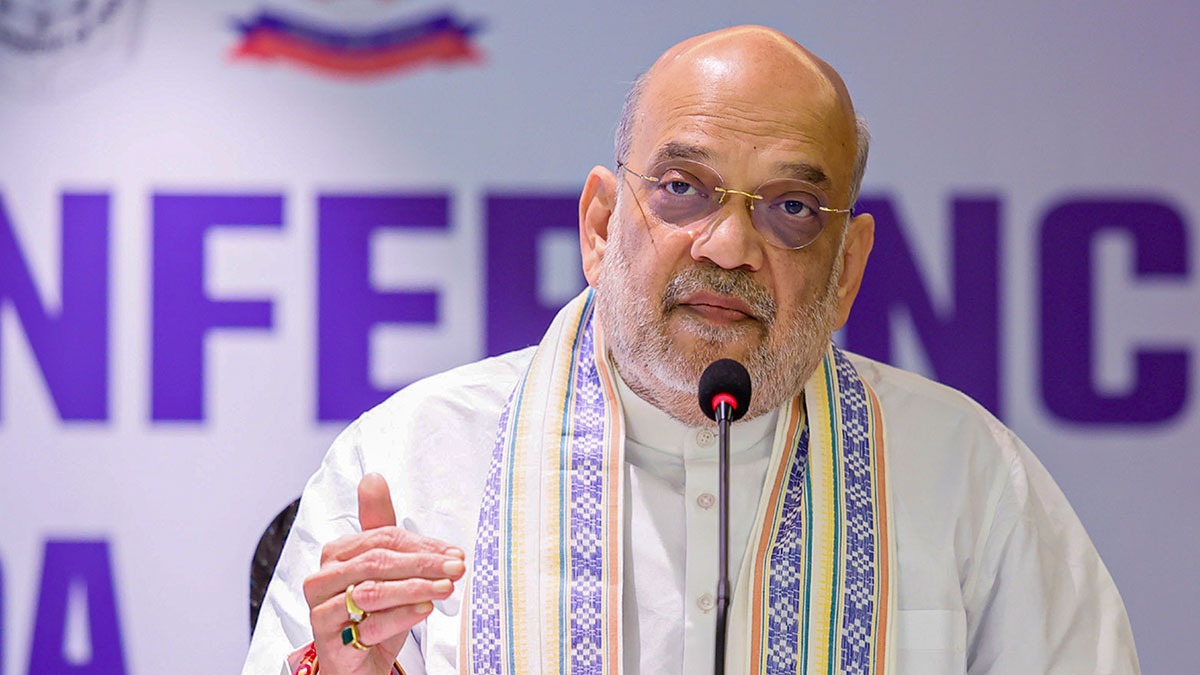
Union home minister Amit Shah recently urged India’s gem and jewellery industry to keep the entire a (LGD) ecosystem—from manufacturing machinery, diamond production, jewellery-making and branding to global showrooms—"firmly in Indian hands”.
Speaking at the 52nd India Gems & Jewellery Awards in Mumbai, Shah said the LGD market, by volume, is expected to become nearly 50 times the size of the current diamond market, calling it a “monumental opportunity”. He added that India possesses the infrastructure, capabilities, capital and entrepreneurs needed to seize it, and noted how the country’s gem trade with the world spans almost 6,000 years.
LGDs are chemically, physically and optically identical to mined diamonds, and grown in reactors rather than dug out from earth. There are two methods of manufacturing LGDs: High-Pressure High-Temperature (HPHT), which recreates the heat and pressure of the earth’s mantle to grow a crystal in weeks; and Chemical Vapour Deposition (CVD), which builds a diamond atom by atom from carbon-rich gas onto a seed crystal in a plasma chamber.
India has built its edge in CVD, with roughly 90 per cent of domestic production coming from this technology as it’s less capital-intensive and more scalable than HPHT. According to industry estimates, the country runs an estimated 2,200-2,800 CVD reactors, mostly in Surat and Mumbai.
The Gems and Jewellery Export Promotion Council (GJEPC) has flagged that most HPHT machines currently are imported from China. Even India’s CVD reactor manufacturers source microwave generators, vacuum pumps, sensors and good-quality seeds from abroad.The Union Budget 2023 had made customs duty on LGD seeds zero and sanctioned a Rs 242 crore, five-year research grant to IIT Madras, specifically to indigenise LGD seeds and machines. IIT Madras director V. Kamakoti called it a step towards “Atmanirbhar Bharat”. Three years on, the dependency that the grant was meant to fix has not yet succeeded in hemming the import of CVD components and seeds.
Moreover, LGDs are in direct conflict with the natural diamond industry, another sector that India leads globally, with nine out of 10 natural diamonds polished in Surat. India’s natural diamond industry directly and indirectly provides work to nearly three million people. A pushback from purists has slowed down LGDs’ progression in the jewellery sector.
As the task of polishing diamonds, whether LGD or natural, is the same, many of the polishers who sit at the bottom of this glamorous pyramid have been engaged in LGD polishing, much to the discomfort of traditional diamantaires. Natural diamonds have lost market to LGDs, and trade has been severely impacted due to the Russia-Ukraine war and unpredictable US tariffs.
India became the world’s largest LGD exporter in 2023, holding 28.6 per cent of global exports. It is the second-largest producer of rough LGDs after China, with a 35 per cent share of global rough output. Surat processes 90-95 per cent of the world’s gem-quality lab-grown stones.
Wholesale LGD prices have fallen roughly 90 per cent since 2019, and De Beers has paused operations at its Venetia mine in South Africa for two years. LGDs are projected to capture 16 per cent of the global diamond market by 2029, up from 12 per cent in 2024.
Beyond jewellery, LGD applications now extend into semiconductor heat sinks, diamond wafers, quantum computing (diamond’s nitrogen-vacancy centres are candidate qubits), precision-machining tools and aerospace components—a shift the industry calls “diamondtronics”.
India’s polished LGD exports rose 28.45 per cent year on year in August to $125.17 million and 11.76 per cent over April-August to $533.67 million. GJEPC attributed this growth to demand from Hong Kong, Israel, Thailand, Russia and Canada. Broader gem and jewellery exports rose 3.14 per cent in August to $2.30 billion, led by a 51.22 per cent surge in studded gold jewellery. “The increase in diamond export volumes... highlights India’s growing ability to create greater value,” said GJEPC chairman Kirit Bhansali.
The certification industry, at least, is positioning itself as the fixed point in that supply chain. Reacting to Shah’s remarks, Tehmasp Printer, managing director and CEO of the International Gemological Institute (IGI) in India, welcomed the minister’s vision of the country owning the ecosystem end to end. Arguing that an ecosystem of this scale “needs a trust layer”, he said IGI plays this role even as the “industry moves from price debates to questions of scale”.