As Trump-Xi Meeting Approaches, Family Sees Chance to Free Uyghur Doctor - Newsweek
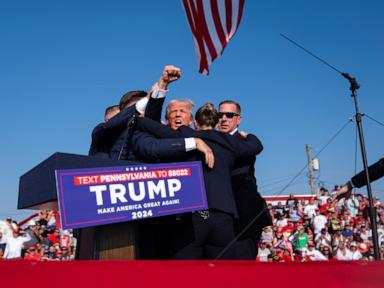
When President Xi Jinping arrives at the White House later this month, Ziba Murat hopes her mother's name will be on the agenda.
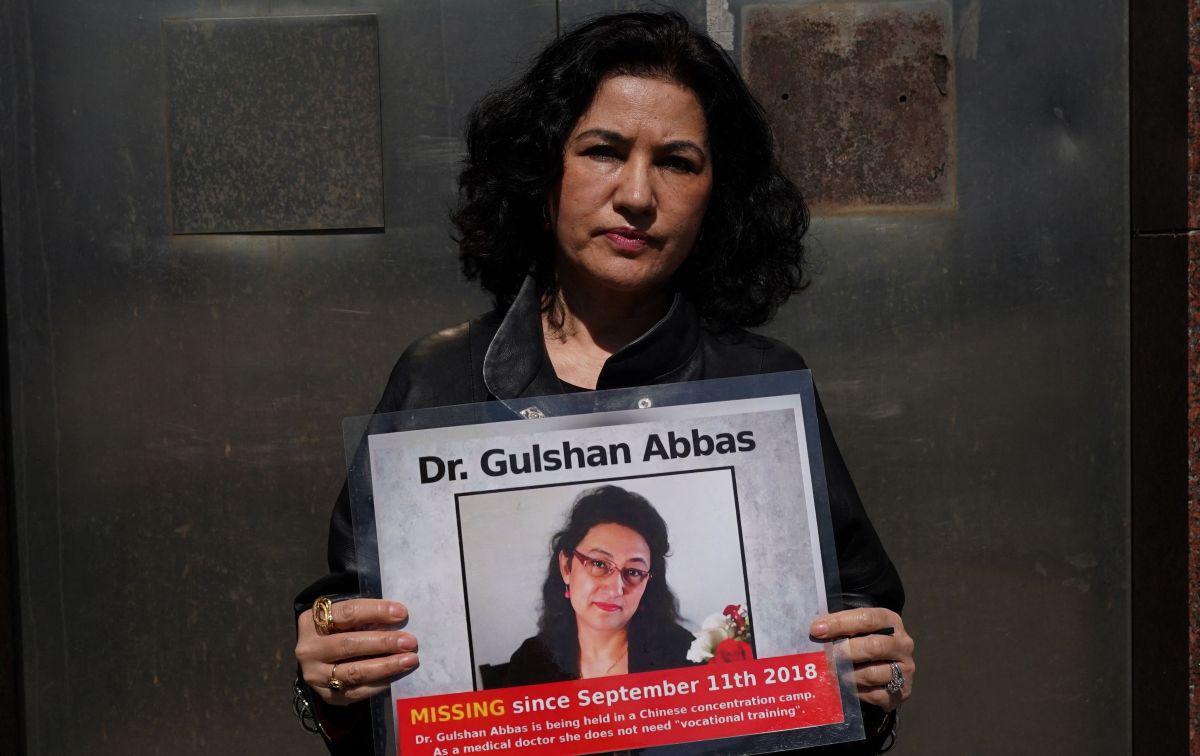
Murat's mother, Dr. Gulshan Abbas, a 64-year-old retired physician, has spent eight years in a Chinese prison on what the U.S. government and human rights groups call fabricated terrorism charges. The meeting, the two leaders' third this year after summits in Busan last October and Beijing in May, is, according to her family, the clearest opening yet to get her out.
"I hope, and we all saw what happened with [Pastor Ezra Jin Mingri's] case, when the president brought it up with Xi back in May and he was released to be with his family here in the United States, that the president can raise this case as well," Murat told Newsweek in an exclusive interview. "This is a very clear-cut case of transnational repression."
Rushan Abbas, Gulshan’s sister, has spent years campaigning for the doctor's release since her arrest in September 2018. She also sees the upcoming summit as an opportunity and is urging Trump to raise her sister’s case.
“It’s extremely important for President Trump to raise her case and bring this mother and grandmother home to her family in the United States,” she told Newsweek. “He can do it.”
The case has drawn bipartisan support in Congress. A House resolution introduced by New Jersey Republican Representative Chris Smith called on President Donald Trump to prioritize securing the release of several political and religious prisoners in China, including Abbas, in future meetings with Xi. The resolution passed the House unanimously in a 414-0 vote in May 13, while the Senate agreed to its version the same day.
Speaking at a GOP House press conference on Tuesday, Speaker Mike Johnson said he expected the release of political prisoners to be among the issues discussed, calling religious freedom “an important American principle.”
“I’m sure that’ll be one among a number of topics,” Johnson said. “I’ve been an advocate for releasing political prisoners, and we’ll continue to do that and prevail upon China to make sure they respect the basic human dignity and freedom of everybody, as America well represents and will continue to defend.”
Asked about Abbas’ case and China’s treatment of Uyghurs abroad, the State Department told Newsweek, “We condemn China’s transnational repression and efforts to pressure other governments to forcibly return Uyghurs and members of other ethnic and religious groups to China, where they have been subject to torture and enforced disappearances.”
Dr. Abbas practiced medicine in Urumqi, the capital of China's Xinjiang region. She retired early due to health issues, according to her family, but kept showing up for patients. She met people who traveled from small villages and walked them through the hospital herself, translating and making sure they got seen.
"Sometimes we'd wake up in the morning and she'd already be gone," Murat said. "When we were little we'd ask my father or my grandmother where she was, and they'd tell us, 'She's at the hospital, someone came from out of town and she wanted to make sure they saw a doctor.'"
Five days after Rushan Abbas spoke at a Hudson Institute panel in Washington in September 2018 about the disappearance of her husband’s extended family in Xinjiang and China’s broader treatment of Uyghurs, a predominantly Muslim ethnic group native to the region, Chinese authorities took her sister from her home in Urumqi.
"She was arrested only five days after my first public speech at the Hudson Institute, which was televised," Rushan Abbas said. "I believe she was taken in retaliation for my freedom of speech. I've been a U.S. citizen since 1995. I've lived in the U.S. for 37 years. When I exercised my freedom of speech and spoke about what China is doing to my people, they took her as a hostage."
For nearly two years, the family says they heard nothing. Then China's state-run Global Times ran a piece accusing Rushan Abbas of inventing her sister and stealing a stranger's photograph to fake her advocacy. A year after that, word came that Dr. Abbas had actually been tried in secret back in March 2019 and sentenced to 20 years on charges of "participating in a terrorist organization," "aiding terrorist activities," and "gathering a crowd to disrupt social order." The family says they didn't learn any of it until December 2020.
"You can't even keep your own lies straight," Rushan Abbas said. "One day I'm a liar and she doesn't exist, the next day she's a criminal."
"Gulshan Abbas's case is one of the clearest-cut cases of transnational repression that we've seen, not among Uyghur cases only, but for political prisoners across China generally," said Olivia Enos, a senior fellow at the Hudson Institute who has followed the case for years. She was detained within days of an American citizen's speech, Enos noted, a fact she considers close to dispositive.
"Her detention wasn't based on her having committed any crime, but on the fact that her American citizen sister exercised her constitutionally guaranteed right to free speech," she said.
Dr. Abbas has 24 relatives who hold U.S. citizenship—two daughters, a sister, brothers and a growing number of grandchildren, most of whom she's barely known.
"My oldest niece was six months old when we last saw my mother in 2016," Murat said. "My daughter was three months old when my mom was taken. My sister's second child was born four months after my mom was taken, so she has never seen her grandchildren in person."
The doctor's health, according to her family, has also gone downhill. High blood pressure requiring daily medication, legal blindness in both eyes from untreated macular retinal hemorrhages, and, in earlier accounts given to Congress, osteoporosis and back pain bad enough to leave her immobilized for weeks at a stretch. Nobody outside the prison system has seen her in eight years.
"I don't know what condition she's in now," Ziba Murat said.
Lawmakers from both parties have spoken about Abbas’ case, with Republicans among the most notable.
“I think it ought to be on the agenda,” Senator Chuck Grassley, a Republican from Iowa and a co-sponsor of a separate Senate resolution on political prisoners in China, told Newsweek on Monday when asked whether Trump should raise Abbas’ case with Xi.
Republican House Speaker Mike Johnson invited Murat as his guest to this year’s State of the Union, while then-Senator Marco Rubio invited Rushan Abbas to the 2020 address. Rubio, who sponsored the Uyghur Forced Labor Prevention Act, has continued to raise the case at the State Department since becoming Secretary of State.
“This isn't a partisan issue, and it isn't about one administration versus another,” Rushan Abbas said. “It's a strong humanitarian issue with support across both parties.”
Newsweek reached out to the White House, the Chinese Embassy in the United States and Johnson's office for comment on Friday.
Dr. Abbas's imprisonment has stretched across three presidencies—the last two years of Trump's first term, all four of Biden's, and the first year and a half of Trump's second. It's the middle stretch her family remembers as the most difficult.
"When the Biden administration took office, we started taking meetings, and I was told she was a priority, that they were raising her case," Murat said. "Every time we met with people in government they'd tell us it was a priority, that they were raising it with the Chinese. But when people came home, she wasn't among them."
The Biden administration did secure releases from China during those years.
Pastor David Lin came home in September 2024, and Mark Swidan, Kai Li and John Leung were freed together the following month in a prisoner swap around Thanksgiving. After that swap, a National Security Council spokesperson said every American then designated "wrongfully detained" in China had been brought home.
Those four, though, were U.S. citizens. Dr. Abbas is not, which meant her case never fell under the same State Department channel, the Special Presidential Envoy for Hostage Affairs, that tracks and negotiates specifically for Americans held abroad.
Dr. Abbas’s family told Newsweek that they wrote to the administration eight times but never received a response, even after a State Department official personally told her that the case mattered. “It was frustrating, after all that work, to wake up to news that other people had come home and my family hadn’t.”
Newsweek reached out to former Secretary of State Antony Blinken for comment on Friday.
Rushan Abbas is careful not to fault any one official by name, but she does say she thinks the Biden administration failed to remain firm in advocating for her sister.
"President Biden tried. He raised my sister's case a few times when he engaged with Xi Jinping, but it wasn't pushed hard enough," she said. "If he did it once for [Pastor Jin], he could have done it again. I believe that if he had stayed firm and kept demanding her release, he could have brought her home."
Sarah Makin, a former senior director on the National Security Council and an adviser on international religious freedom during Trump’s first term, has remained close to the family in the years since. She told Newsweek she was disappointed that the case fell under the radar during the Biden administration, particularly compared with other cases involving Americans who were brought home.
"I don't think there was a strong enough inclination to confront religious persecution during the Biden administration, and that's very much what's at play here with the Uyghur community specifically."
Part of the problem is structural. Dr. Abbas isn't a U.S. citizen, so her case never fell under the State Department's hostage affairs office, which prioritizes Americans held abroad.
"Her case represents what we refer to as transnational repression. Over the years, this has become more and more of an issue. It's a lever China uses because it can't necessarily stop American citizens directly, so it goes after their family members inside China instead, applying pressure as a way to silence Americans," she said
Every conversation about Dr. Abbas eventually circles back to Ezra Jin Mingri, the Chinese Christian pastor whose American family Trump personally raised with Xi during their May summit in Beijing. Jin himself is not an American citizen, but he returned home on July 4.
According to Enos, he was the first Chinese political prisoner released under such circumstances in nearly two decades. Advocates believe that model could be repeated.
"President Trump has already demonstrated he can secure the release of a political prisoner, but we need to see more released," Enos said. "This next meeting is a second opportunity. ...I think he has the opportunity to make history by freeing the first Uyghur political prisoner, and I think Dr. Gulshan Abbas would be the perfect person to bring home."
The Trump administration's ties to the Uyghur cause run deeper than any single meeting. The U.S. was among the first countries to formally declare China’s campaign against the Uyghurs, which has involved mass detention, forced labor and family separation, a genocide. On his last full day in office in January 2021 during Trump's first term, then-Secretary of State Mike Pompeo said China’s campaign against the Uyghurs met the legal threshold for genocide and crimes against humanity. The Biden administration later upheld that determination.
But for Abbas’s family and her advocates, Trump’s return to the White House offers a new opportunity, largely because of the leverage they believe he has with foreign leaders and his reputation for striking deals.
Trump’s rapport with Xi is real leverage, in Makin’s view, especially when paired with tools the administration has been developing, including the Transnational Repression Policy Act, which is moving through Congress and would seek to punish foreign governments that use family members as pressure points against U.S. citizens.
“I strongly believe that if anyone has built the kind of relationship with Xi that can get this done, it’s President Trump,” she said.
Enos wants Washington to think beyond one name. She pointed to bulk releases the administration has already negotiated elsewhere, including Israeli hostages and political prisoners in Belarus and Venezuela, and asked why China should be treated differently.
“China wouldn’t be at the negotiating table if it didn’t want something from the United States,” she said. “That means the U.S. has the upper hand.”
The family doesn't get caught up in those complexities. What they want is simpler.
"My hope is that if President Trump brings up this case with Xi, that Xi will make the right decision and let her come home to us," Murat said. "She's 64 years old, she has a list of health issues, and she's not getting any younger."
Contact Newsweek editors on this story: Jason Lemon and Geoffrey Rowland.