As UP’s sugar output plunges, hopes on a new cane variety - The Indian Express
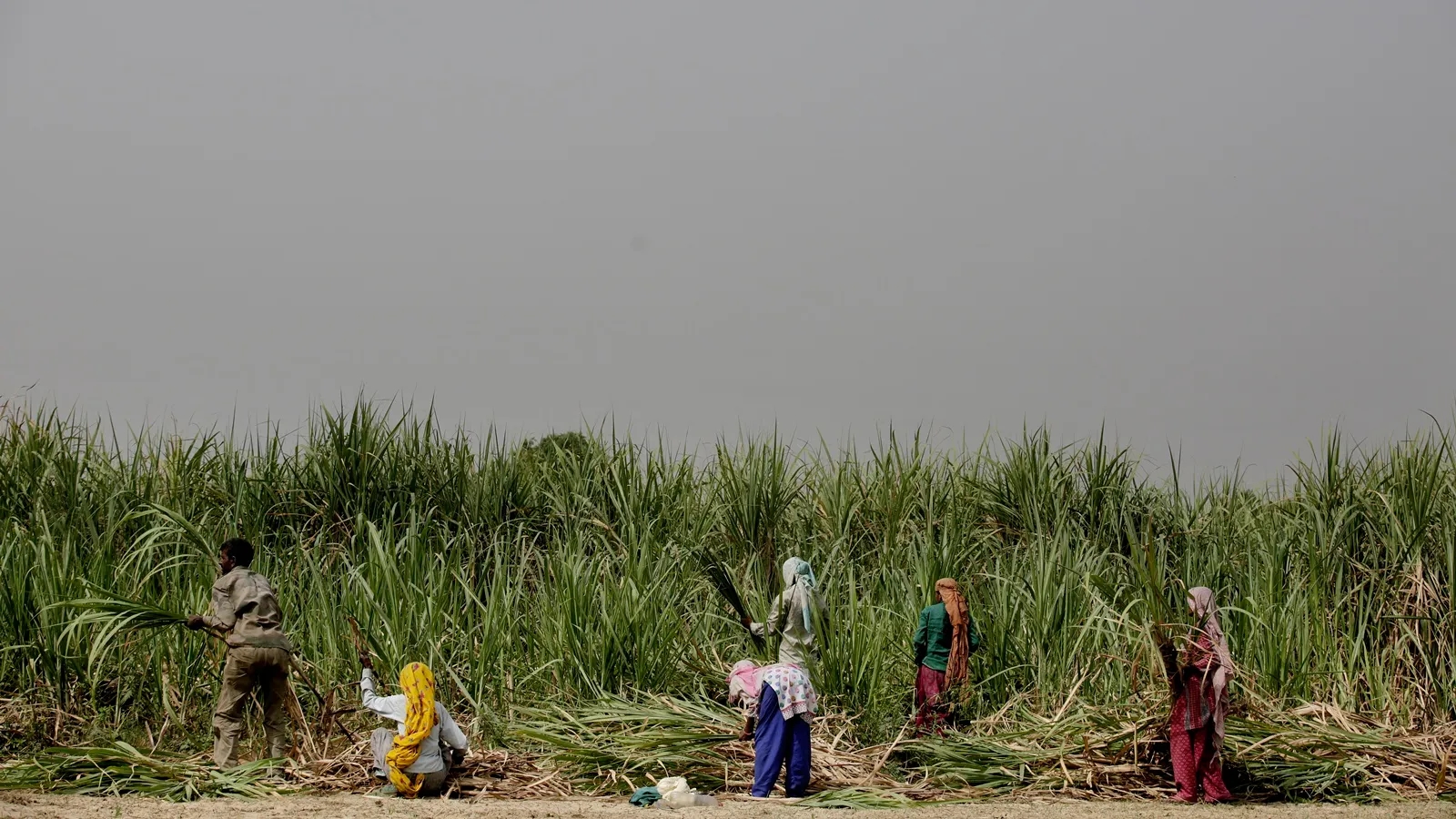
Uttar Pradesh, India’s top cane growing state, has seen its sugar output plummet from 126.4 lakh tonnes (lt) to 89.5 lt between 2019-20 and 2025-26 (October-September production years).
The primary reason has been the susceptibility of the widely-cultivated sugarcane variety, Co-0238 (also called Karan 4), to red rot fungal disease.
The resultant yield losses have also led to the total quantity of cane crushed by UP’s 120-odd sugar mills – the state is slated to go for Assembly polls in February-March 2027 – falling by over a fifth in the last six years.
The industry is now pinning hopes on a new variety developed by the Indian Council of Agricultural Research’s Sugarcane Breeding Institute (ICAR-SBI) at Coimbatore. This variety, Co-20016 (Karan 20), has already been picked as a potential replacement for Co-0238 by a Varietal Identification Committee under the All-India Coordinated Research Project (AICRP) on Sugarcane, which met on May 27.
“It will next be placed before the Central Varietal Release Committee, which is expected to meet in October. Once approved by it and officially released for commercial cultivation, farmers can plant the variety in the coming spring (February-March), summer (April-May) or autumn (mid-September to mid-November) seasons,” said a government official.
The Indian Sugar & Bio-energy Manufacturers Association (ISMA) had, in August 2023, launched a joint initiative with the ICAR-SBI for conducting evaluation trials of improved cane varieties at selected factory locations across both subtropical (UP, Uttarakhand, Bihar, Haryana and Punjab) and tropical (Maharashtra, Karnataka, Tamil Nadu, Gujarat, Madhya Pradesh, Andhra Pradesh and Telangana) India.
For the subtropical region, the clones of two varieties (Co-20016 and Co-21012) were tested over three years through two plant-cane and one ratoon crops. 16 sugar mills participated in the trials, including 11 of UP: Triveni Engineering & Industries (Milak Narayanpur and Ramkola), Balrampur Chini Mills (Balrampur), DCM Shriram Ltd (Ajbapur), DCM Shriram Industries (Daurala), Mawana Sugars (Mawana), Avadh Sugar & Energy (Seohara), Dhampur Bio Organics (Asmoli), K.M. Sugar Mills (Ayodhya), Seksaria Biswan Sugar Factory (Biswan) and United Provinces Sugar Company (Seorahi).
“We have completed the trials for both the varieties and the results are very encouraging,” ISMA’s director-general Deepak Ballani told The Indian Express. The AICRP trials under ICAR have also been completed for Co-20016, while in progress for Co-21012.
The three-year average cane yield for Co-20016 at ISMA’s trial locations worked out to 144.6 tonnes per hectare, as against 116.4 tonnes for Co-0238. The mean sucrose content in the cane juice at 10-months cropping period, too, was found higher for Co-20016 (18.7%) than for Co-0238 (18.3%).
More important, the Co-20016 variety has shown itself to be resistant to red rot – specifically the highly virulent ‘CF13’ pathotype of the Colletotrichum falcatum fungal pathogen. When Co-0238 was developed by ICAR-SBI and released in 2009, it was evaluated as moderately resistant to the prevalent ‘CF07’ and ‘CF08’ pathotypes of the red rot-causing fungus.
“The CF13 pathotype emerged due to the intensive monoculture planting of Co-0238 in UP as well as other subtropical states. As the fungus mutated and evolved into this new pathotype, Co-0238 suffered varietal breakdown, losing its resistance and becoming susceptible to red rot,” explained Dr. Bakshi Ram, former director of ICAR-SBI and breeder of this once-blockbuster variety.
The contribution of Co-0238 to UP’s sugar industry can be seen from the accompanying table.
Till 2012-13, this variety was grown only in select farmers’ fields under ISMA’s evaluation trials. As its share in UP’s total cane area rose from practically nothing to 82.2% in 2019-20, sugar production in the state soared to 126.4 lt, from 69.7 lt in 2011-12. UP even overtook Maharashtra as India’s No. 1 sugar producer by 2016-17 and retained this position till 2020-21.
Between 2011-12 and 2019-20, the quantity of cane crushed by UP mills also increased from 768.6 lt to 1,118 lt. So did the average recovery of sugar from every tonne of cane crushed, from hardly 9.1% to over 11.7%.
Co-0238 was a win-win for both cane growers and sugar mills. This variety, having thicker cane sticks, enabled average yields in UP to go up from below 60 tonnes to 80-plus tonnes per hectare. Being early-maturing, it accumulated very high levels of sucrose sooner than other “general” cane varieties. Mills could, then, obtain higher sugar recoveries right from November through the crushing season till April-end.
“For all its advantages, I had warned against the over-cultivation of the variety, especially in the central, eastern and Terai belts of UP that are prone to waterlogging. Waterlogged fields are particularly conducive for red rot infestation and transport of the fungal spores across regions. Unfortunately, neither the mills nor farmers followed my advice,” Dr Ram pointed out.
By 2020-21, Co-0238 covered 86.7% of UP’s total cane area and about 84% of the entire subtropical northern India. The rapid collapse of the variety’s resistance to red rot also happened from around that time, when the new highly virulent strain of the fungus was designated as CF13.
The red rot fungus basically attacks the vascular system of sugarcane, through which the transport of water and nutrients from the roots to the stems, leaves and the rest of the plant takes place. Once infected, this system gets clogged, disrupting the plant’s ability to access these essential growth elements, leading to wilting, and eventually, shrivelled and hollow canes.
“It’s necessary to ensure no single sugarcane variety covers more than 40-50% in any growing region to prevent the loss of genetic resistance to disease,” Dr Ram added.
ISMA’s Ballani was hopeful of both Co-20016 and Co-21012 turning out to be effective replacements for Co-0238. ISMA’s trials have shown average cane yields and sucrose content for Co-21012 (129.4 tonnes per hectare and 18%) to be higher than for Co-0238 (119.7 tonnes and 17.8%). But its resistance to red rot, including the CF13 pathotype, will be tested only after the completion of AICRP trials in mid-2027.
The ultimate test, however, would be in farmers’ fields.
Jitender Singh Hooda, a grower from Kheri Bairagi village in western UP’s Shamli district, reduced his sugarcane area from eight acres to six in 2025. He has further cut it to four acres this year, while planting maize, urad (black gram) and short-duration Pusa-1509 basmati paddy on the vacated land.
“My yields, which were previously 38-39 tonnes per acre, are just 22-23 tonnes today. Lal sadan rog (red rot) has really dented farmer confidence in cane,” he stated.
Harish Damodaran is National Rural Affairs & Agriculture Editor of The Indian Express. A journalist with over 33 years of experience in agri-business and macroeconomic policy reporting and analysis, he has previously worked with the Press Trust of India (1991-94) and The Hindu Business Line (1994-2014). ... Read More